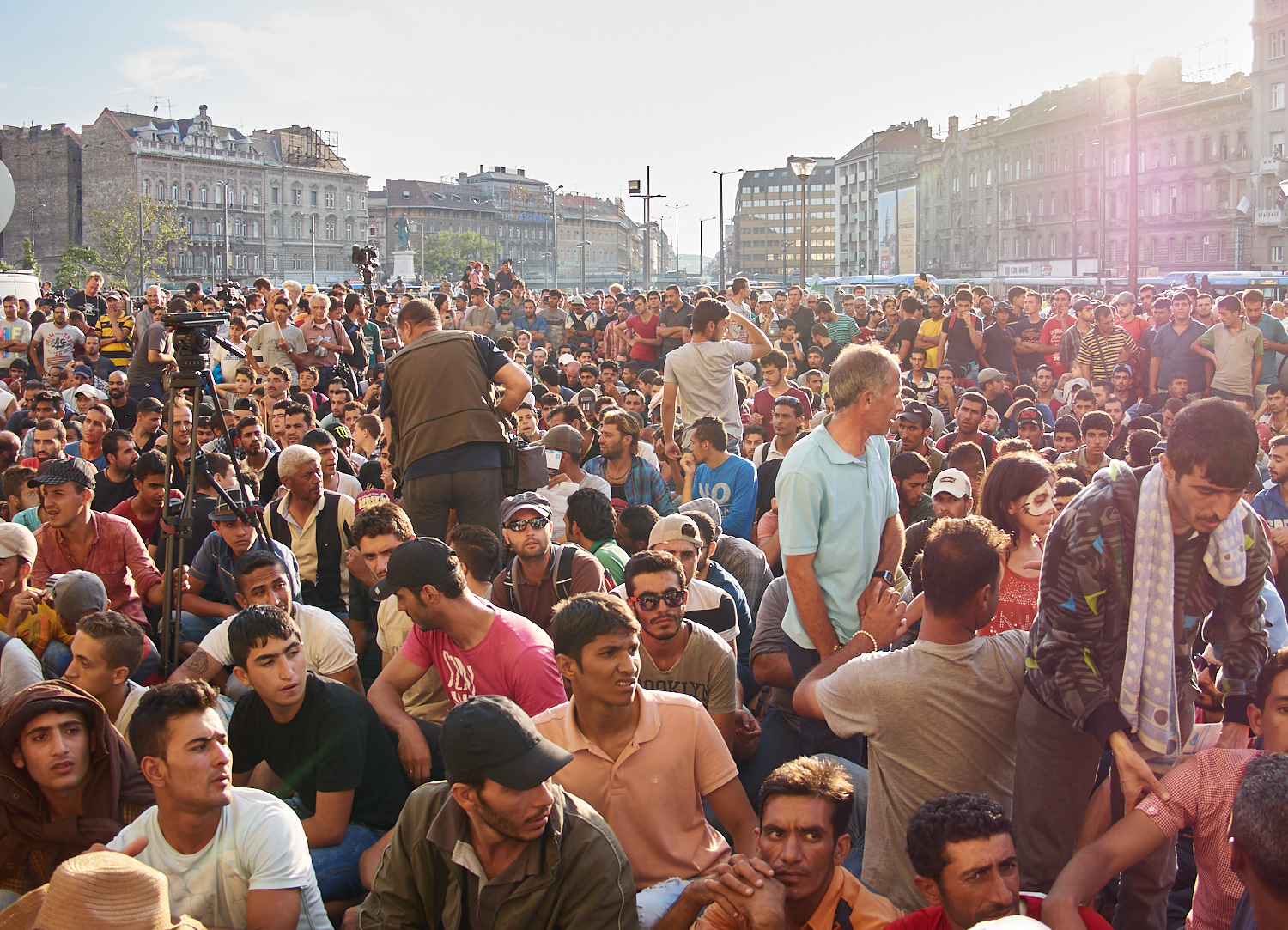
Budapest, early September 2015: From mid-2015 onward, hundreds of migrants arrived daily in the Hungarian capital Budapest via the Balkans—more than 50,000 in August alone—in order to continue on to Western Europe. However, onward travel was made more difficult in early September under the Orbán government, when train connections to Western Europe were suspended. This was intended to deter migrants from continuing to enter Hungary. As a result, Keleti railway station turned into a large encampment in early September, where thousands of migrants were stranded, waiting to continue their journey.
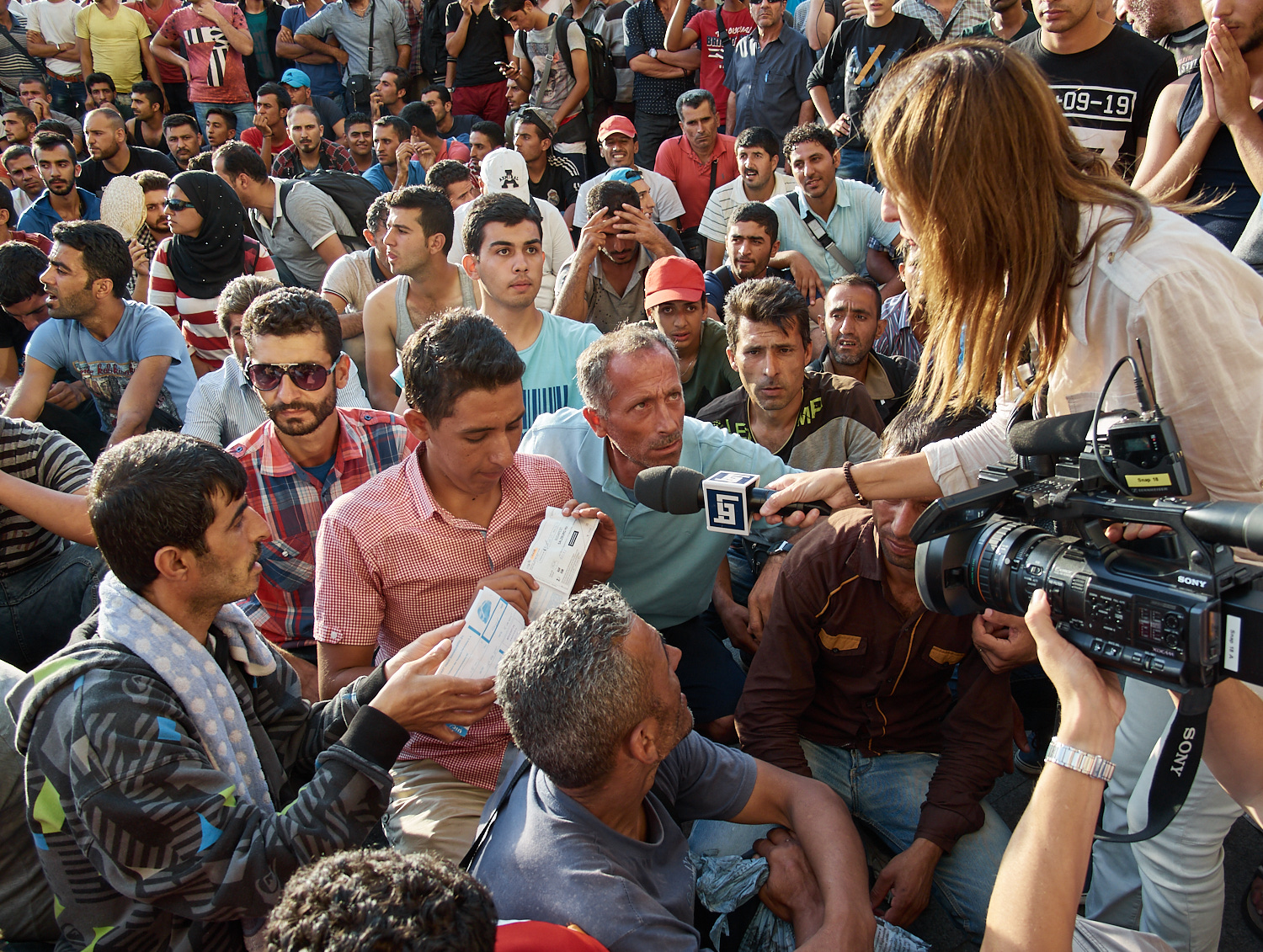
Budapest, Keleti Railway Station, early September 2015: Migrants in the square in front of Keleti station.
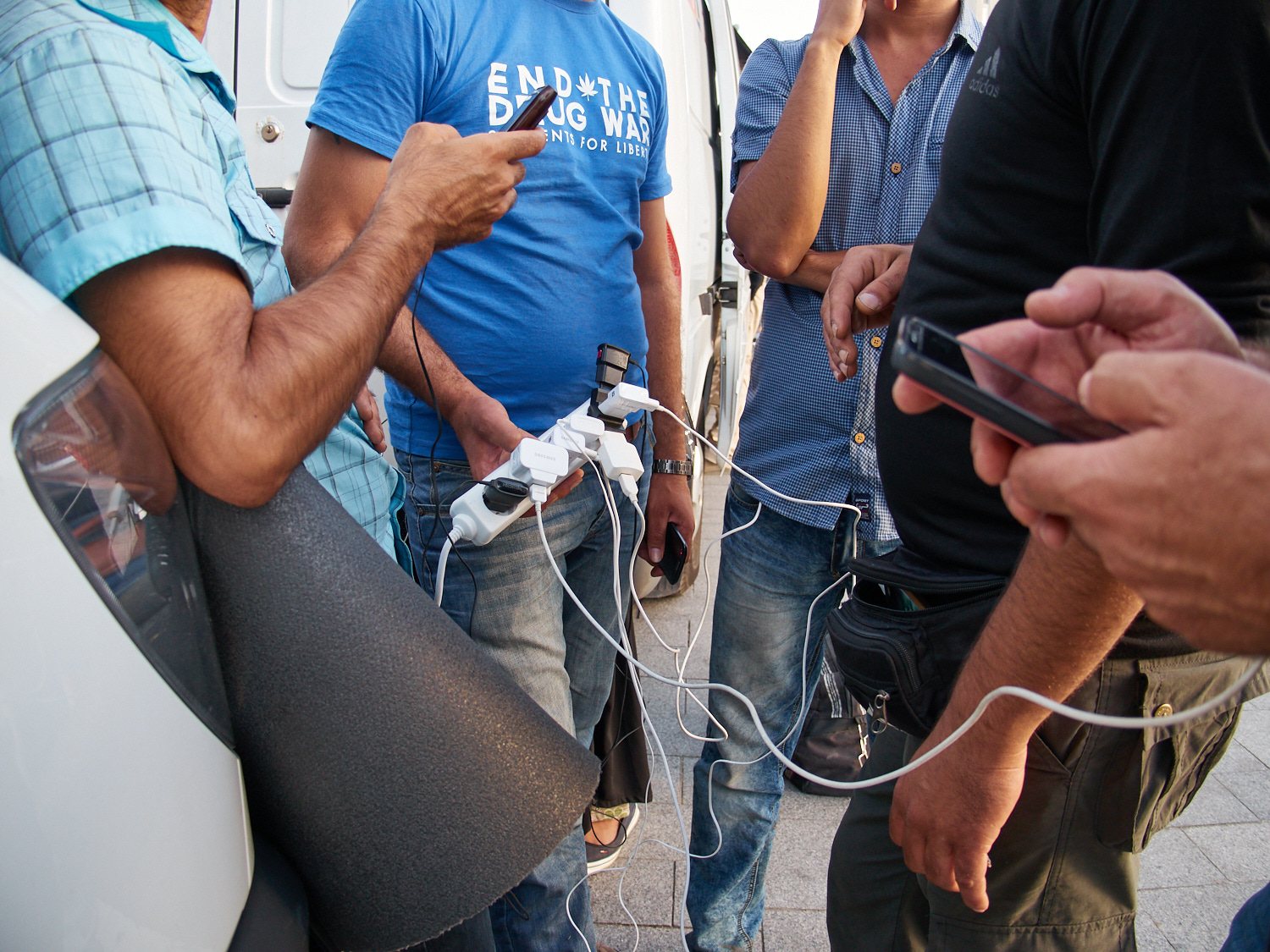
Budapest, Keleti Railway Station, early September 2015: Migrants charging their mobile phones. Mobile phones were not only an indispensable tool for flight and migration—for communication, payment, and the exchange of information. Social media was also used to spread hopes, dreams, and (false) promises, which was one of the reasons for the channeling and concentration of migration movements toward selected destinations.
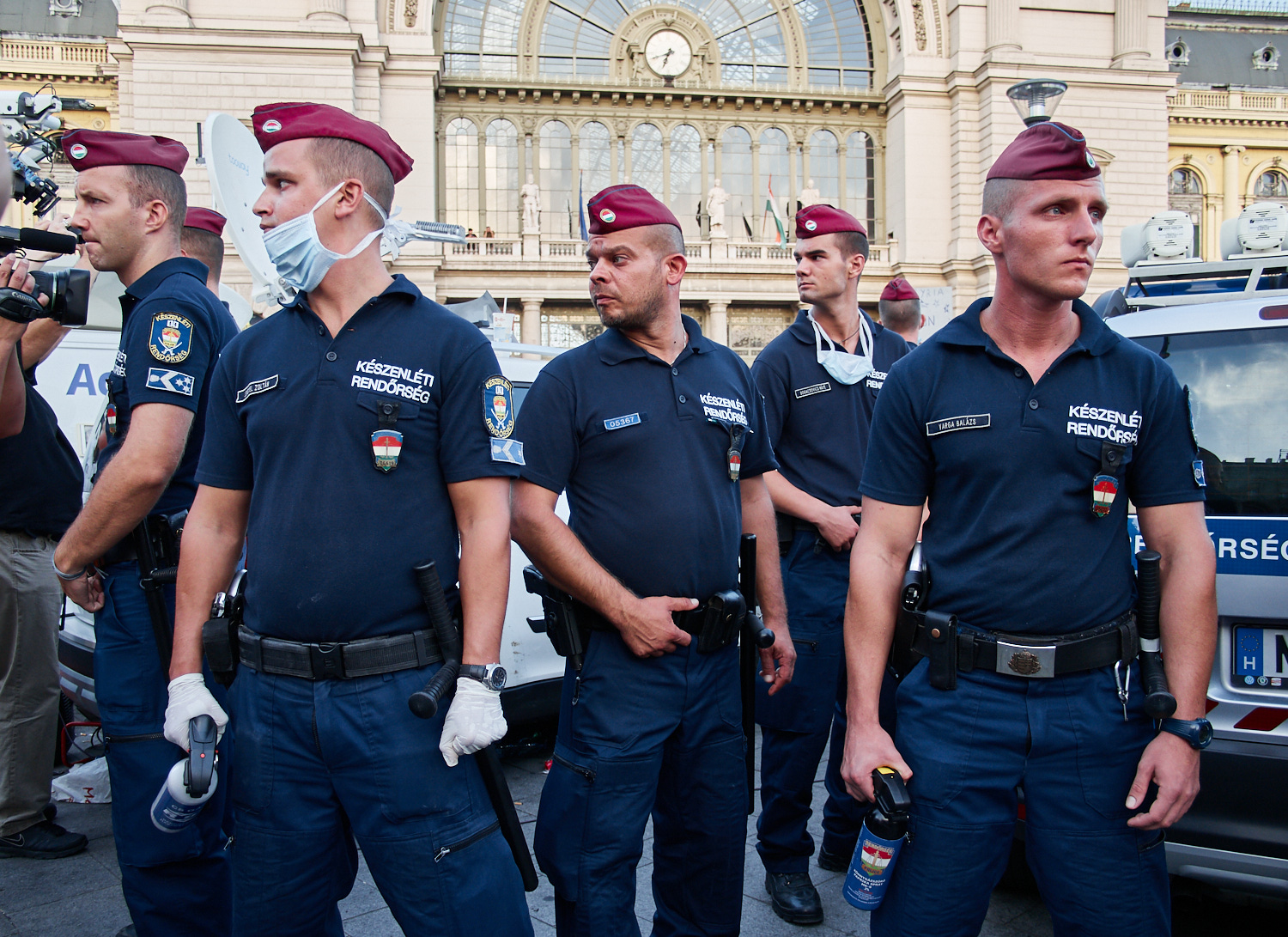
Budapest, Keleti Railway Station, early September 2015: Hungarian police officers at Keleti railway station.
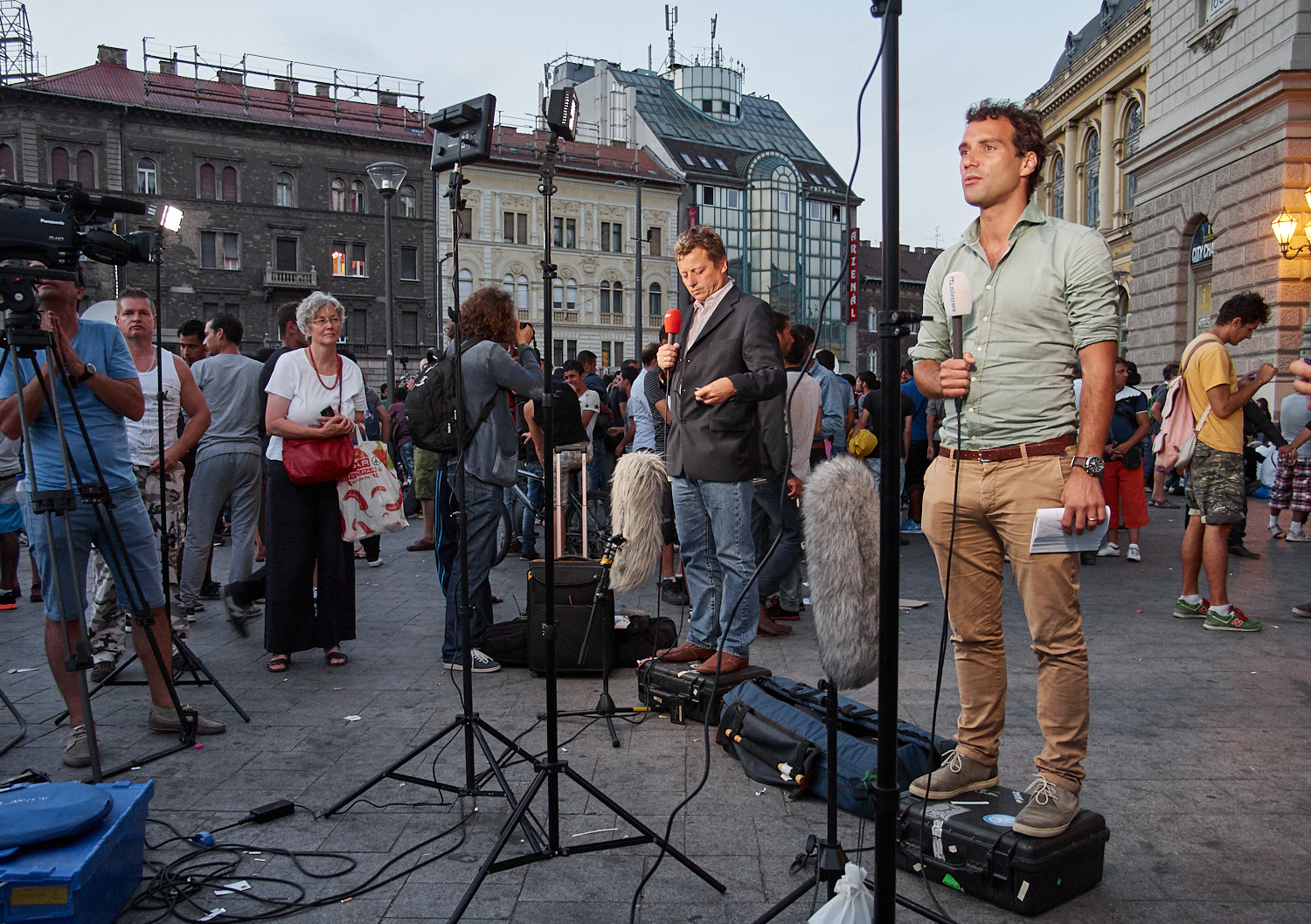
Budapest, Keleti Railway Station, early September 2015: Media interest during the 2015 refugee crisis was enormous; numerous television networks reported live from Keleti station for their main news broadcasts.
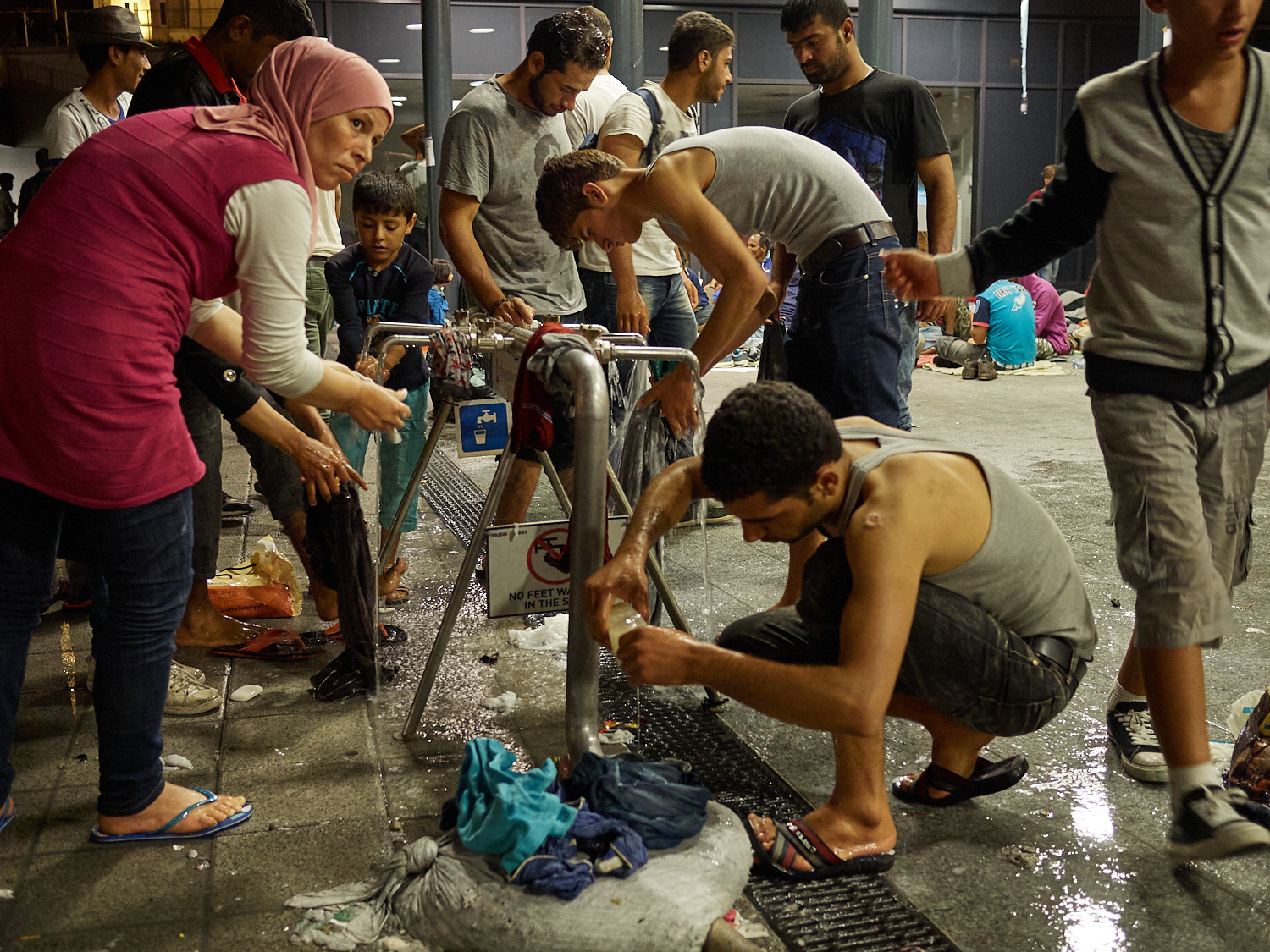
Budapest, Keleti Railway Station, early September 2015: Migrants at makeshift water taps.
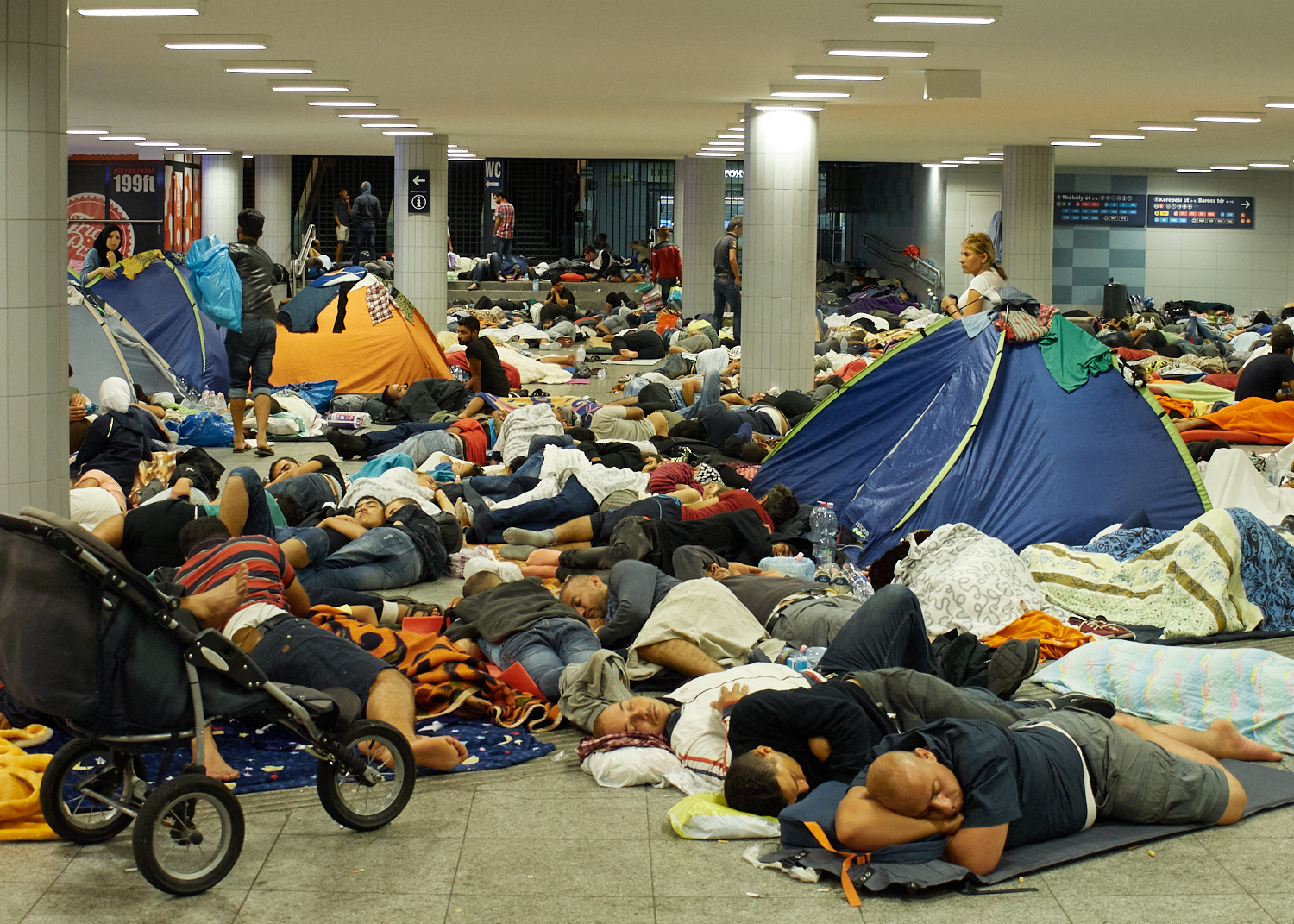
Budapest, Keleti Railway Station, early September 2015: The corridors and halls of the station complex turned into vast sleeping areas at night.
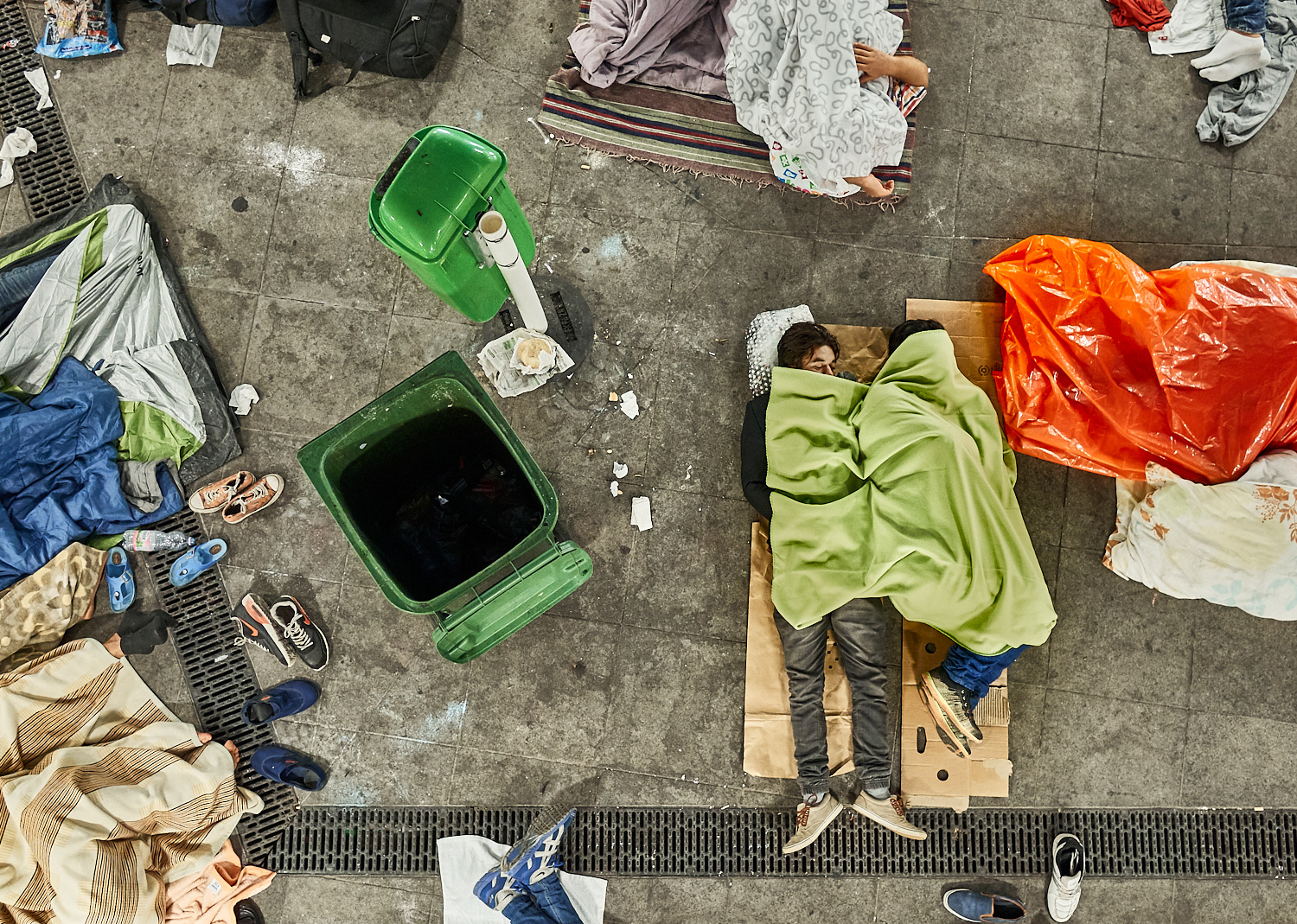
Budapest, Keleti Railway Station, early September 2015: The corridors and halls of the station complex turned into vast sleeping areas at night.
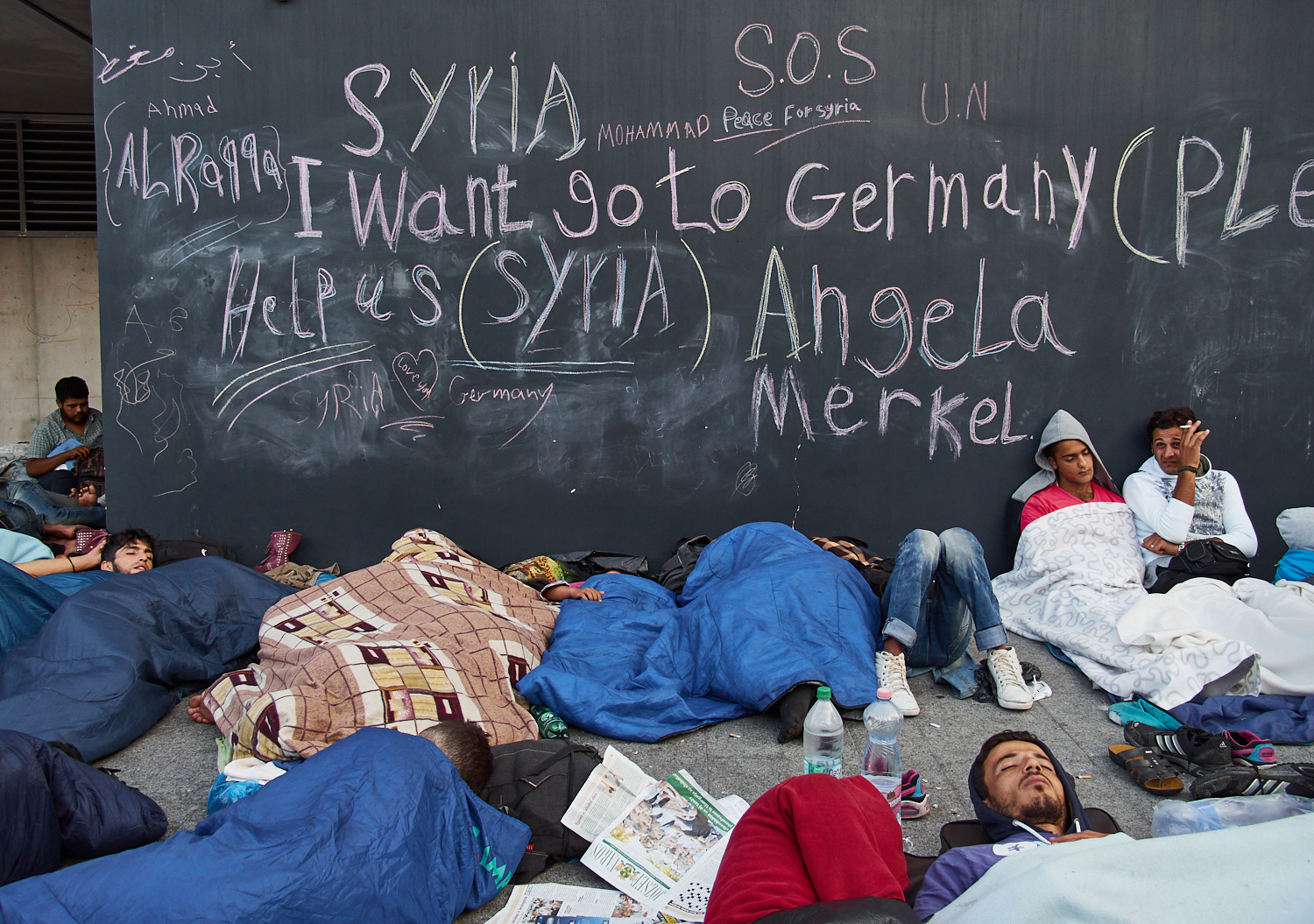
Budapest, Keleti Railway Station, early September 2015: Graffiti symbolize the life stories and hopes of migrants.
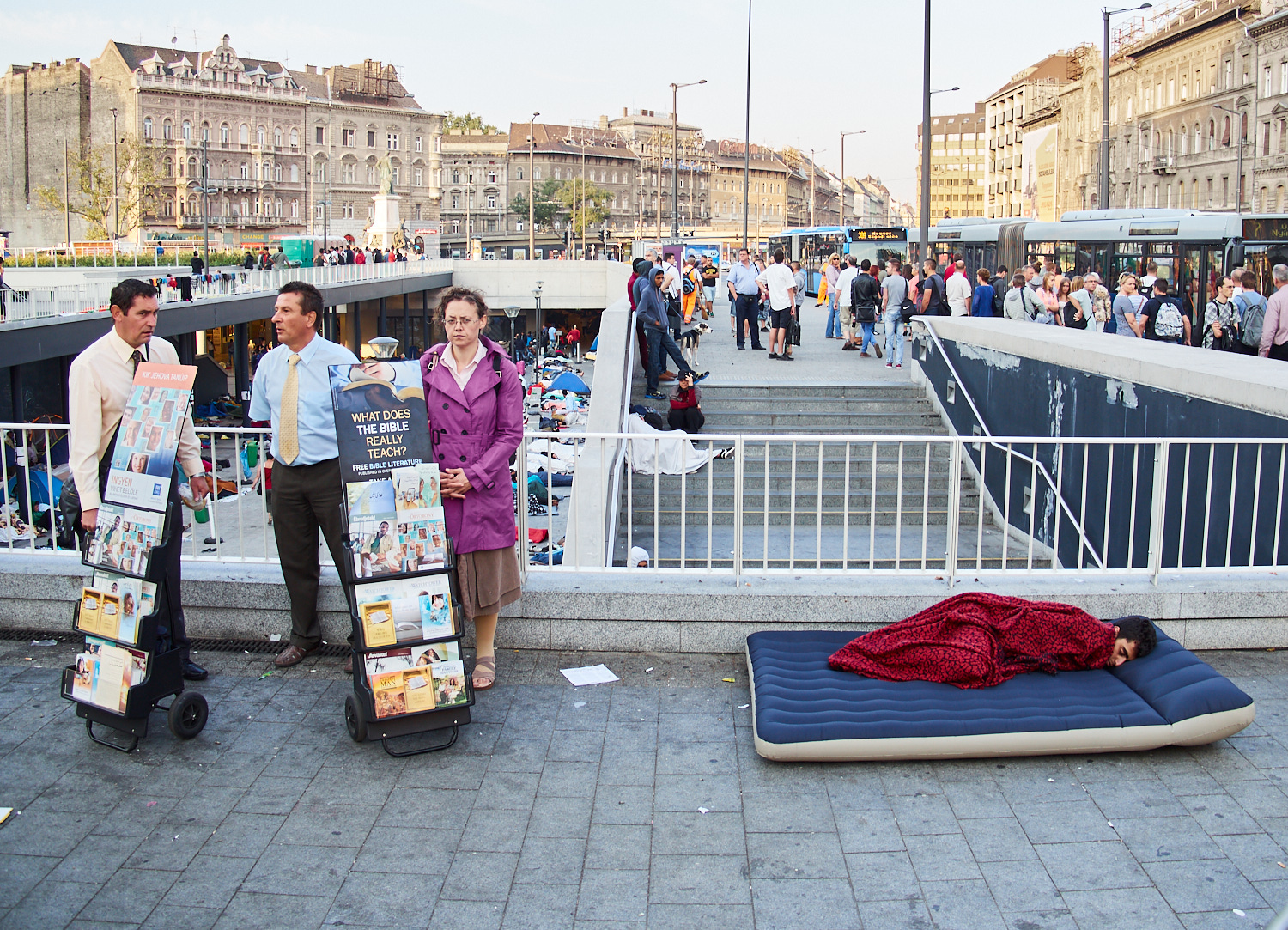
Budapest, Keleti Railway Station, early September 2015
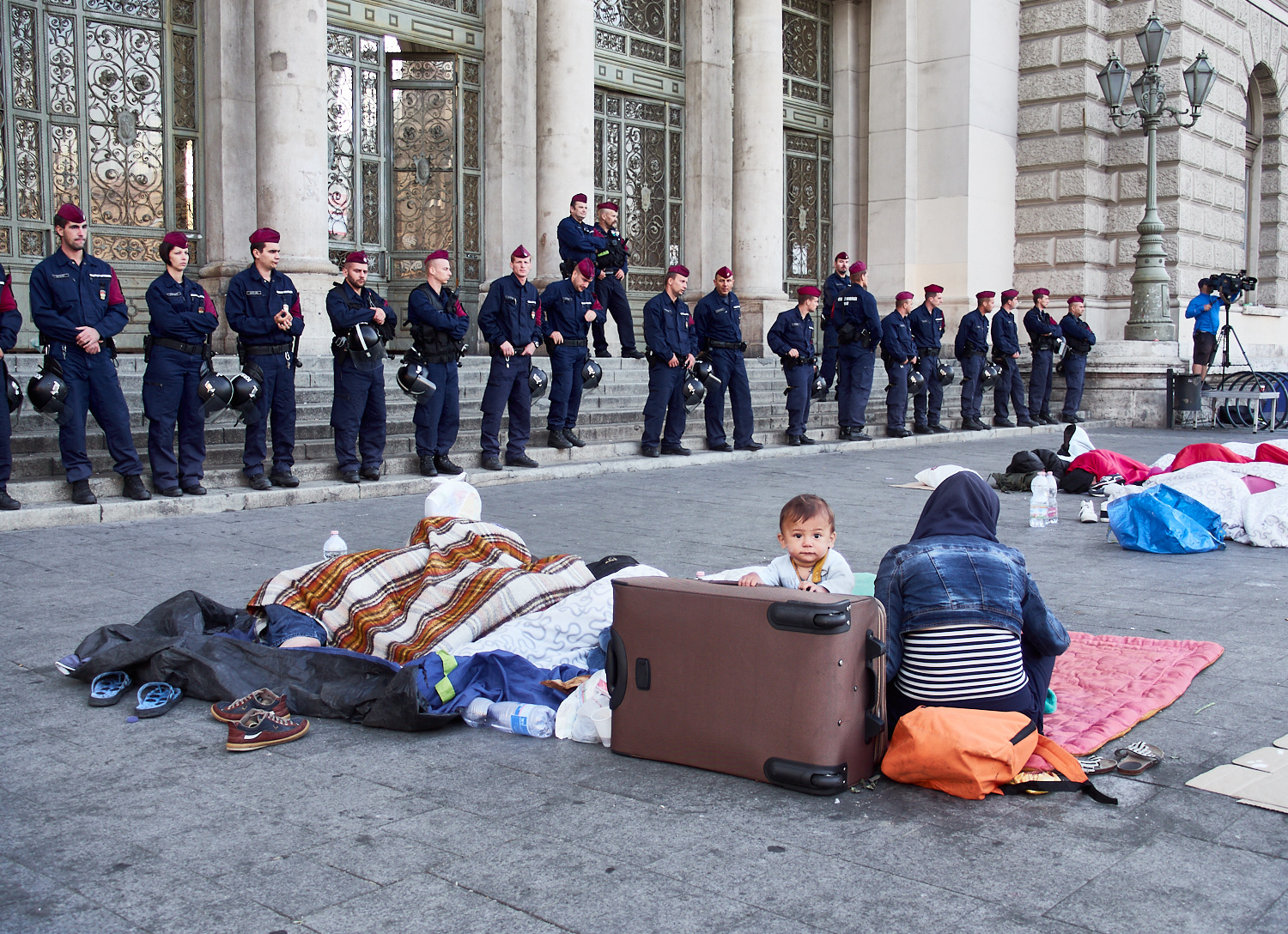
Budapest, Keleti Railway Station, early September 2015
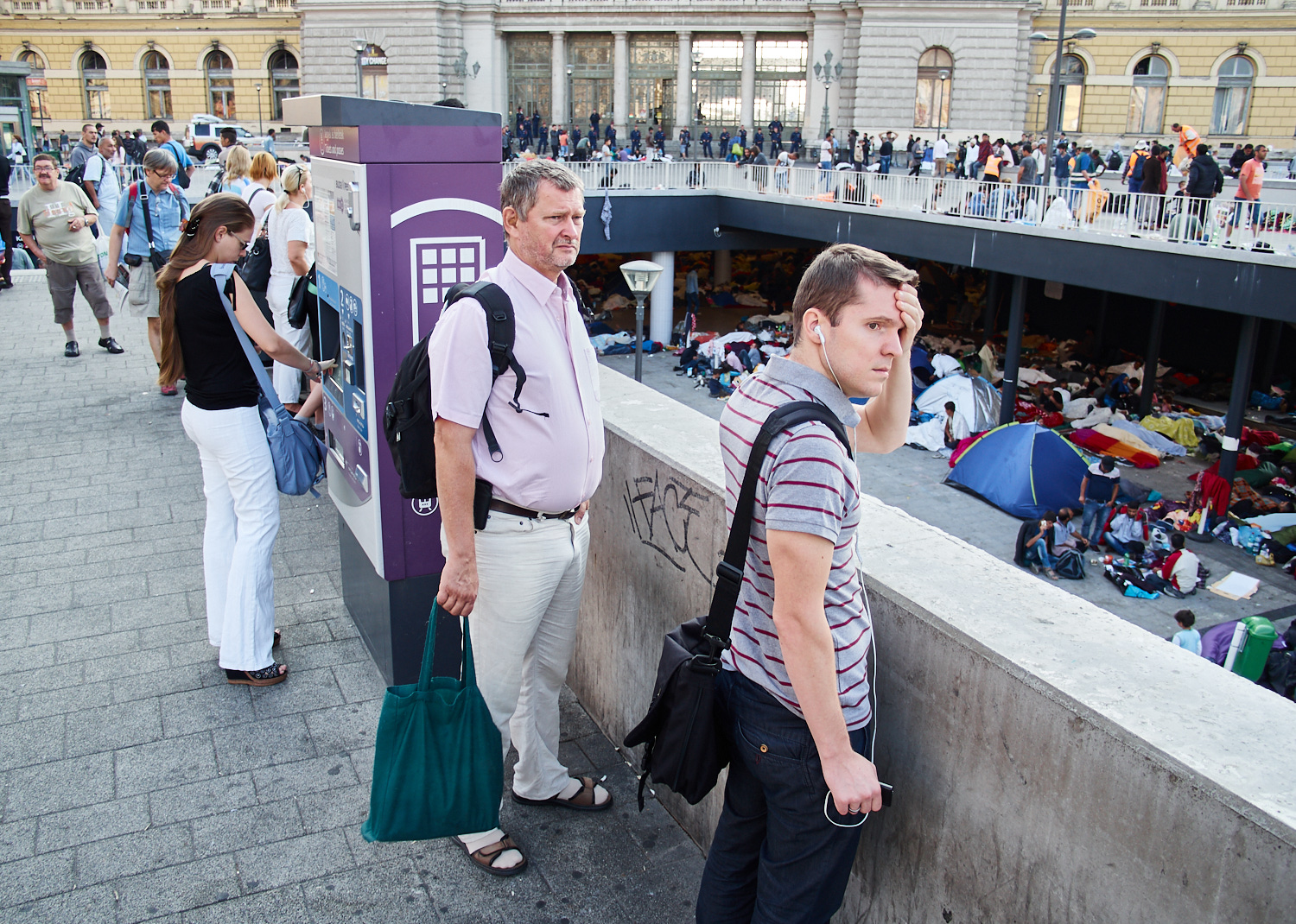
Budapest, Keleti Railway Station, early September 2015: Passers-by observe the conditions at the station early in the morning on their way to work.
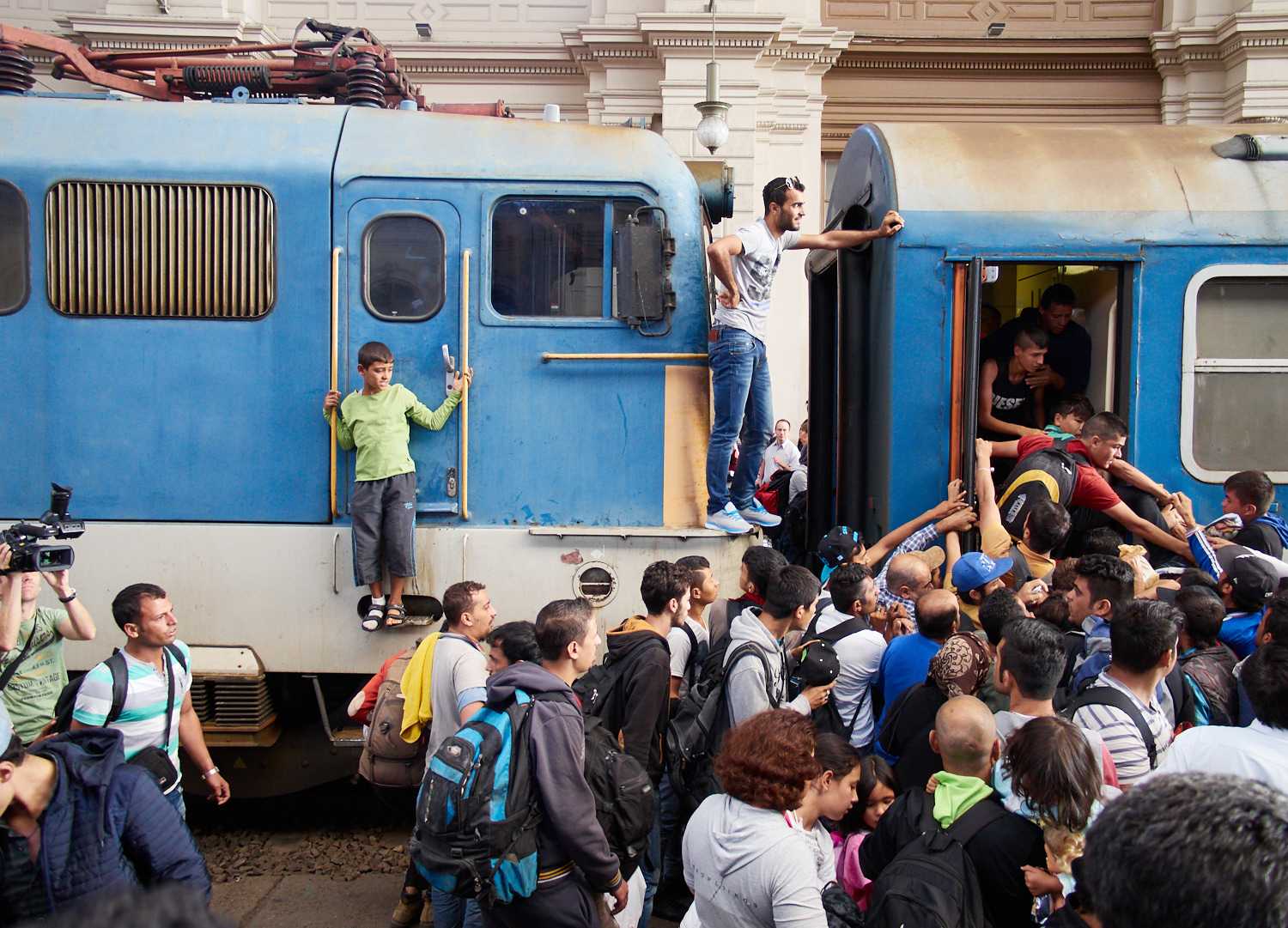
Budapest, Keleti Railway Station, early September 2015: n the hope of reaching Western Europe, migrants attempt to board an overcrowded train.
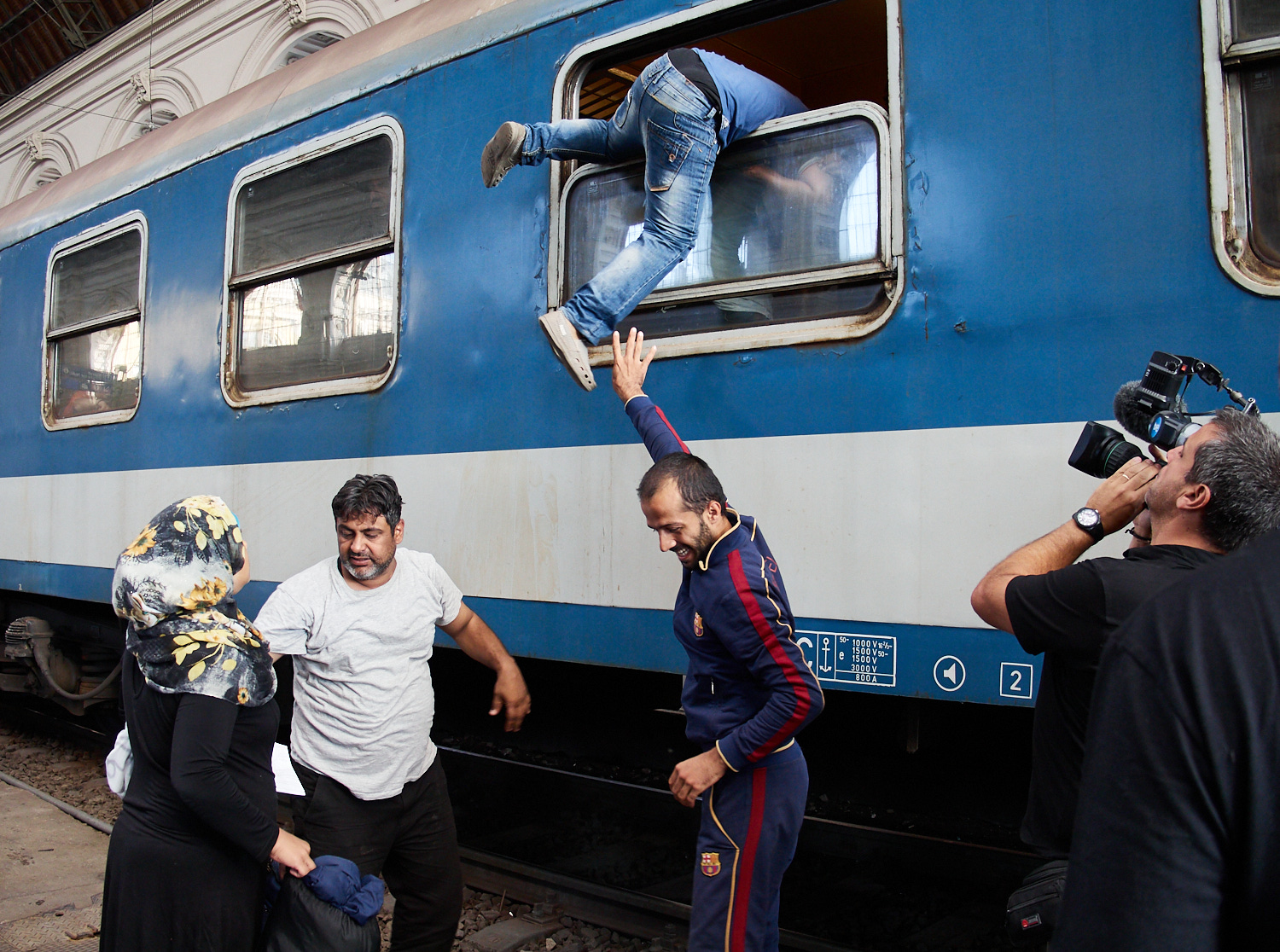
Budapest, Keleti Railway Station, early September 2015: In the hope of reaching Western Europe, migrants attempt to board an overcrowded train.
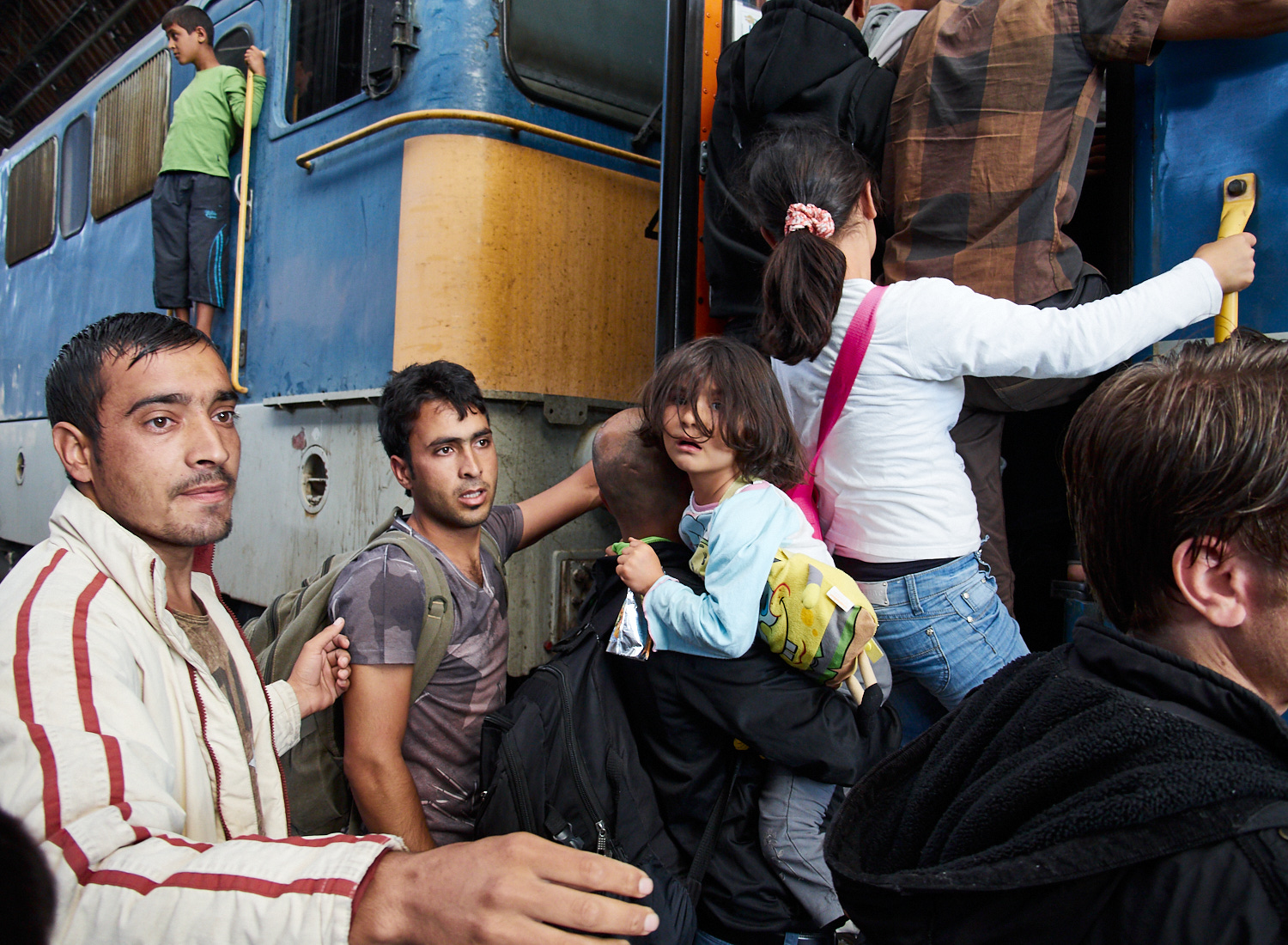
BBudapest, Keleti Railway Station, early September 2015: In the hope of reaching Western Europe, migrants attempt to board an overcrowded train.
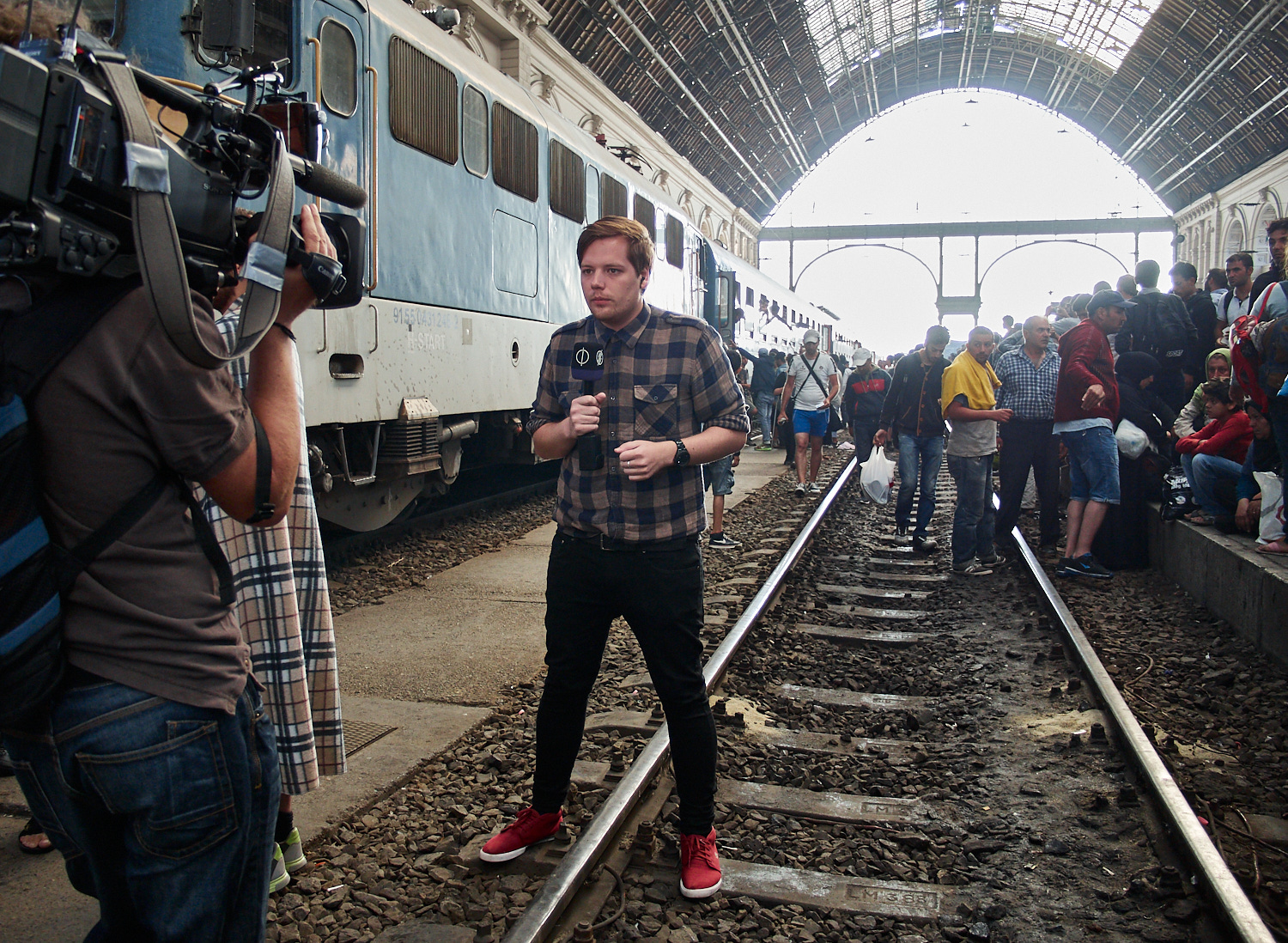
Budapest, Keleti Railway Station, early September 2015: A camera crew reports from inside the station building.
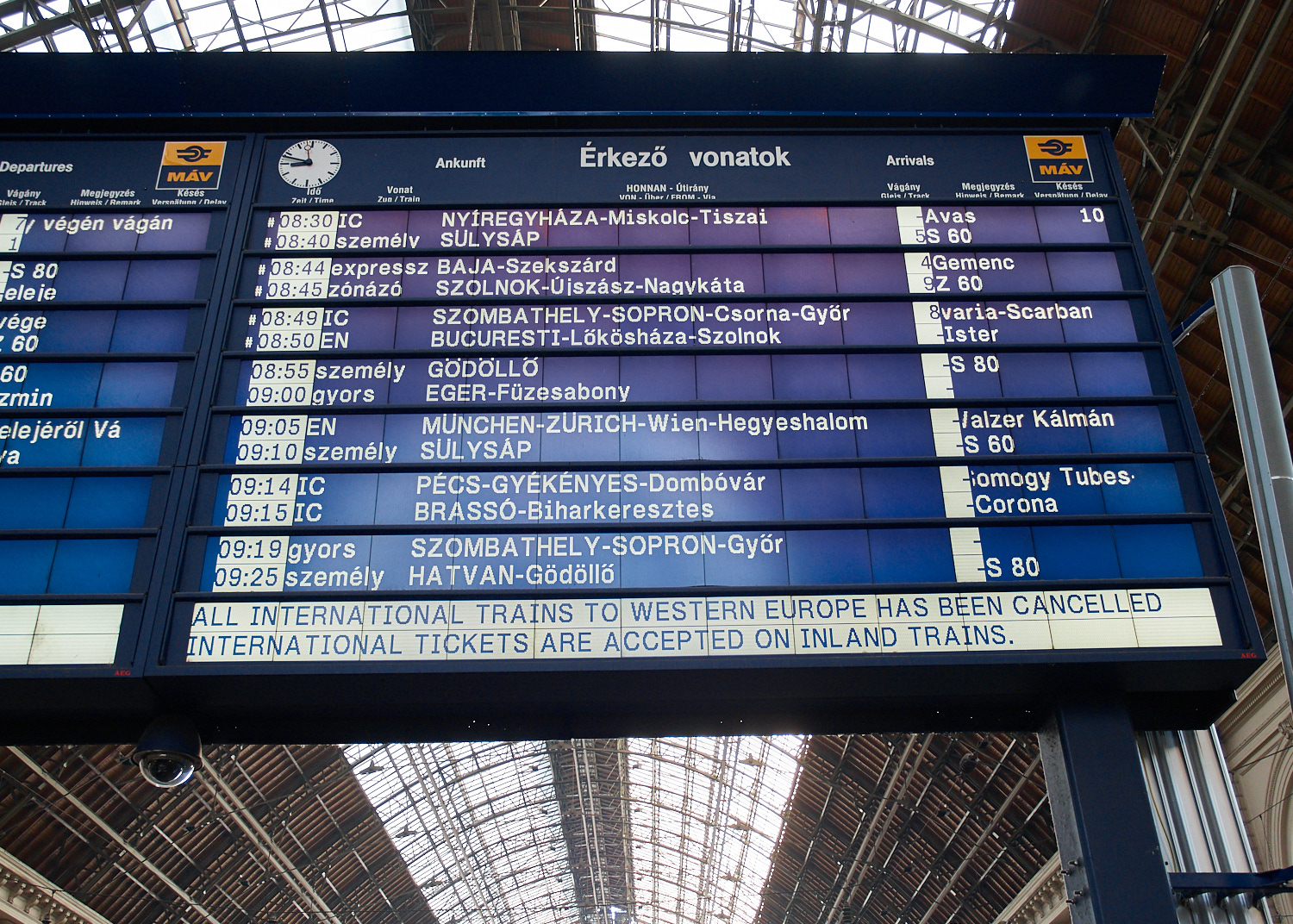
Budapest, Keleti Railway Station, early September 2015: The high number of migrants brought numerous public transport systems to the limits of their capacity in late summer and autumn 2015. In Budapest, all international train connections to Western Europe were suspended on September 1. However, this measure was primarily political, as Hungarian Prime Minister Orbán aimed to signal a tough stance on migration.
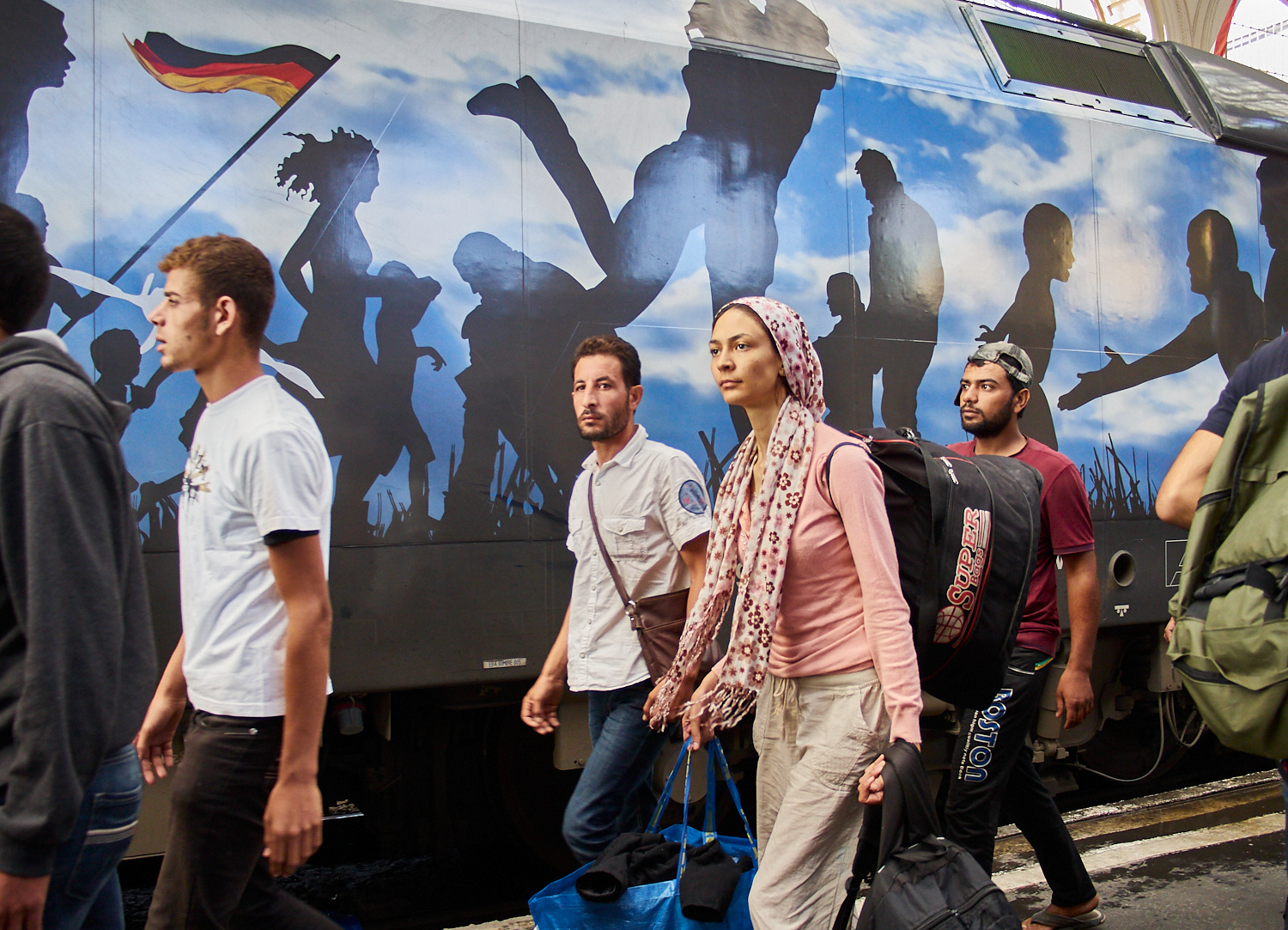
Budapest, Keleti Railway Station, early September 2015: Migrants pass a locomotive whose design recalls the events before and around the fall of the Berlin Wall in 1989. The train, featuring the motif “25 Years of the Pan-European Picnic,” was presented the previous year by Raaberbahn (GYSEV).
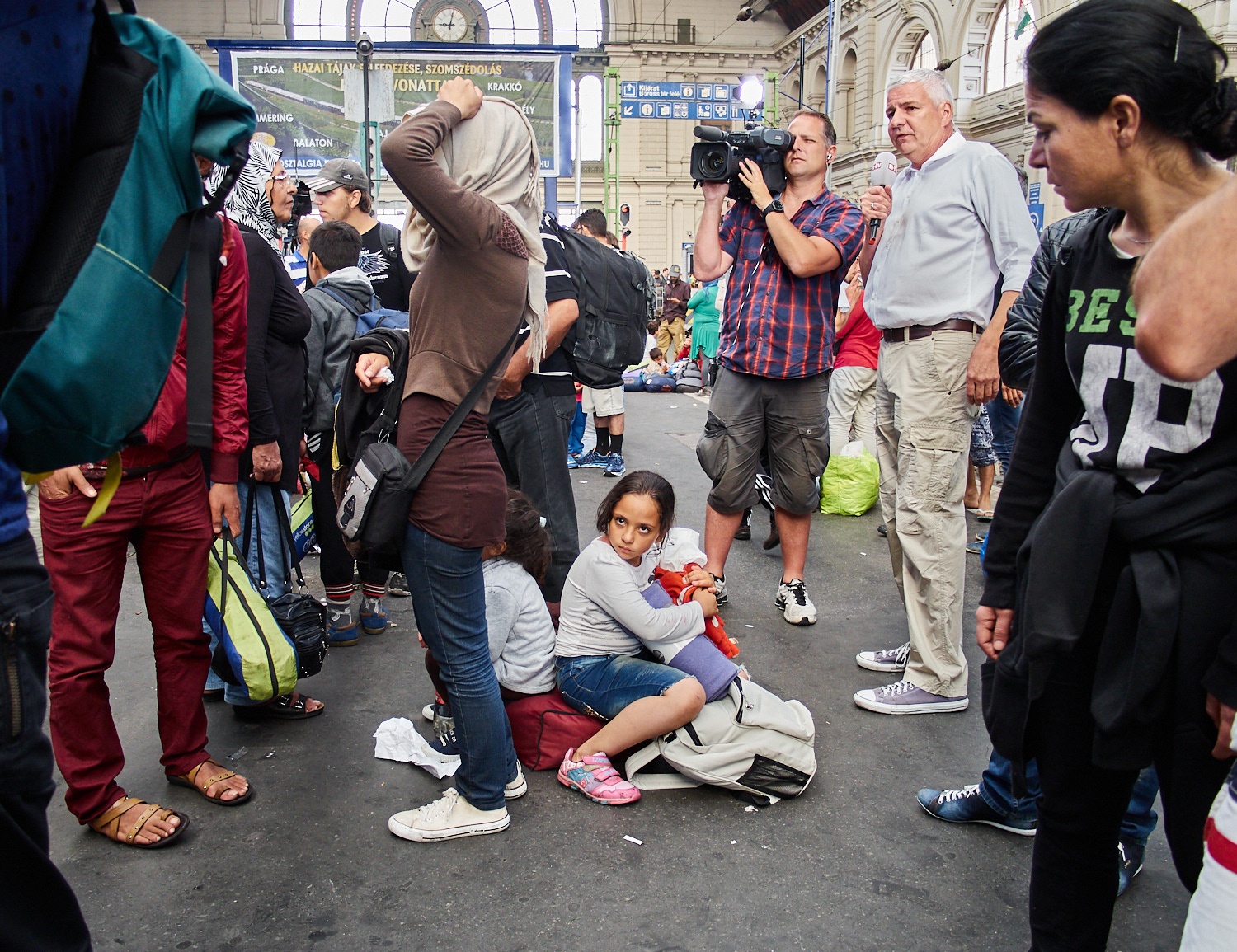
Budapest, Keleti Railway Station, early September 2015: A camera crew reports from inside the station building.
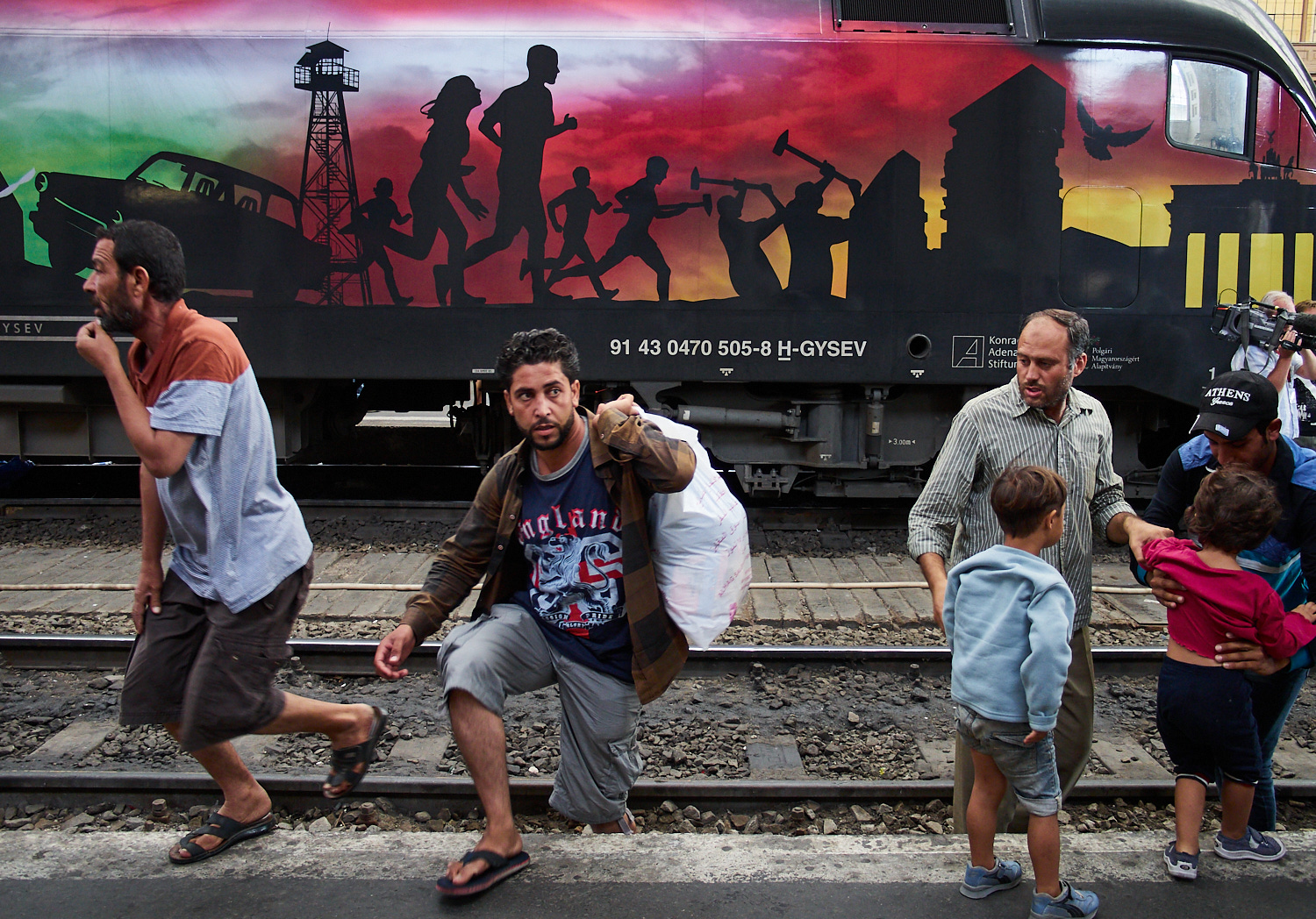
Budapest, Keleti Railway Station, early September 2015: Migrants pass a locomotive whose design recalls the events before and around the fall of the Berlin Wall in 1989. The train, featuring the motif “25 Years of the Pan-European Picnic,” was presented the previous year by Raaberbahn (GYSEV).
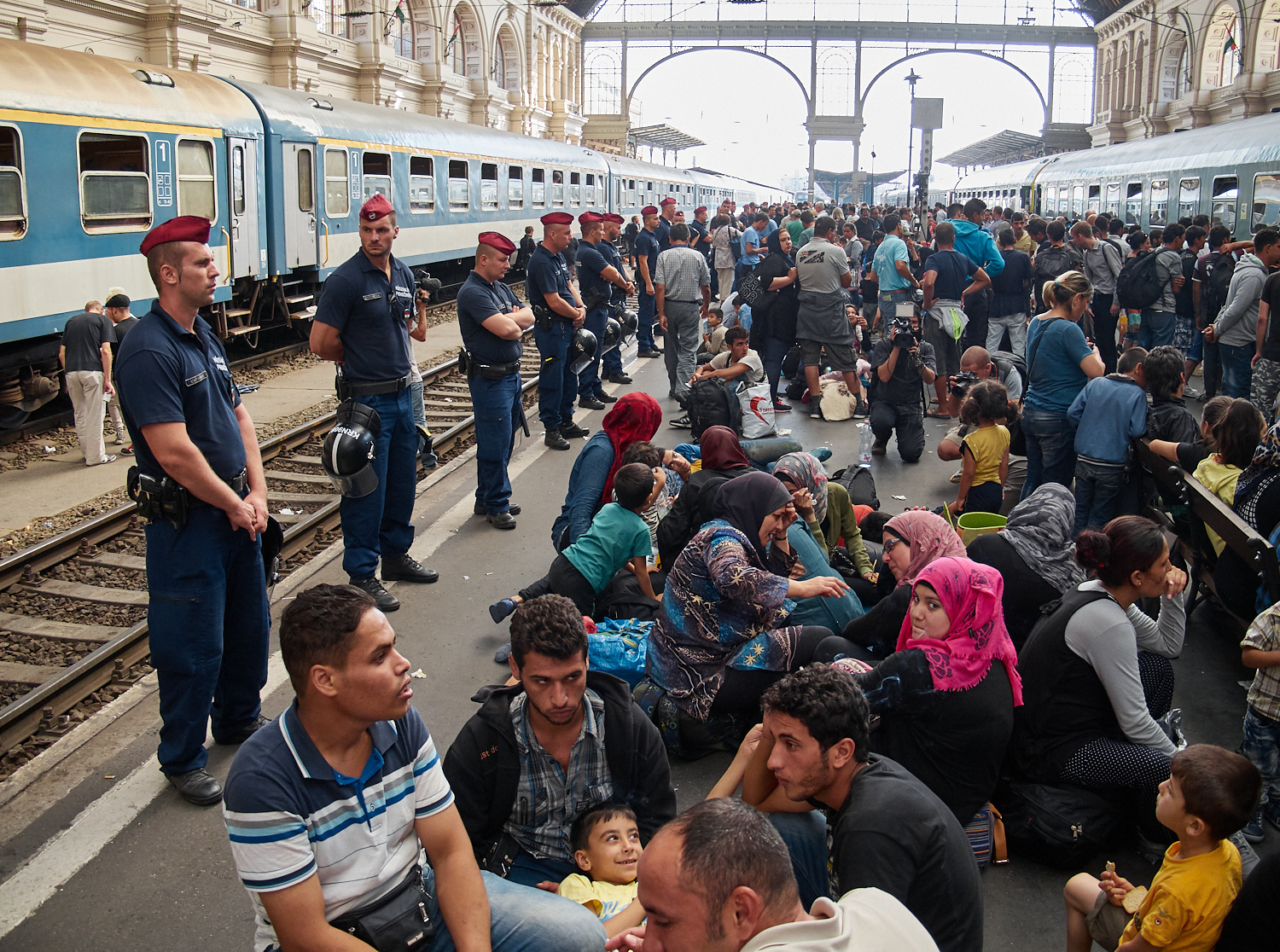
Budapest, Keleti Railway Station, early September 2015: Migrants and police officers inside the station building.
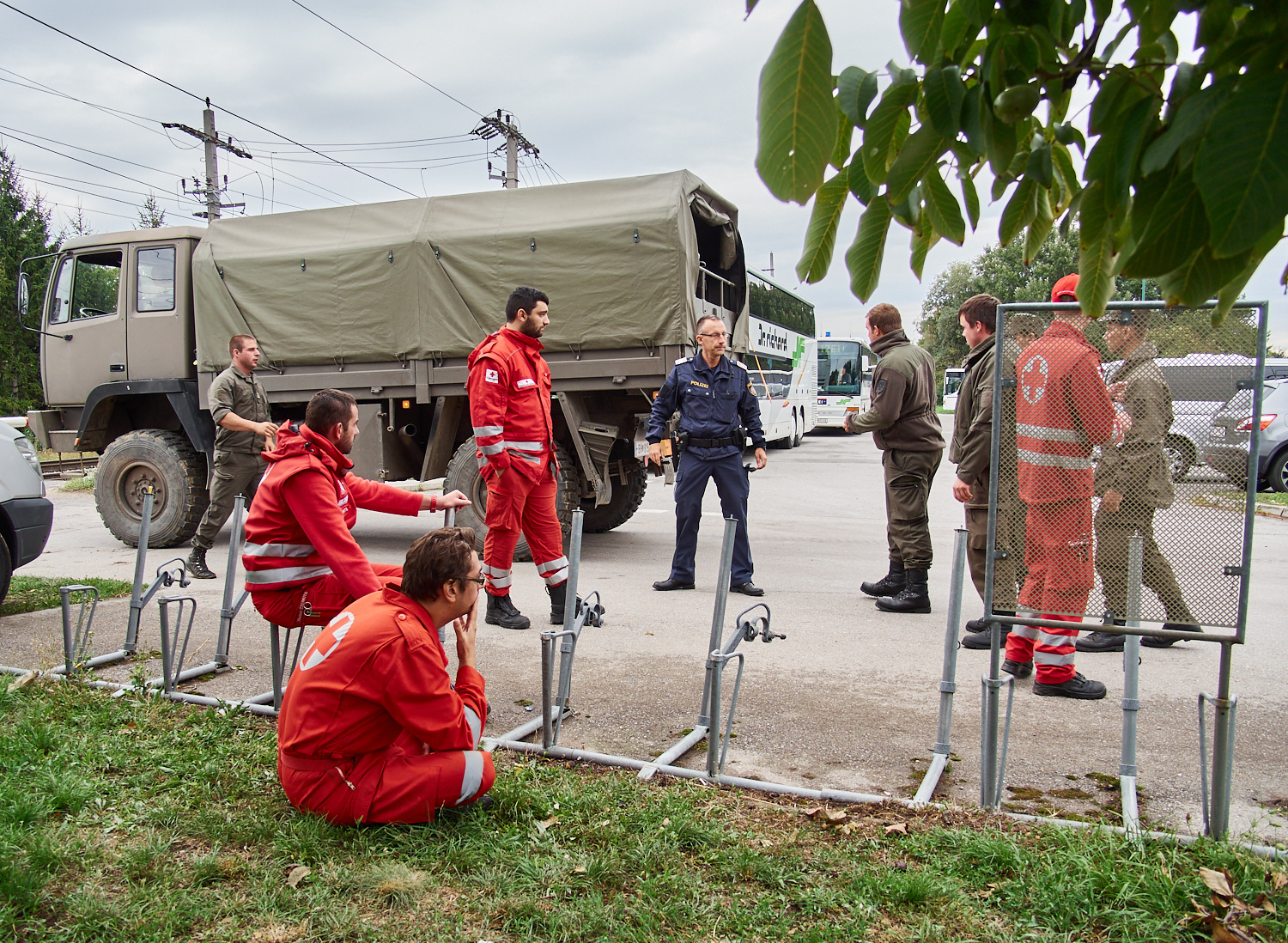
Nickelsdorf, Lower Austria, early September 2015: Rescue services, police, and the Austrian Armed Forces prepare for the arrival of tens of thousands of migrants. After being unable to continue from Budapest, thousands of migrants set out on foot toward the West. The resulting traffic chaos on roads and highways heading west prompted Hungarian Prime Minister Orbán to transport all migrants by bus to the Austrian border at Nickelsdorf, where thousands arrived on September 5.
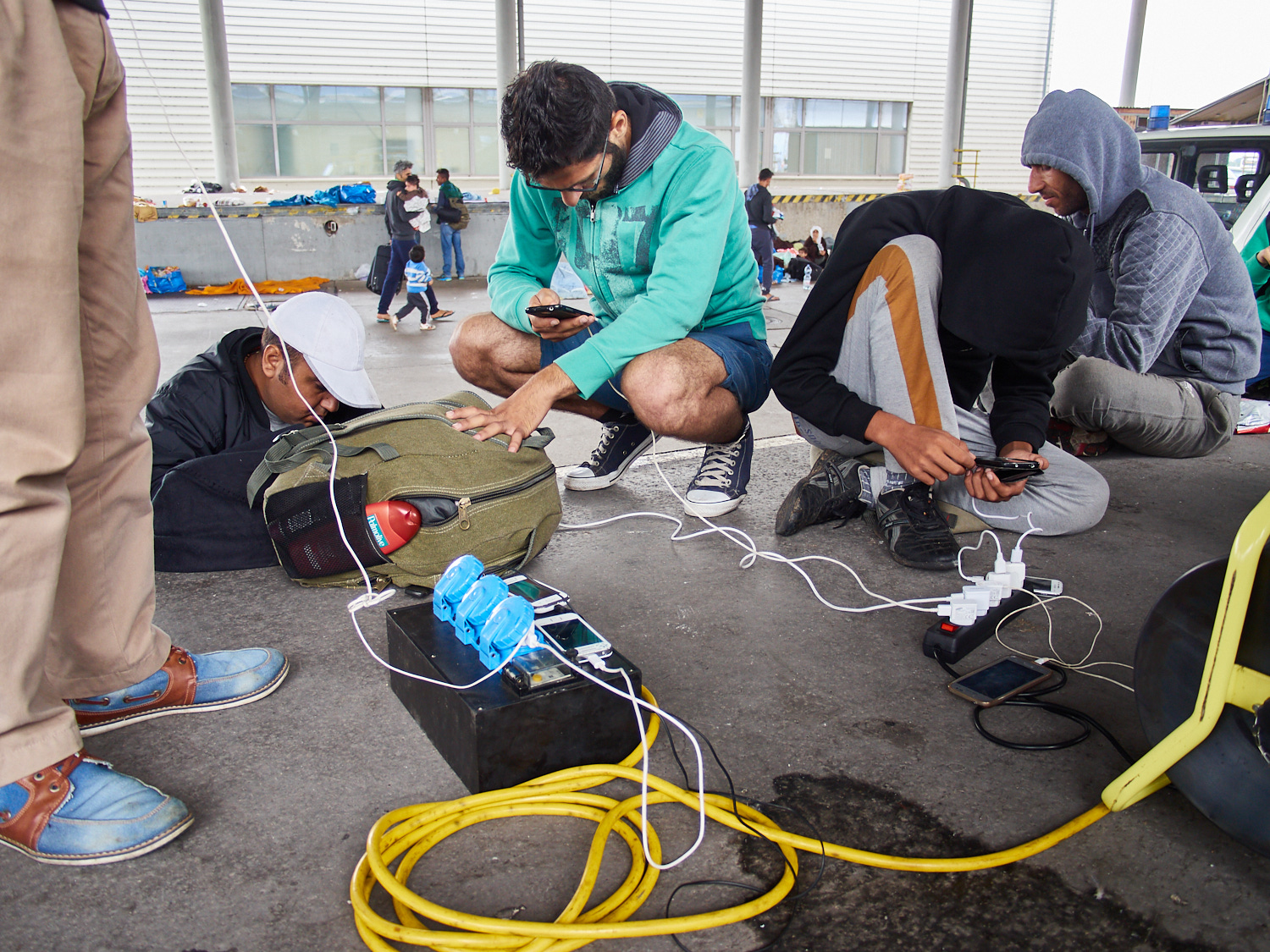
Nickelsdorf border crossing, Lower Austria, early September 2015: Charging stations for mobile phones.
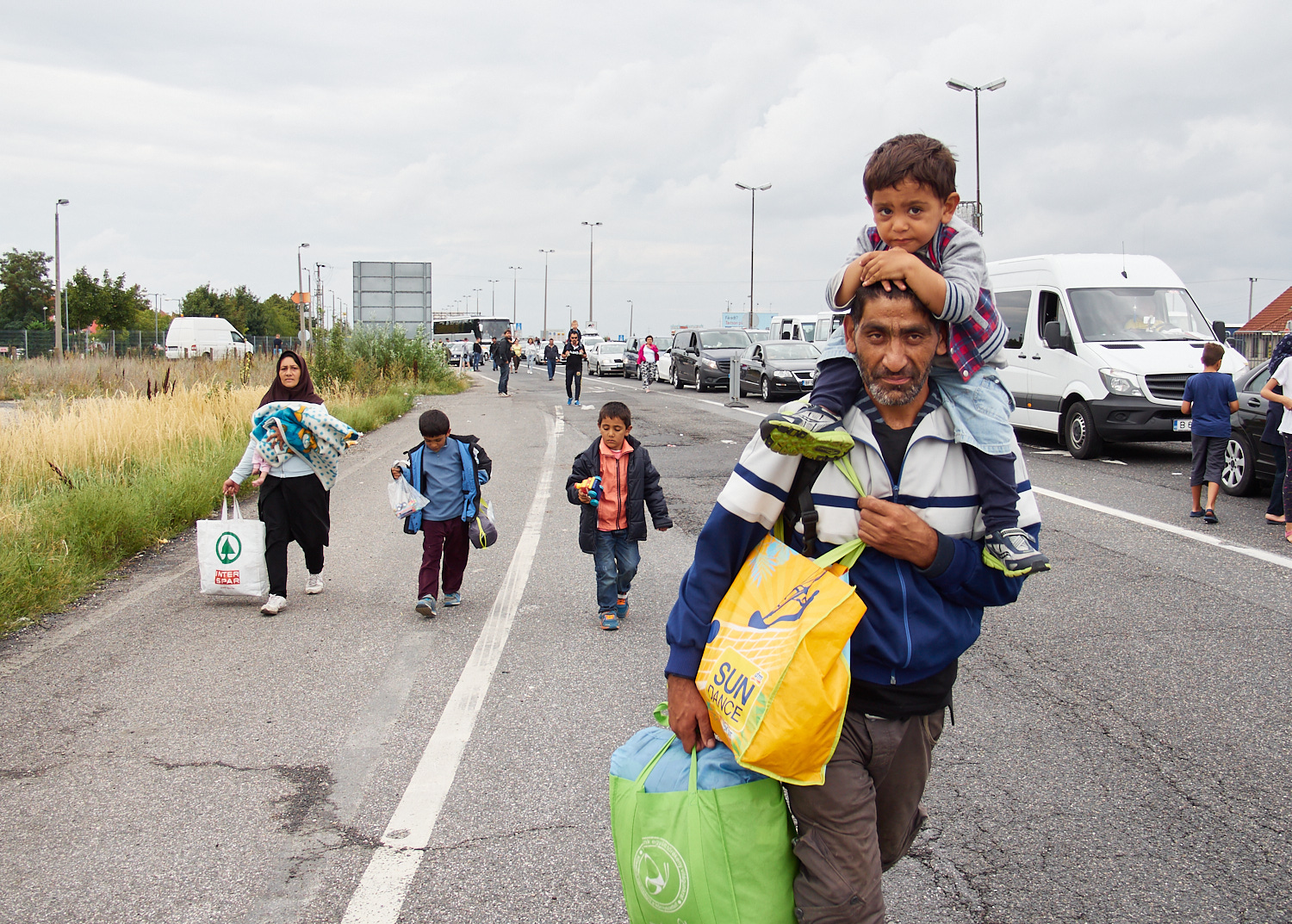
Hungary, border with Austria near Nickelsdorf, early September 2015: After being transported by bus from Budapest to the border area, migrants walk the final kilometers along the highway into Austria.
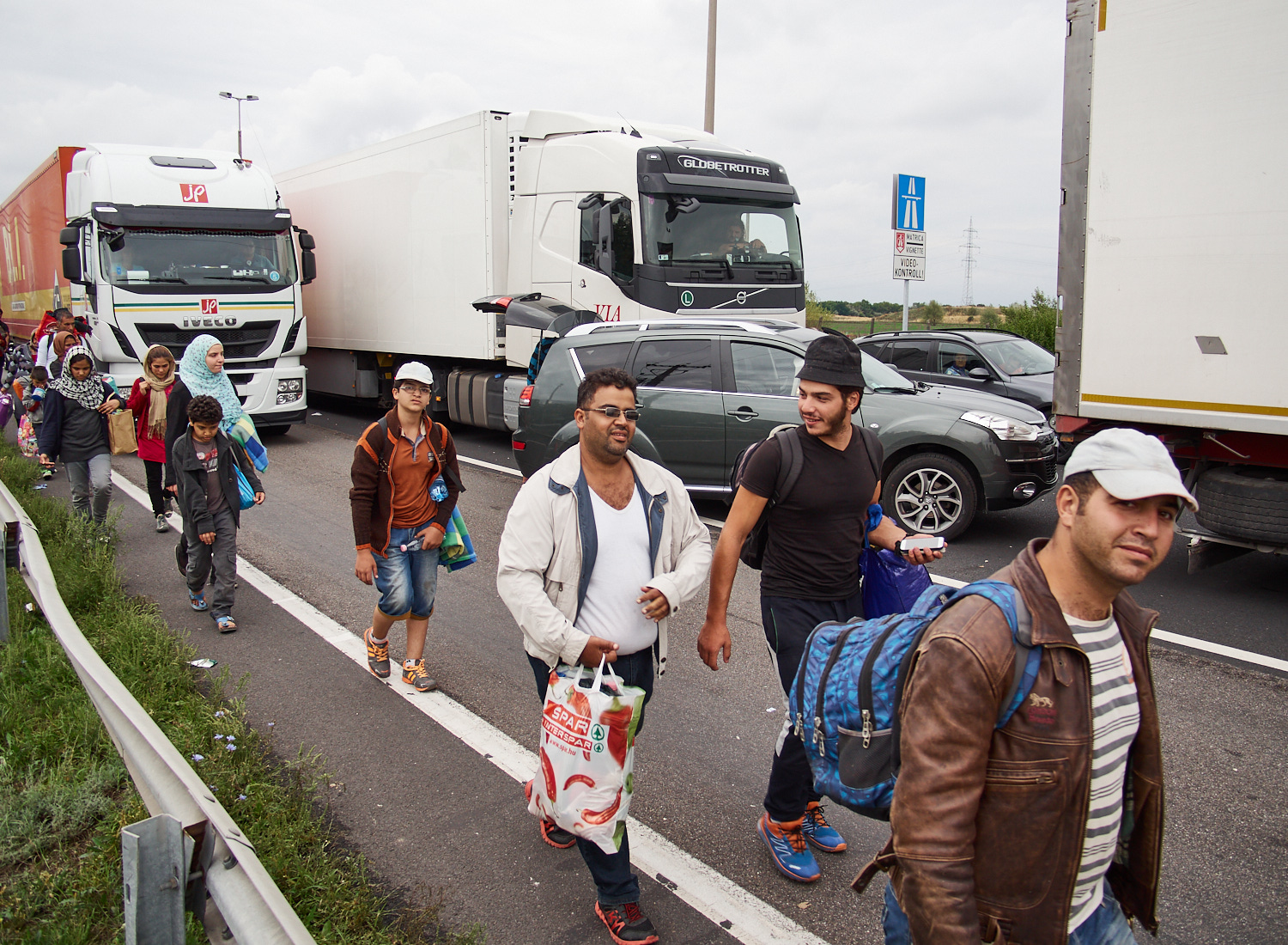
Hungary, border with Austria near Nickelsdorf, early September 2015: After being transported by bus from Budapest to the border area, migrants walk the final kilometers along the highway into Austria.
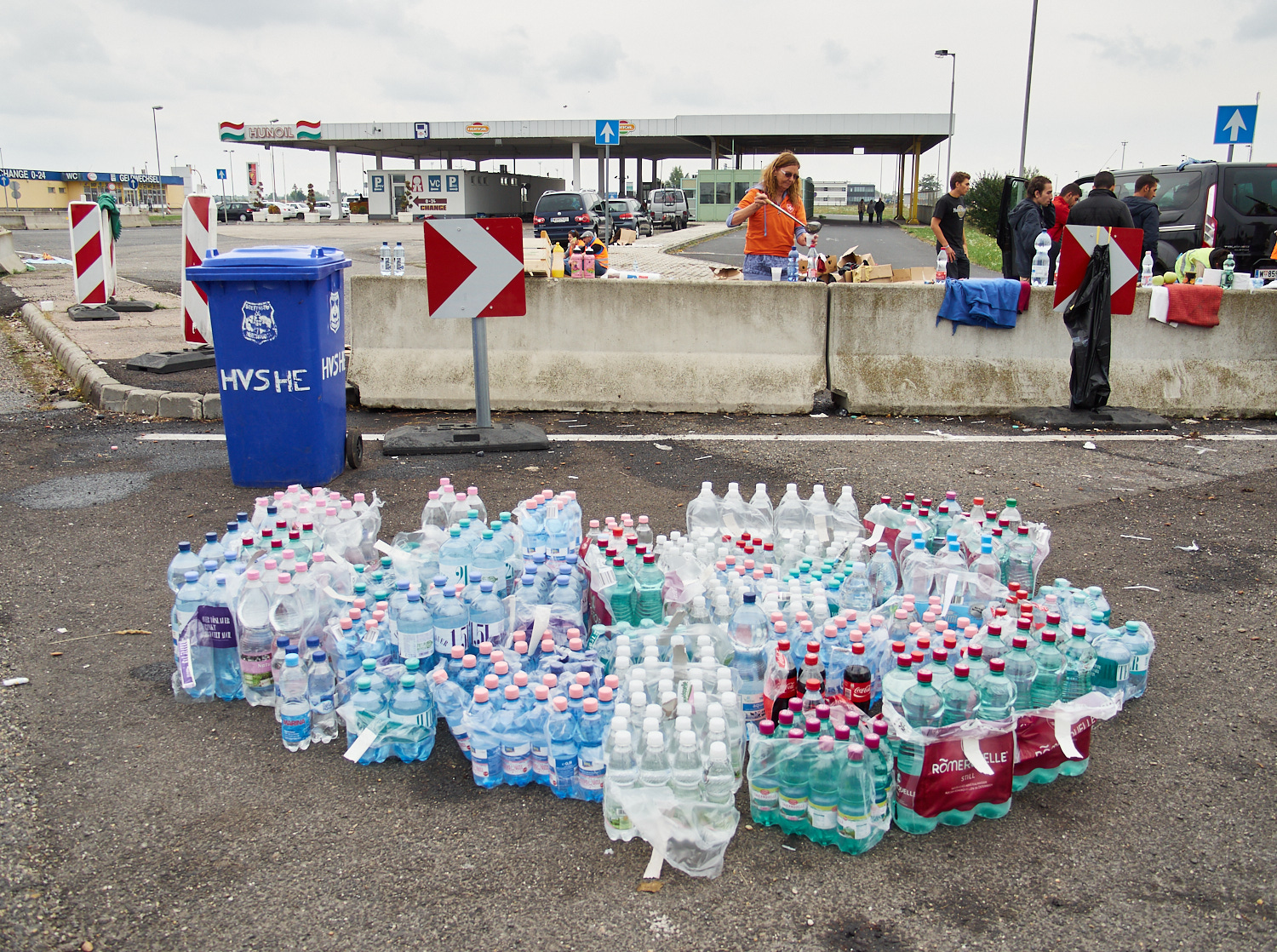
Hungary, border with Austria near Nickelsdorf, early September 2015: A makeshift supply station with drinks and food.
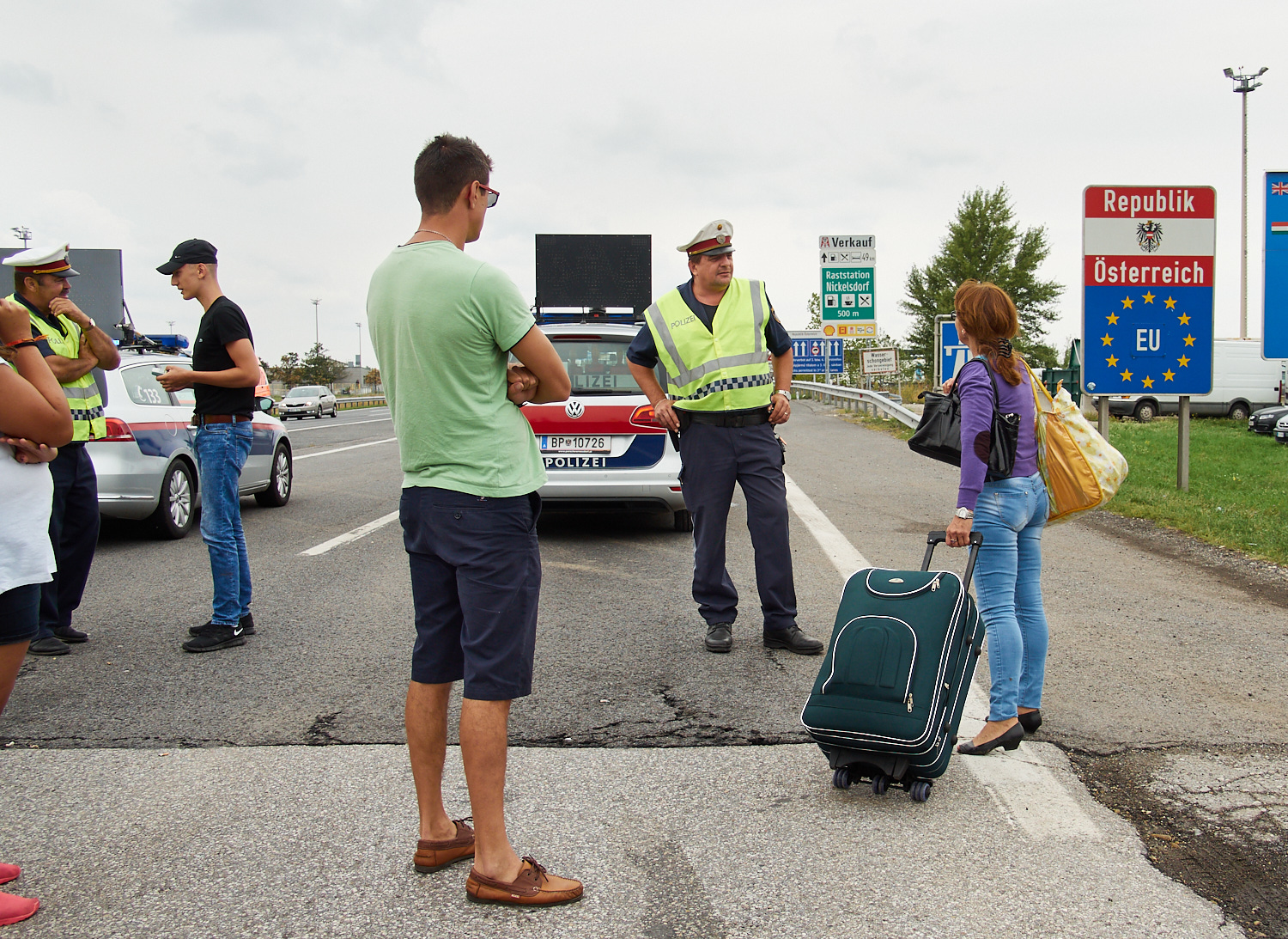
A4 Motorway at the Hungary–Austria border near Nickelsdorf, early September 2015: To prevent traffic accidents involving the thousands of migrants walking on the motorway, the Austrian police closed the A4 at the border. As a result, a traffic jam several dozen kilometers long formed on the Hungarian side of the border.
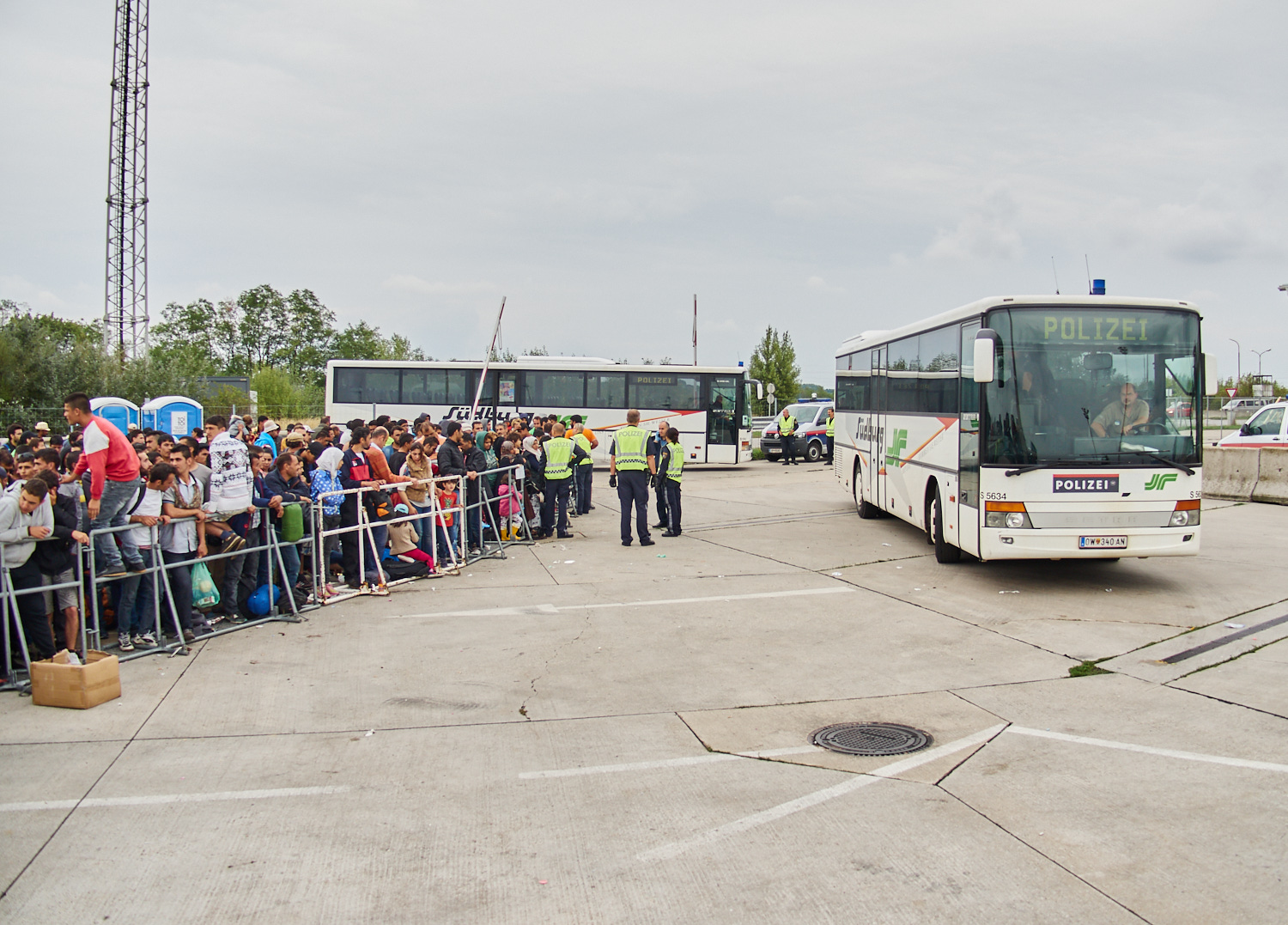
Nickelsdorf border crossing, Lower Austria, early September 2015: Migrants wait for onward transport by bus.
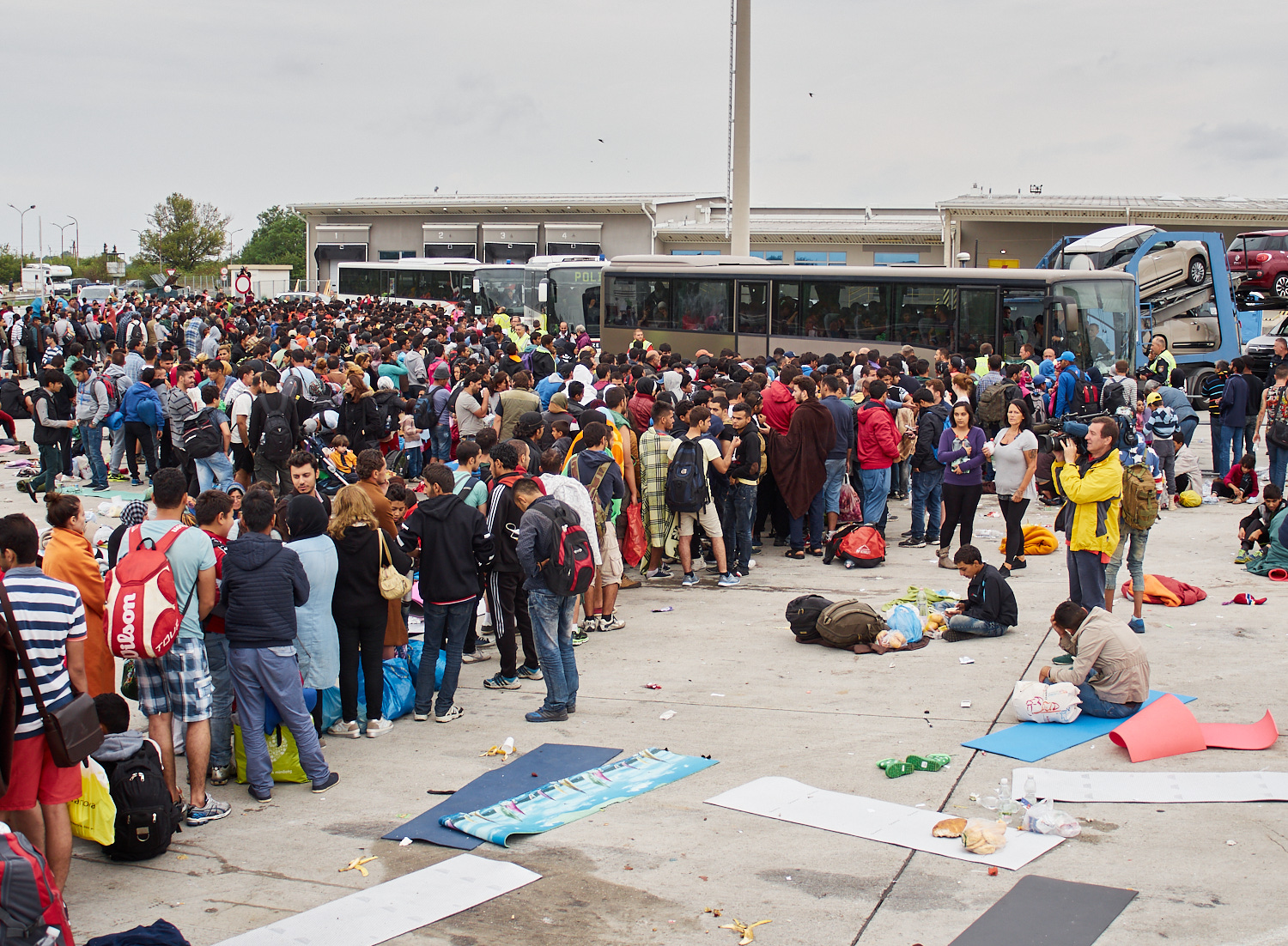
Nickelsdorf border crossing, Lower Austria, early September 2015: Migrants wait for onward transport by bus.
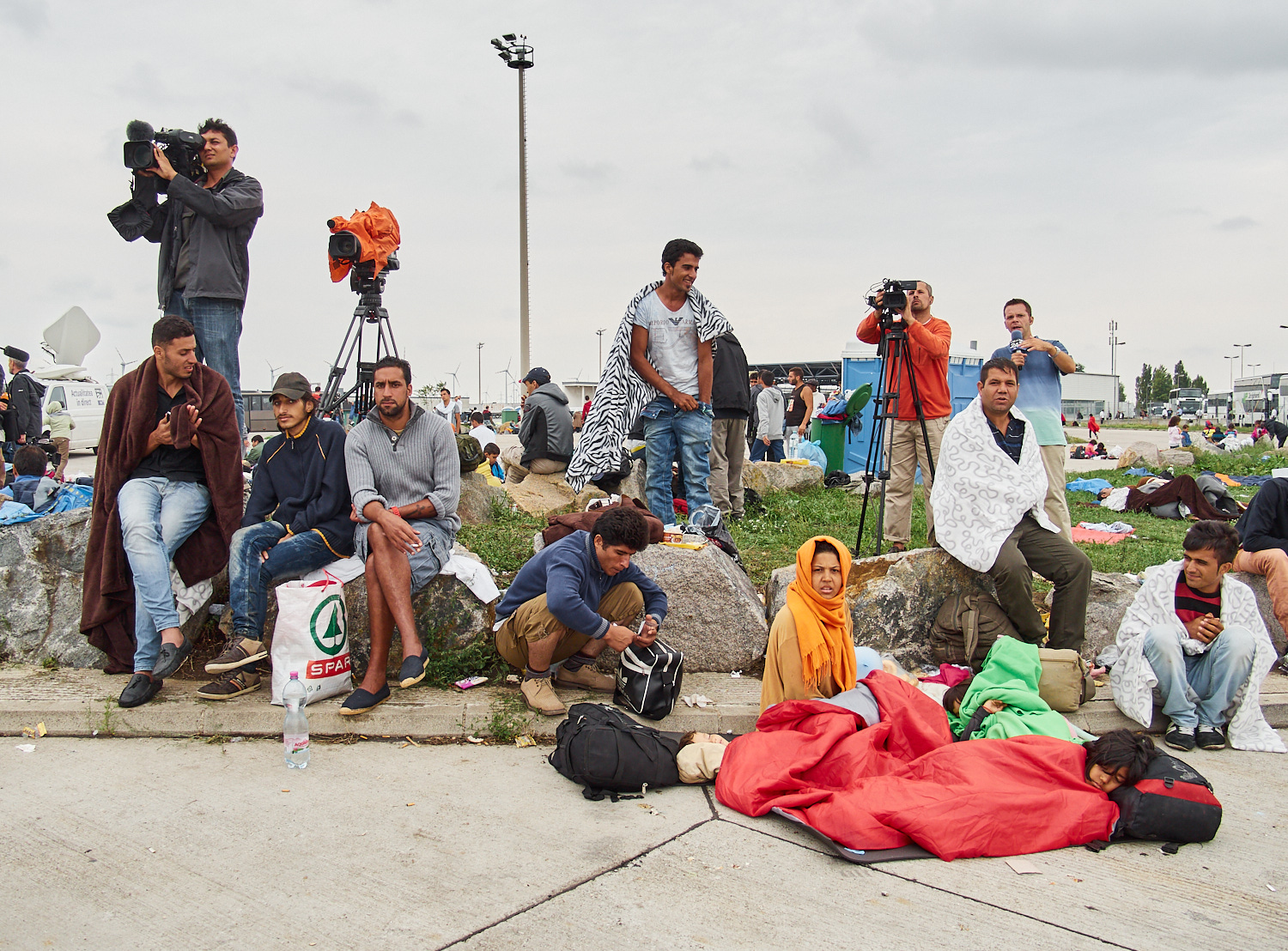
Nickelsdorf border crossing, Lower Austria, early September 2015: Media interest was also high in Nickelsdorf.
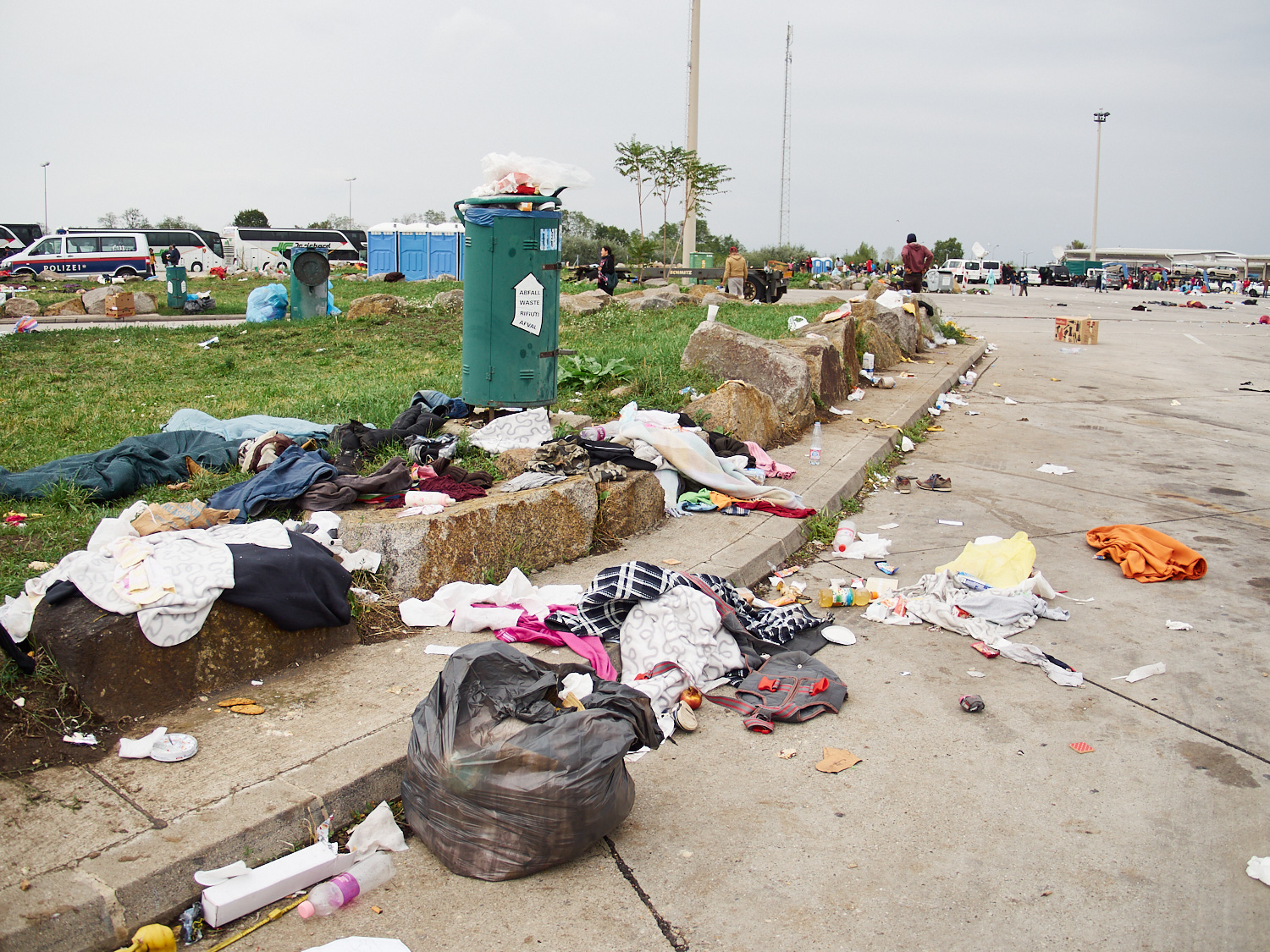
Nickelsdorf border crossing, Lower Austria, early September 2015.
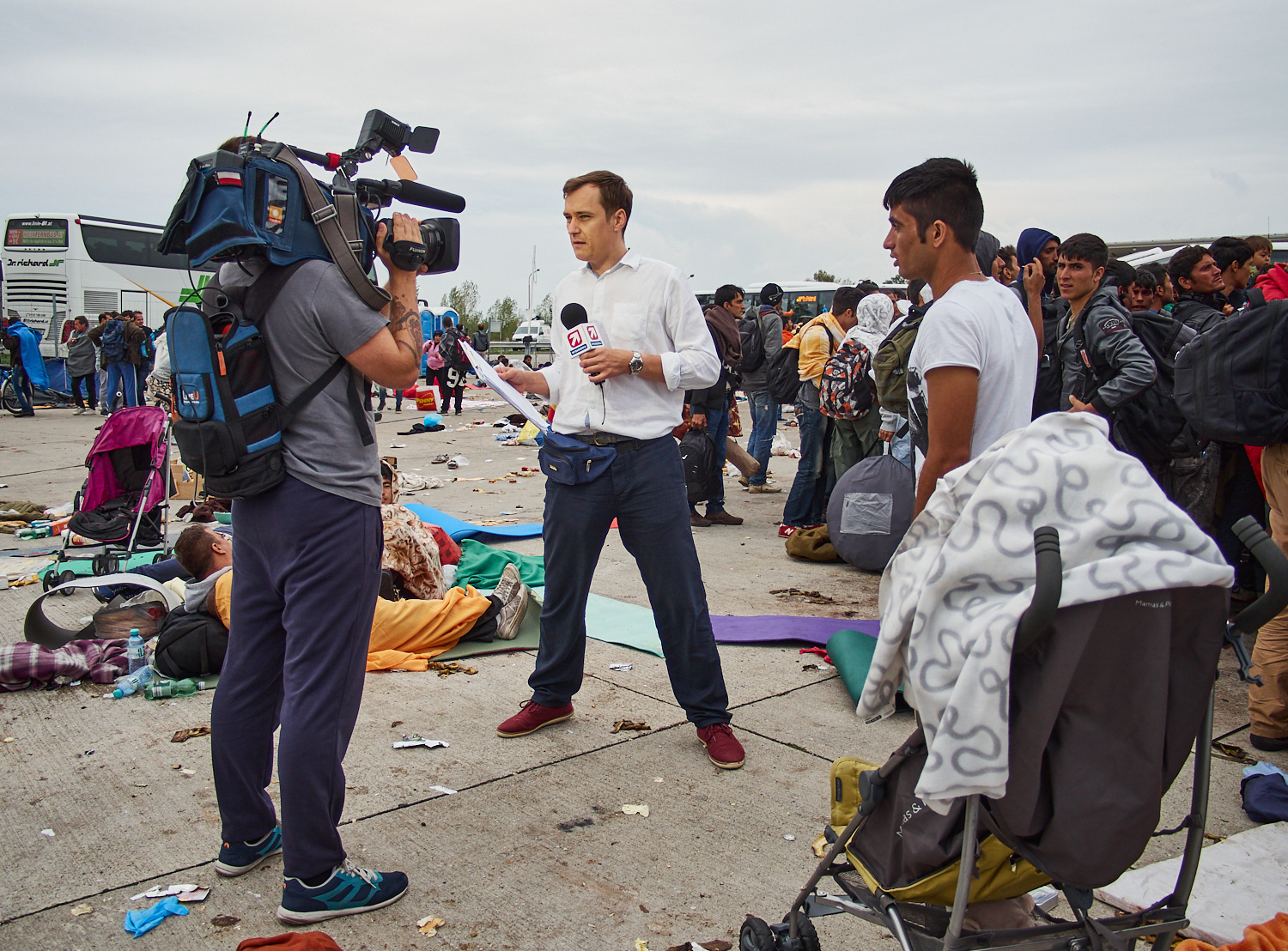
Nickelsdorf border crossing, Lower Austria, early September 2015: Media interest was also high in Nickelsdorf.
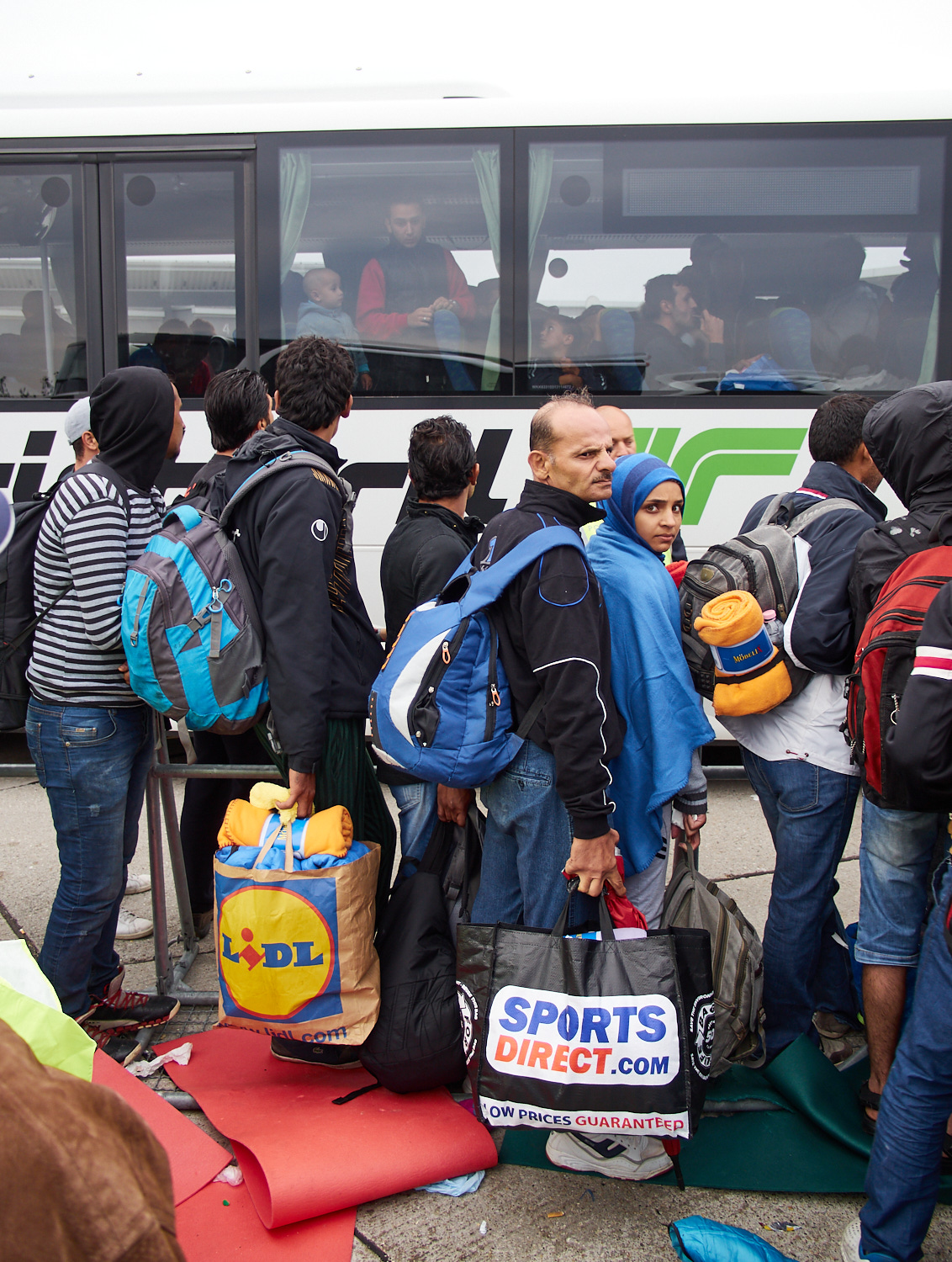
Nickelsdorf border crossing, Lower Austria, early September 2015: Migrants wait for onward transport by bus.
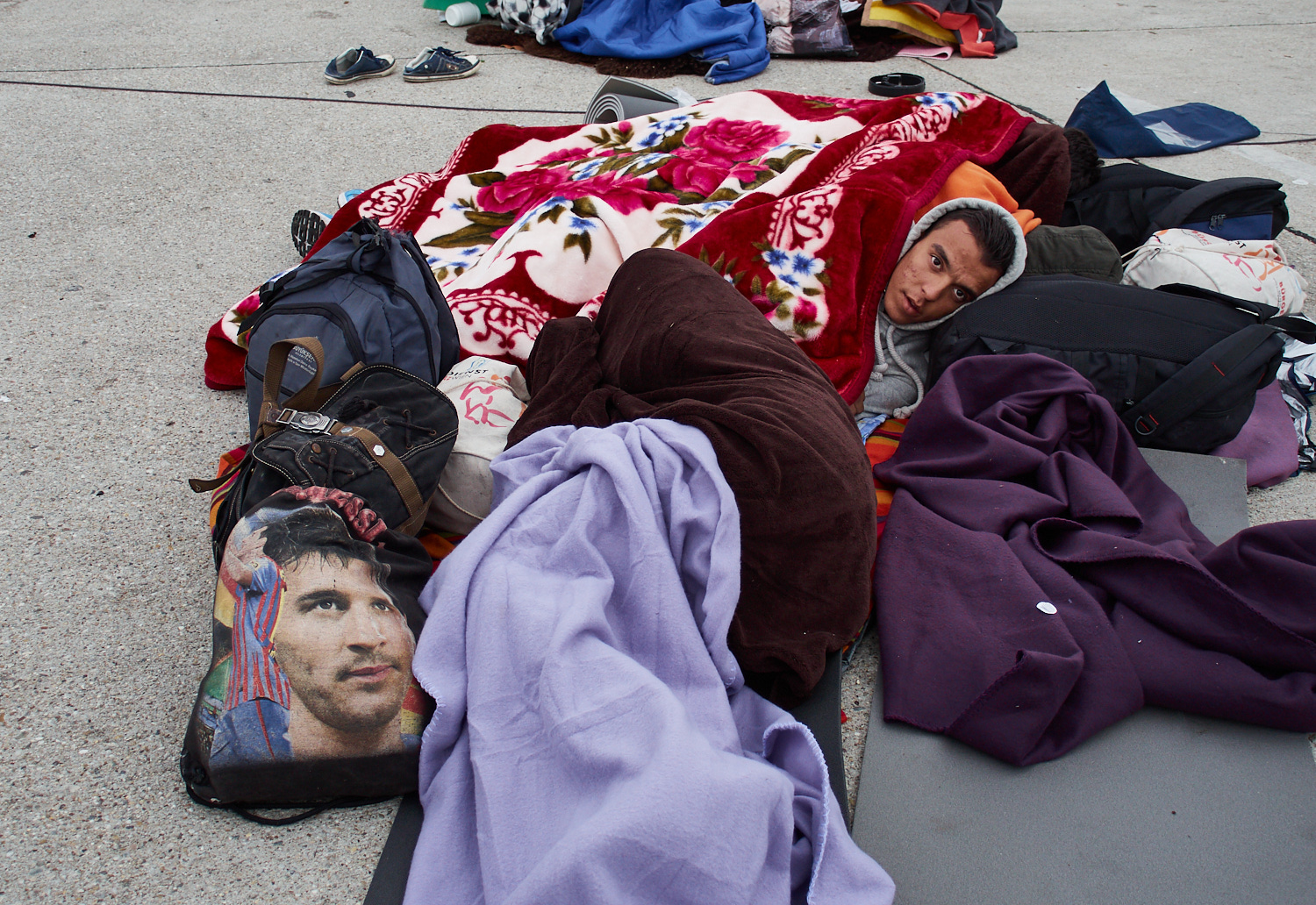
Nickelsdorf border crossing, Lower Austria, early September 2015.
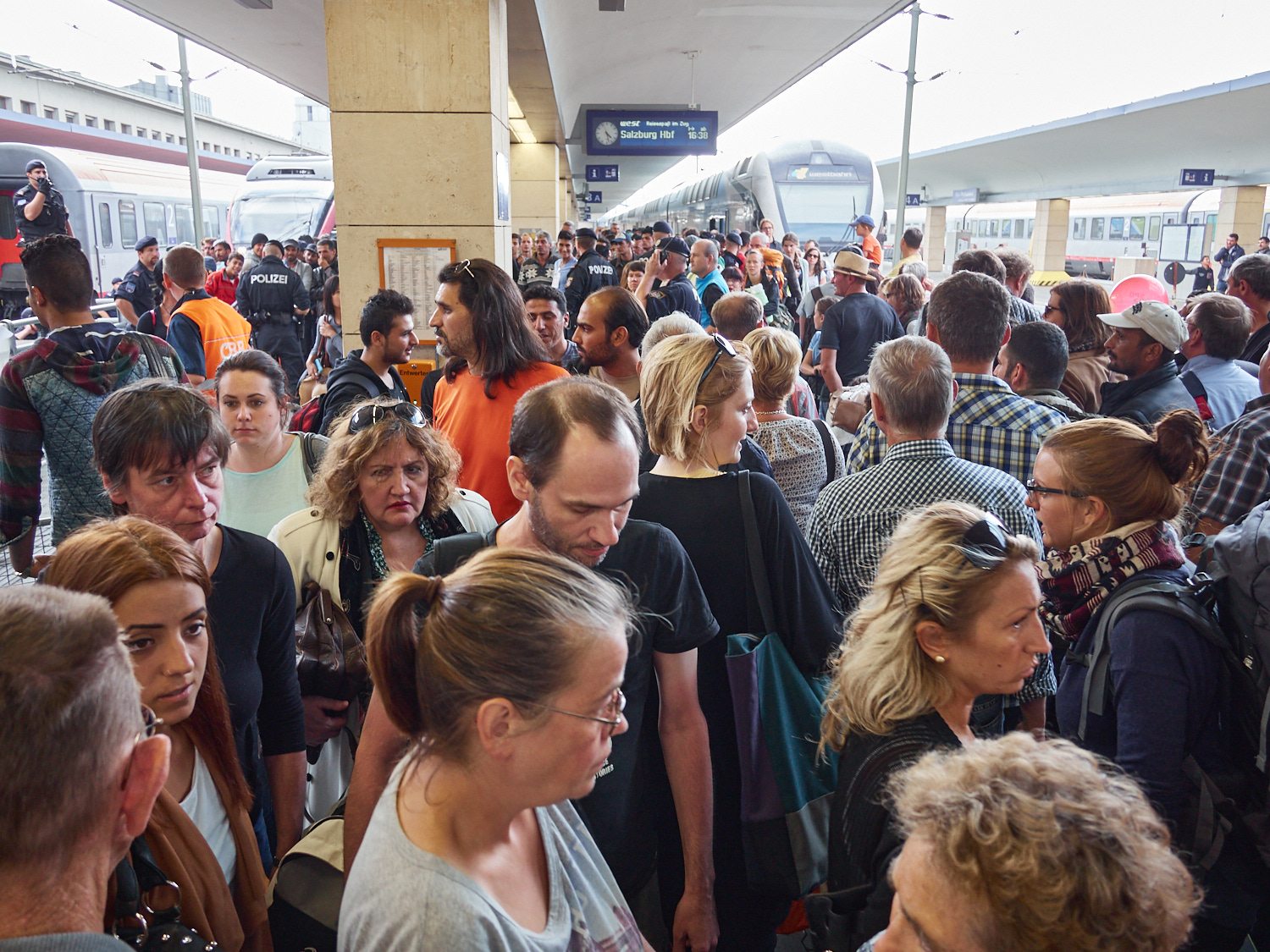
Vienna Westbahnhof, mid-September 2015: At the hotspots of the 2015 refugee crisis, public transport repeatedly became overcrowded and overloaded in late summer and autumn 2015.
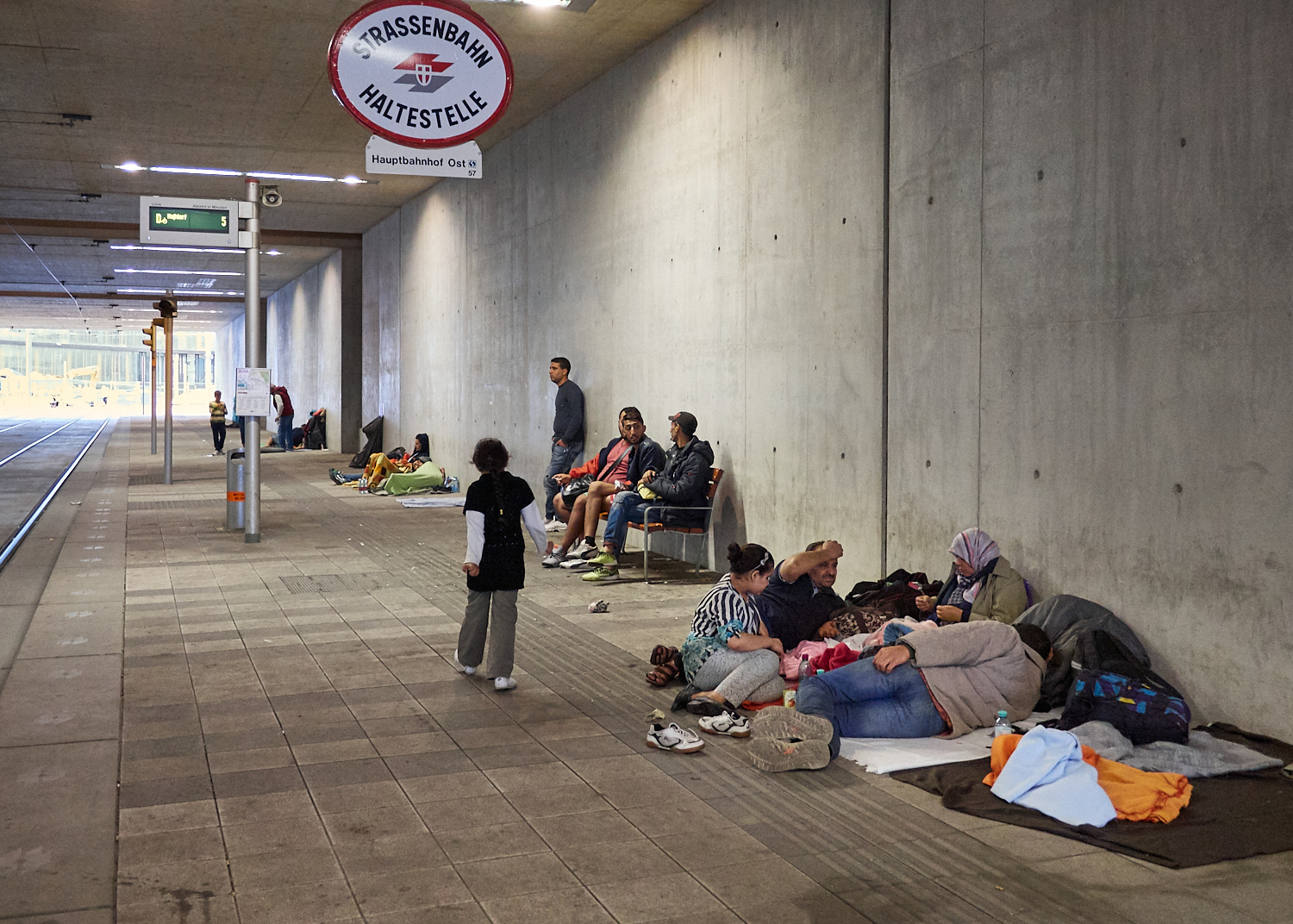
Vienna, Central Station, mid-September 2015.
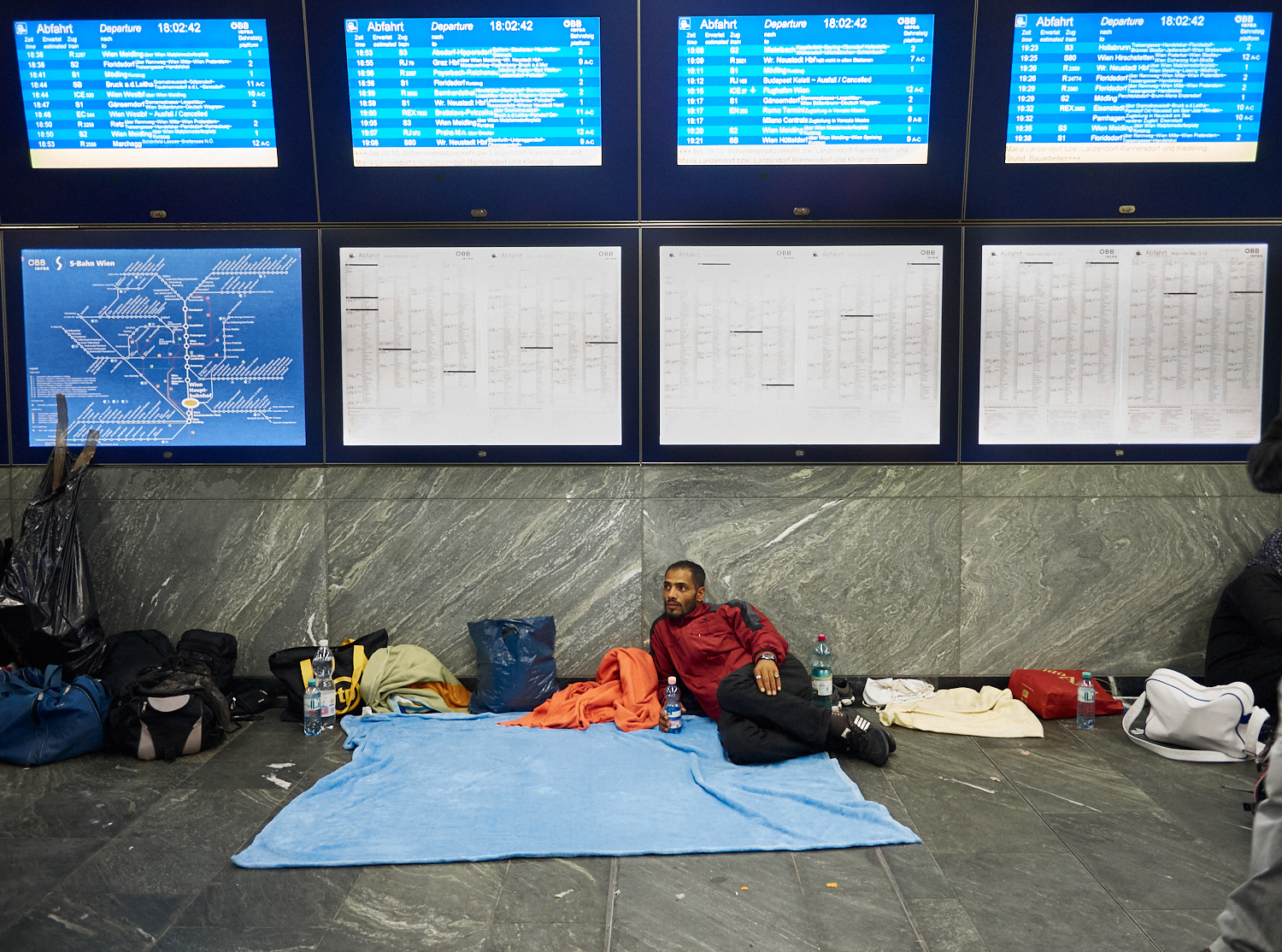
Vienna, Central Station, mid-September 2015.
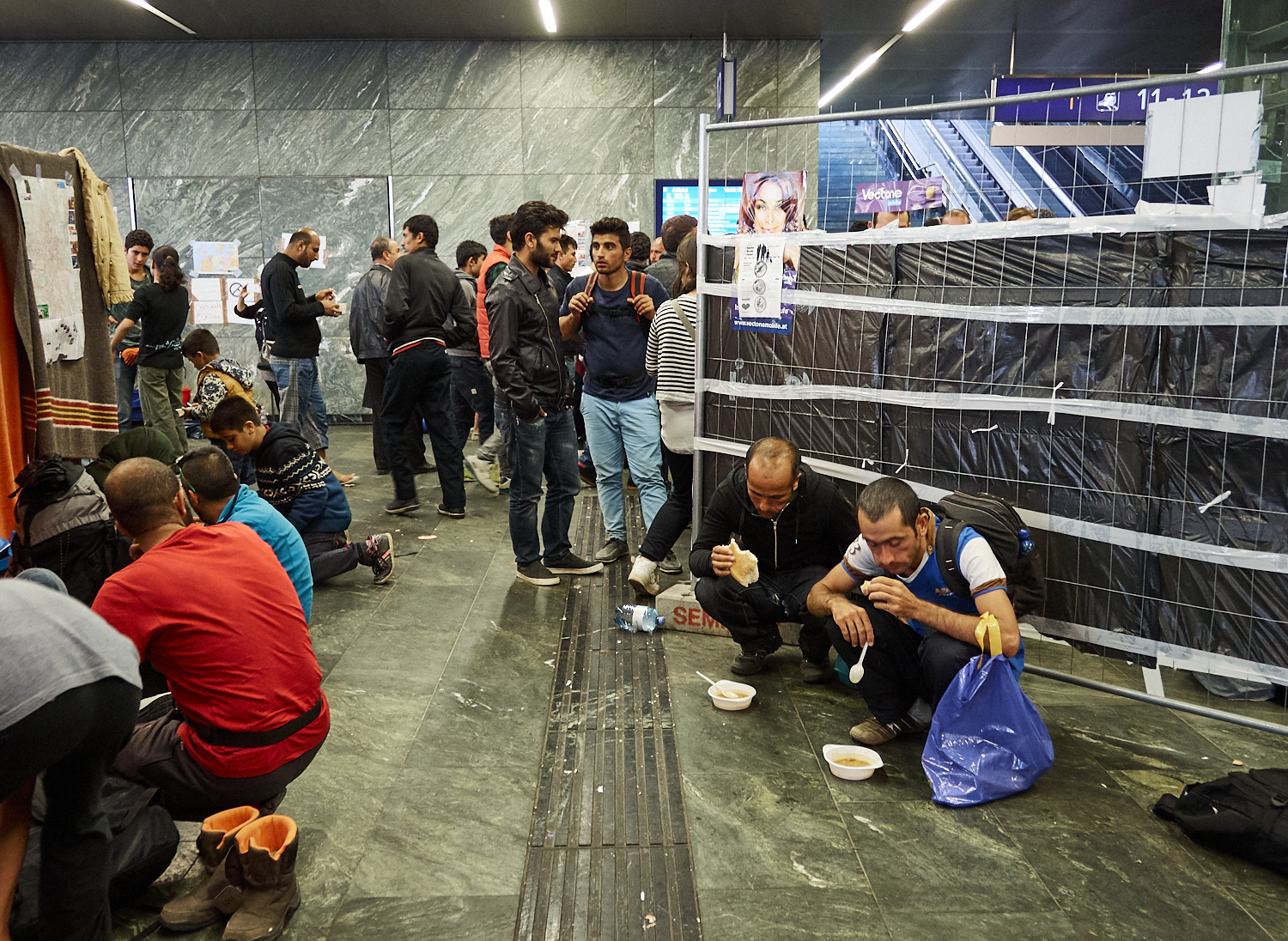
Vienna, Central Station, mid-September 2015.
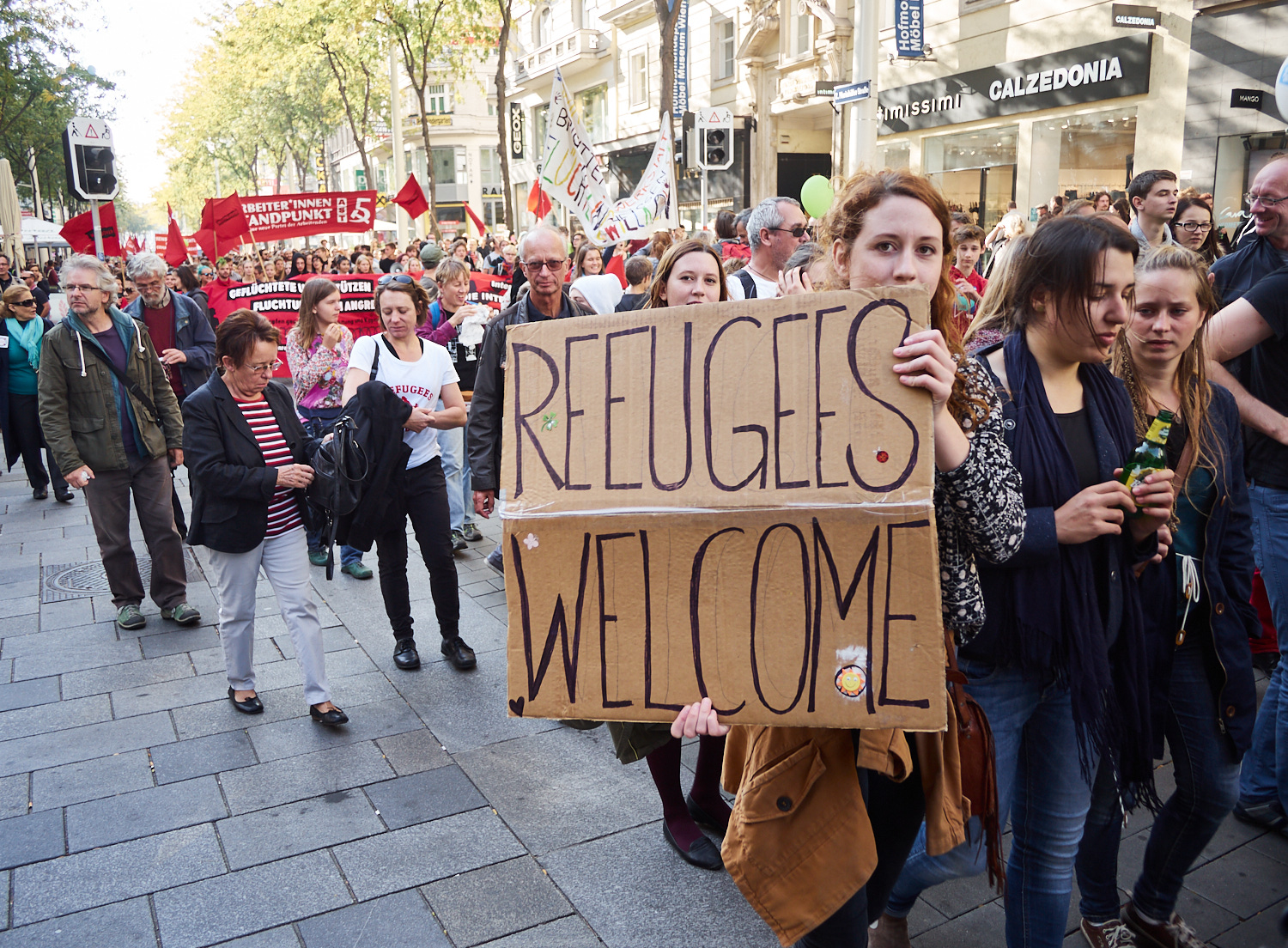
Vienna, Mariahilfer Straße, early October 2015: The 2015 refugee crisis prompted strong support from part of the population. “Welcome” and “Refugees Welcome” were widely used slogans in the political discourse.
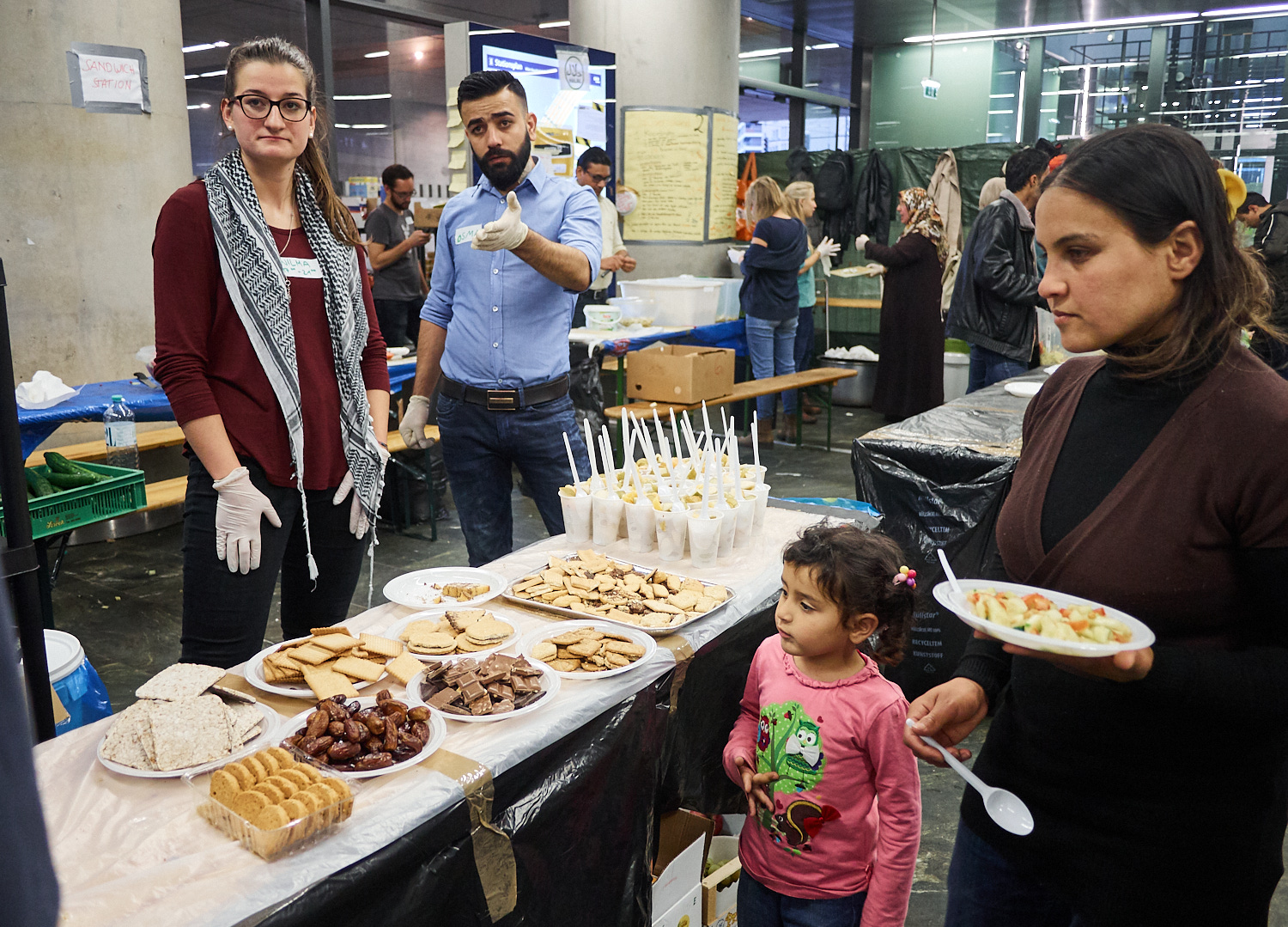
Vienna, Central Station, early October 2015: Volunteers provide aid to migrants in a station hall.
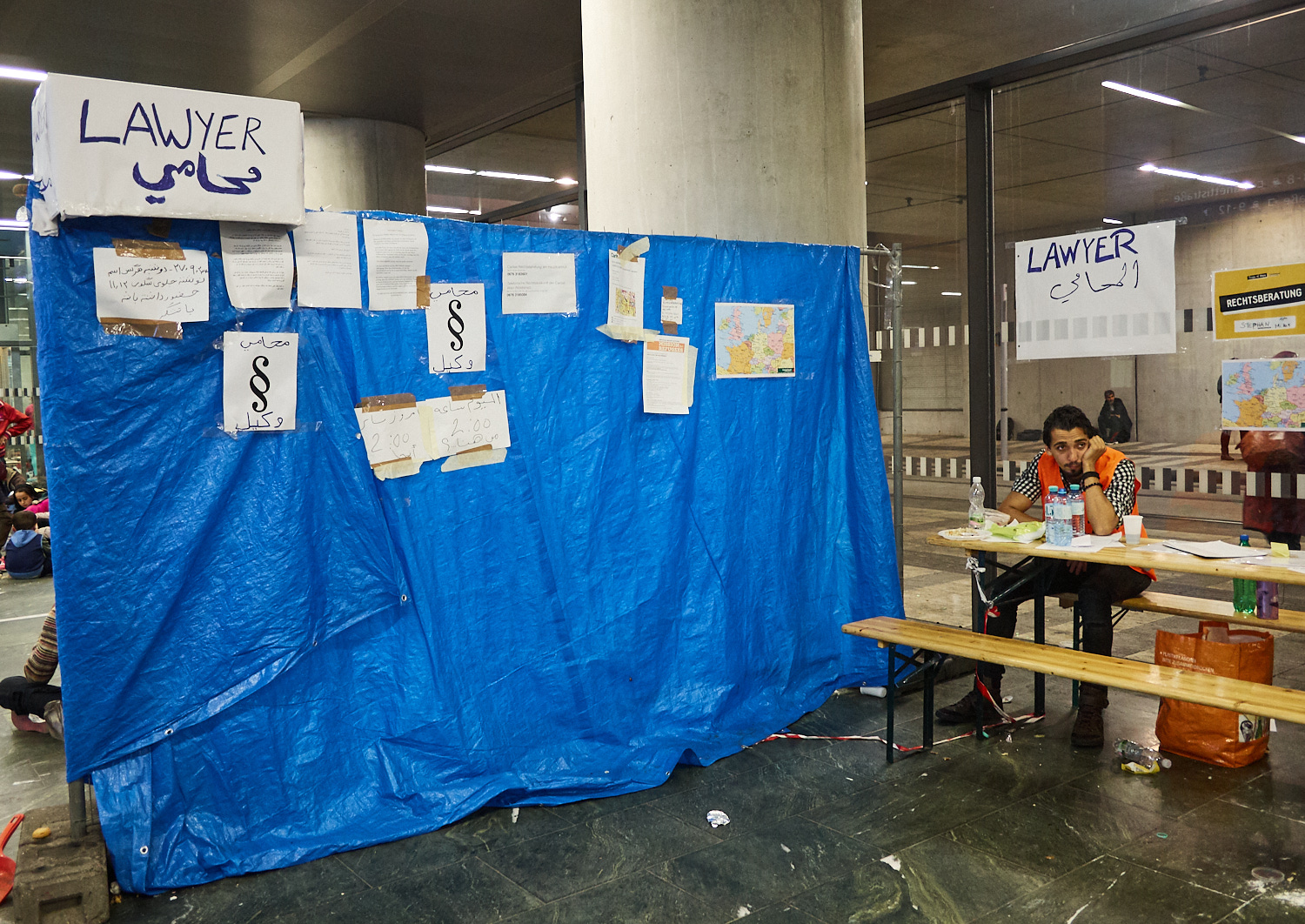
Vienna, Central Station, early October 2015: Volunteers offer legal advice.
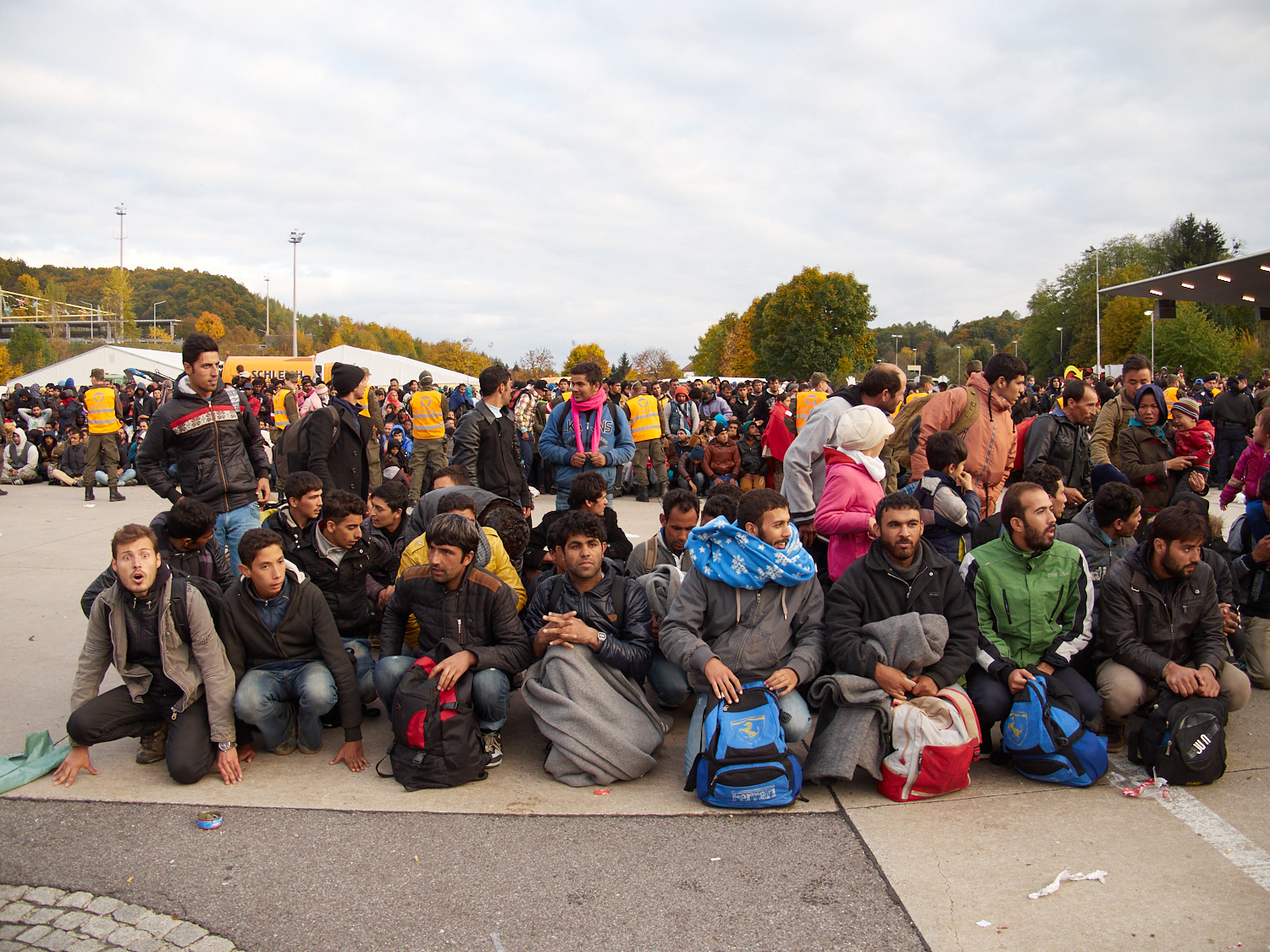
Grenzübergang Spielfeld, Steiermark, Ende Oktober 2015: Mitte Oktober verlagerten sich die Migrationgsströme nach der Sperre der ungarisch-kroatischen Grenze schlagartig an die slowenisch-österreichische Grenze.
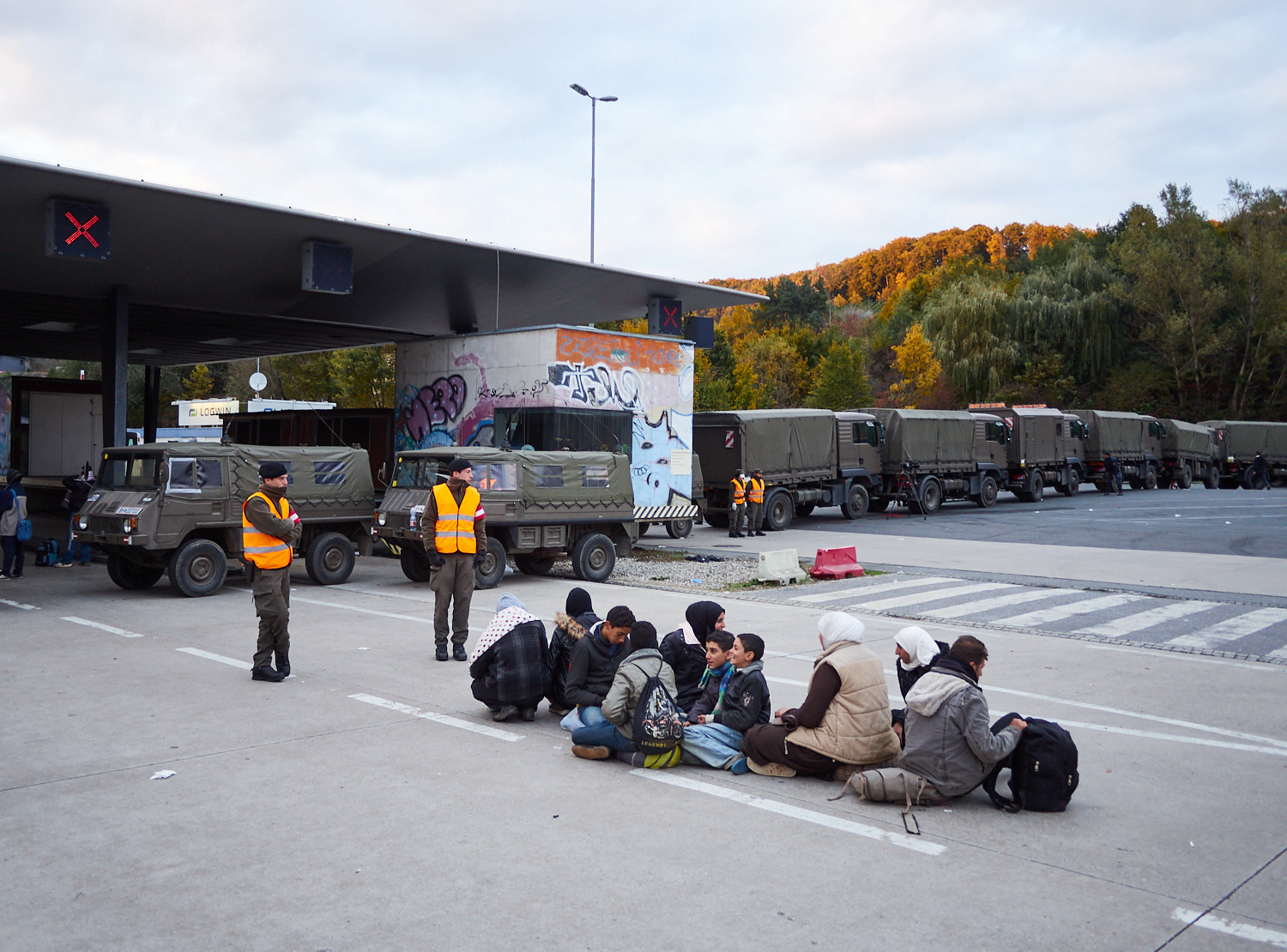
Spielfeld border crossing, Styria, late October 2015: In mid-October, after the closure of the Hungary–Croatia border, migration flows suddenly shifted to the Slovenia–Austria border.
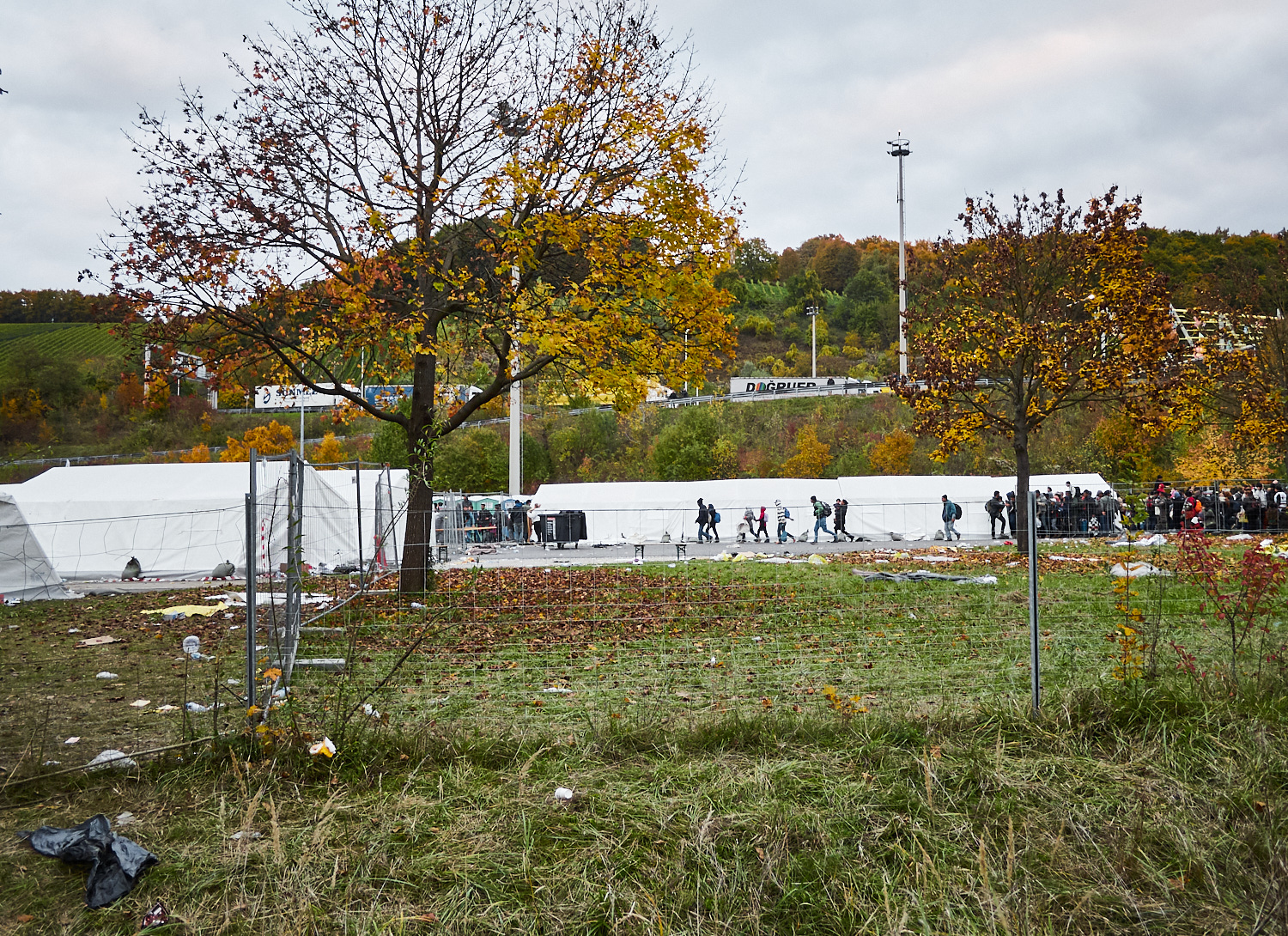
Spielfeld border crossing, Styria, late October 2015.
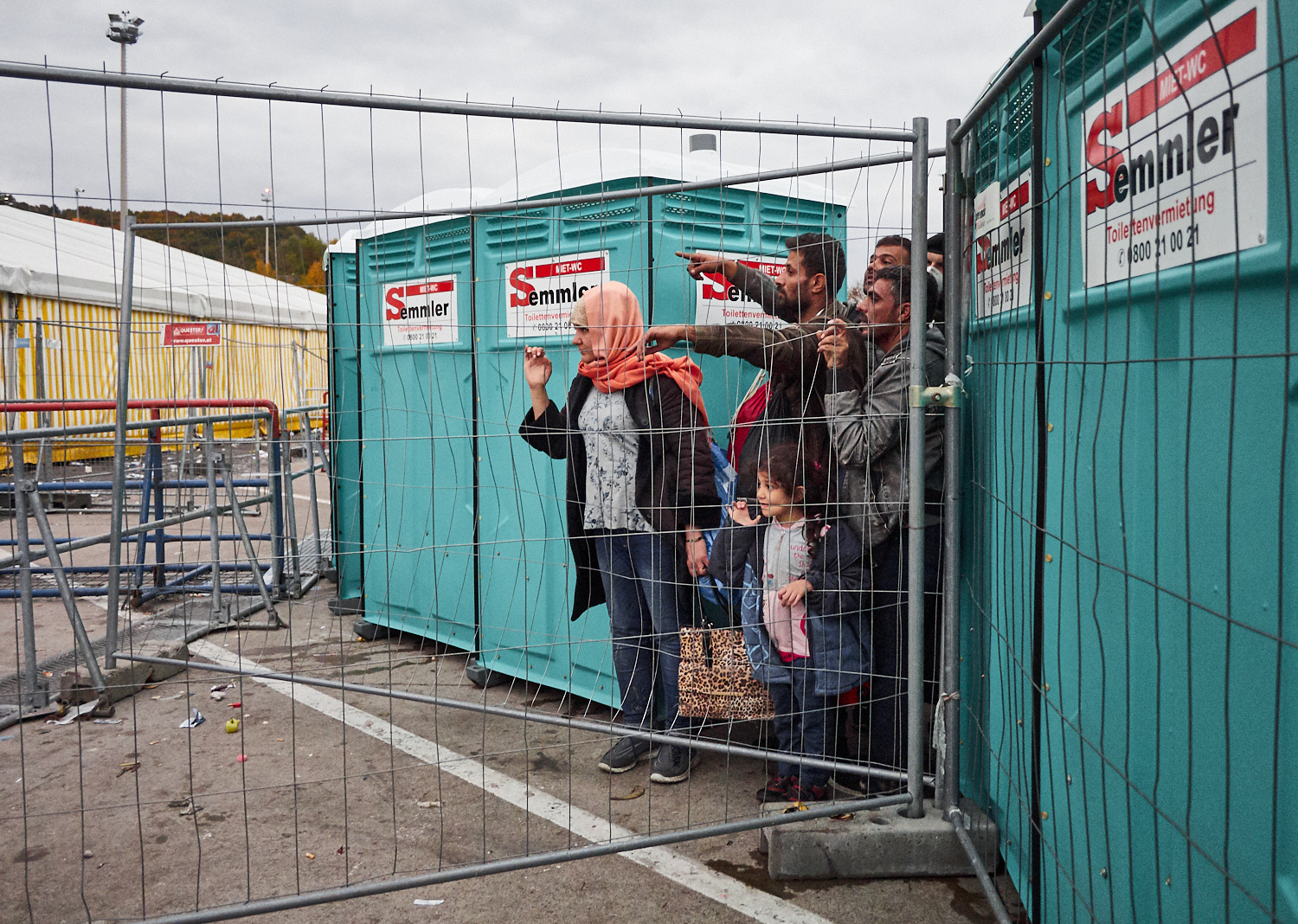
Spielfeld border crossing, Styria, late October 2015.
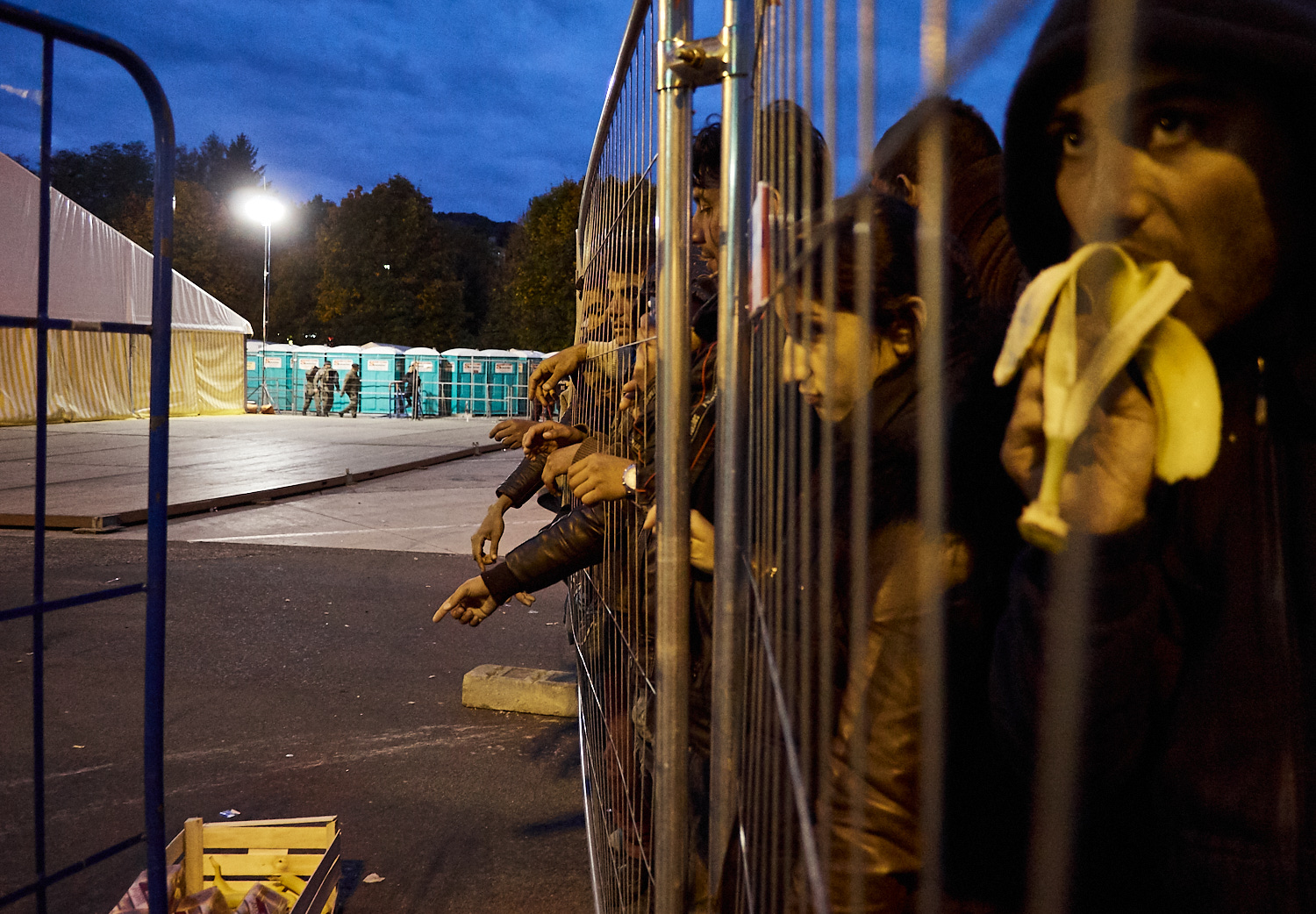
Spielfeld border crossing, Styria, late October 2015.
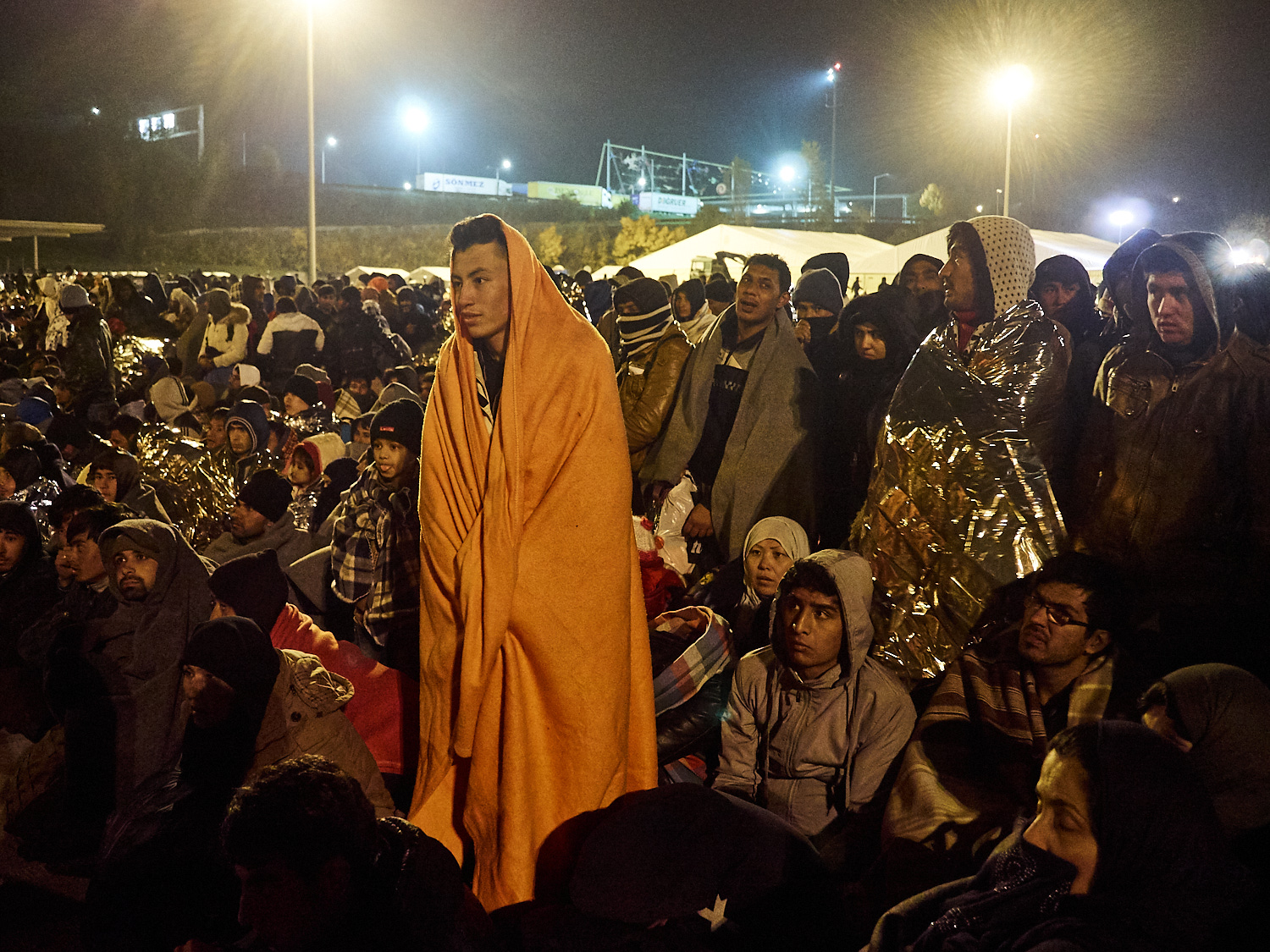
Spielfeld border crossing, Styria, late October 2015.
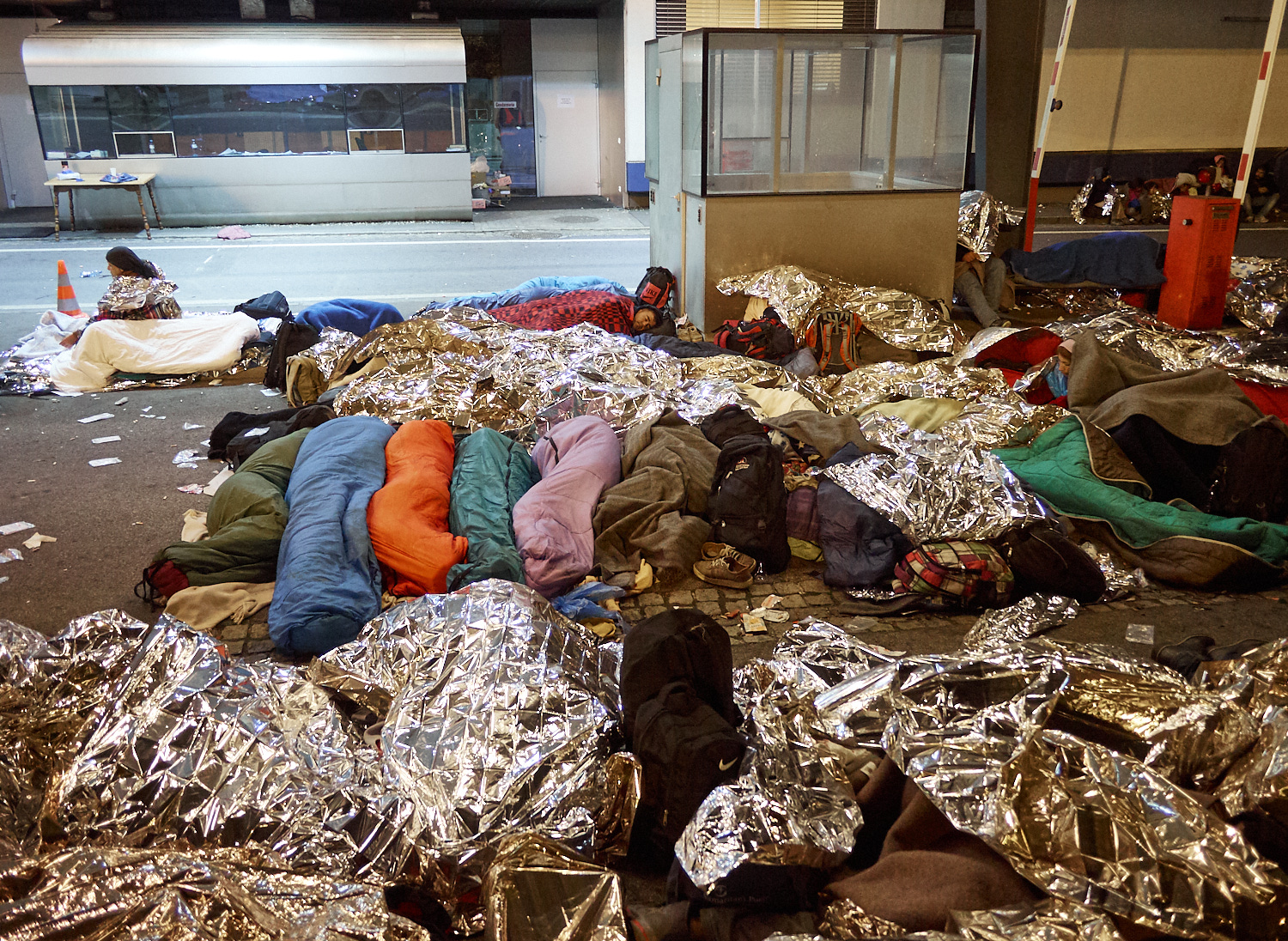
Spielfeld border crossing, Styria, late October 2015.
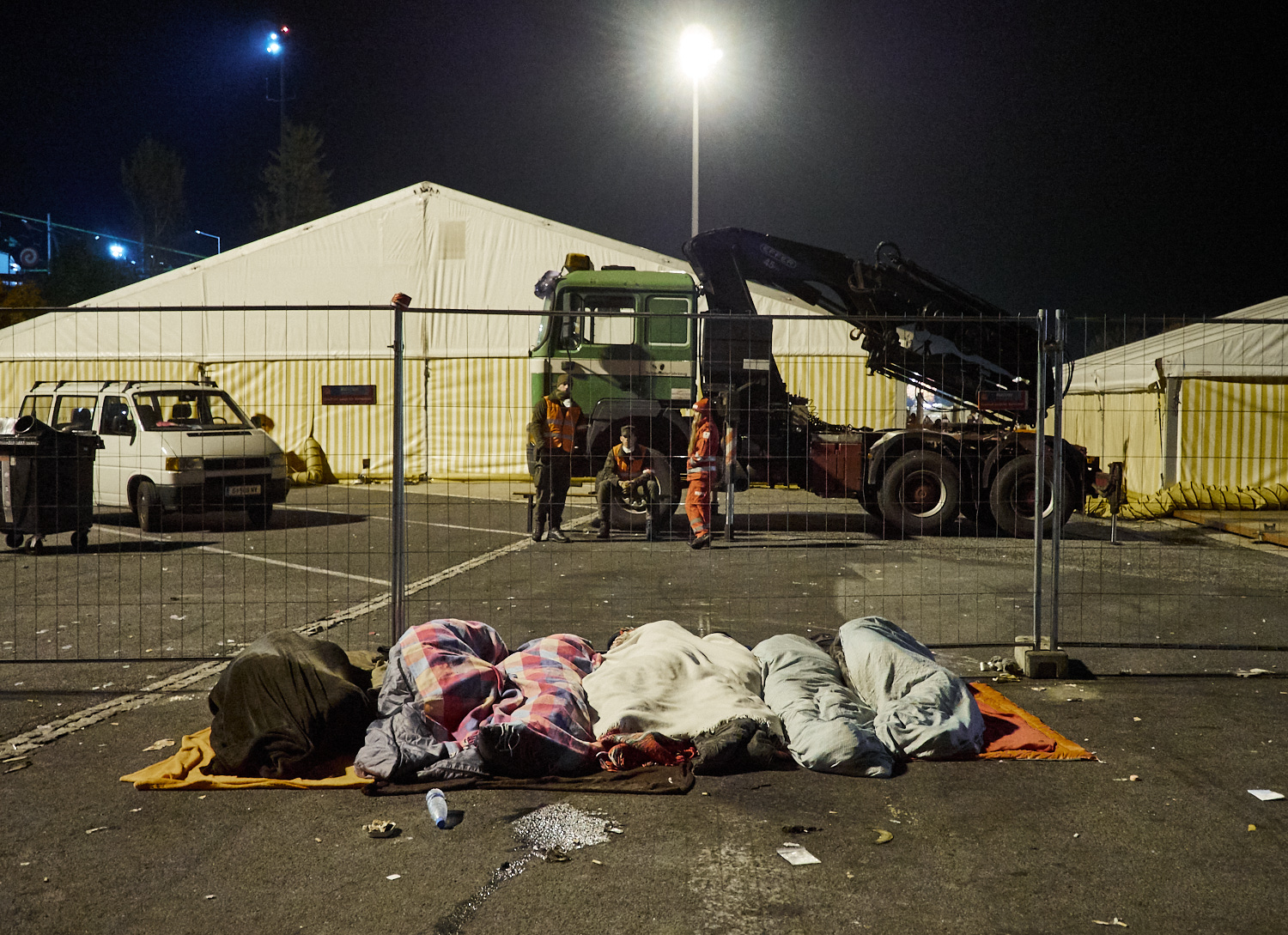
Spielfeld border crossing, Styria, late October 2015.
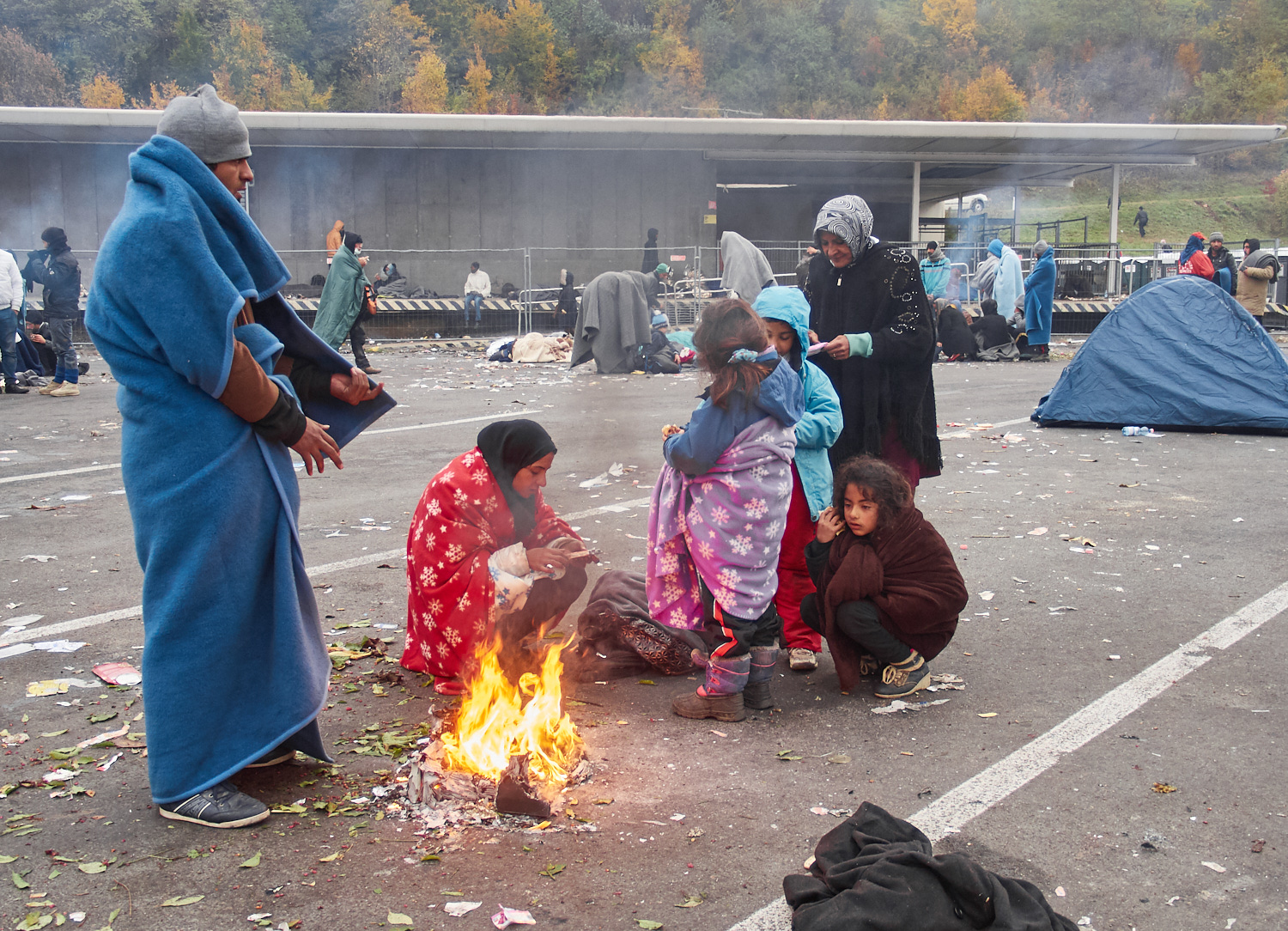
Spielfeld border crossing, Styria, late October 2015: Migrants warm themselves by a fire in the early morning.
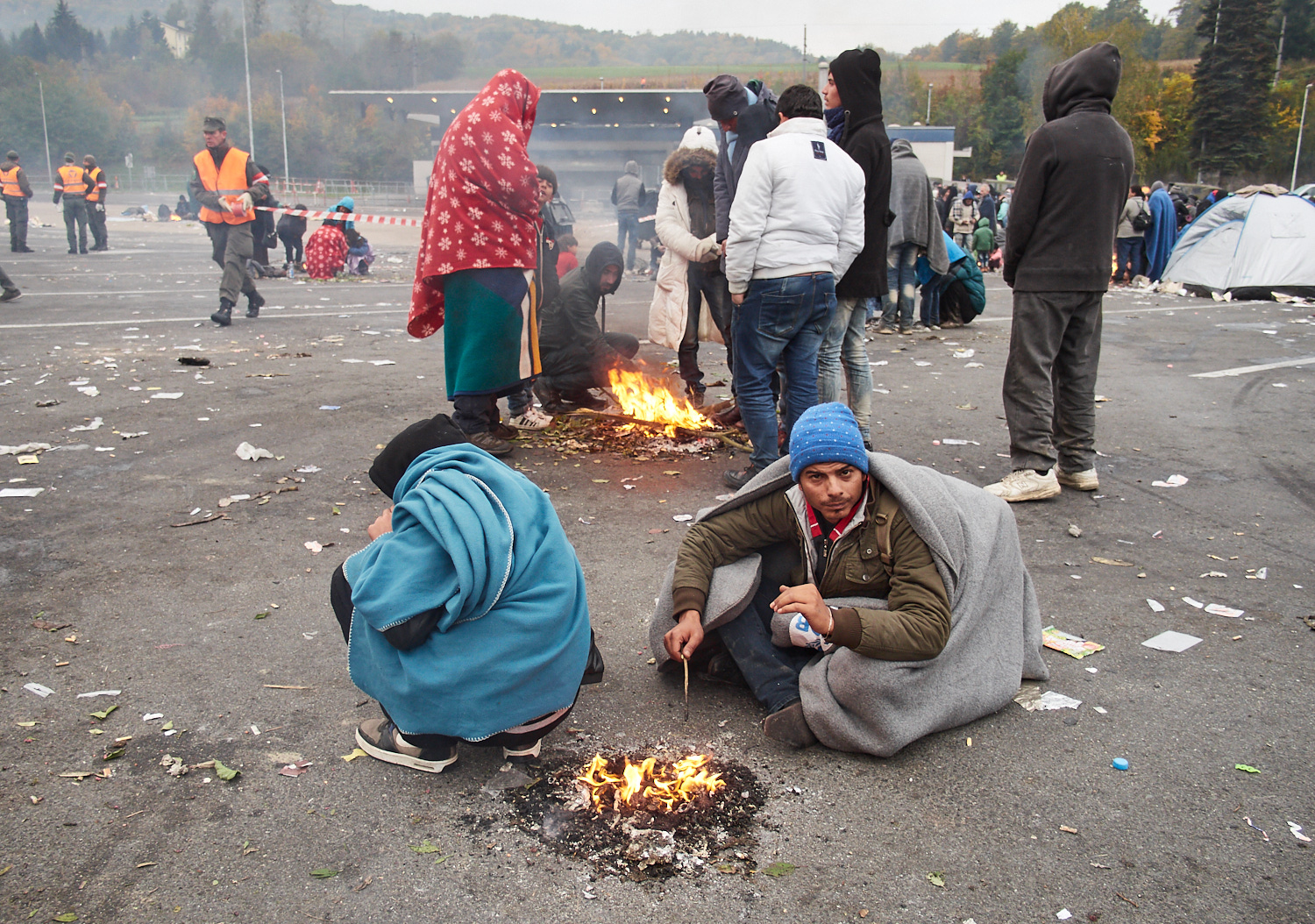
Spielfeld border crossing, Styria, late October 2015: Migrants warm themselves by a fire in the early morning.
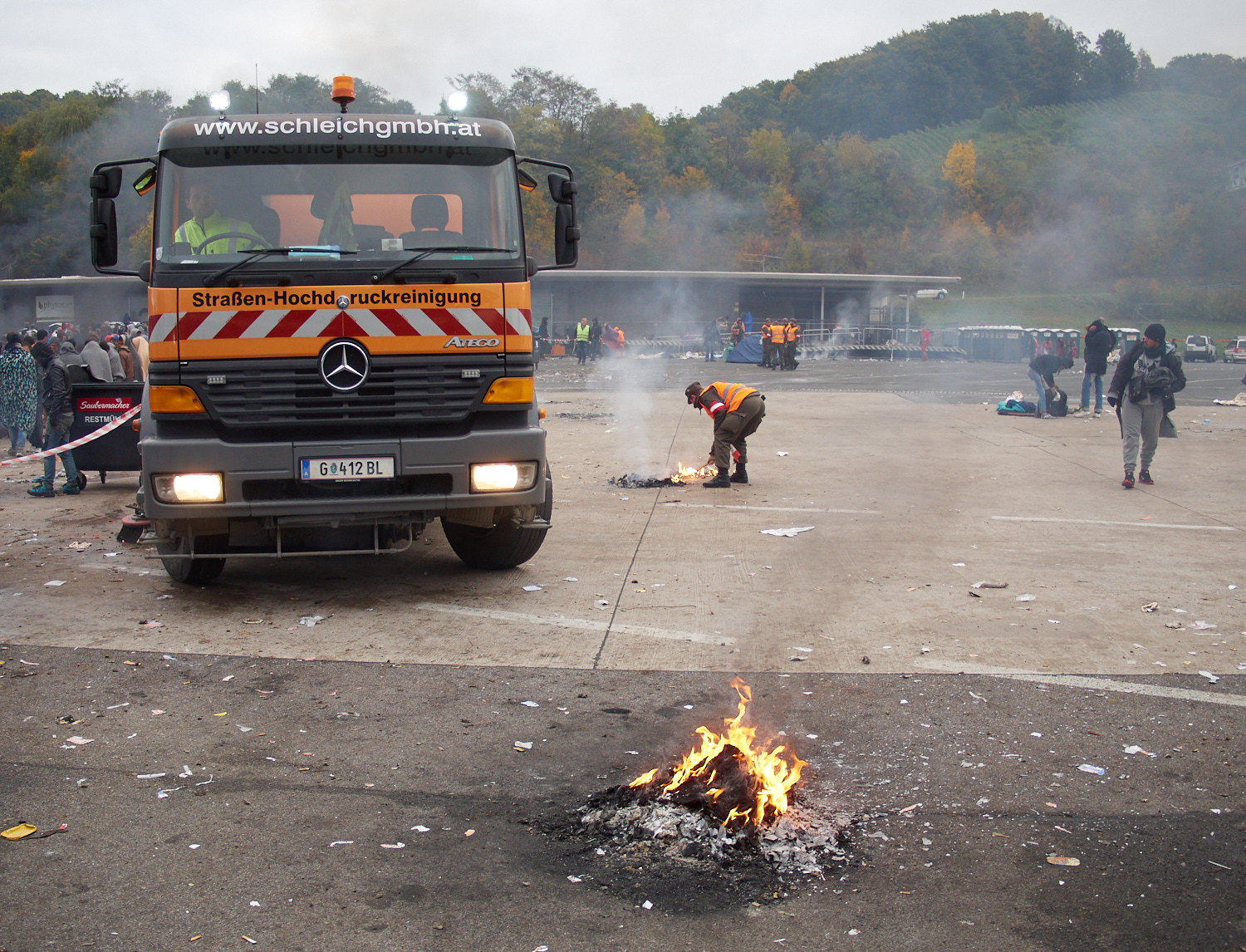
Spielfeld border crossing, Styria, late October 2015: A soldier of the Austrian Armed Forces extinguishes a fire.
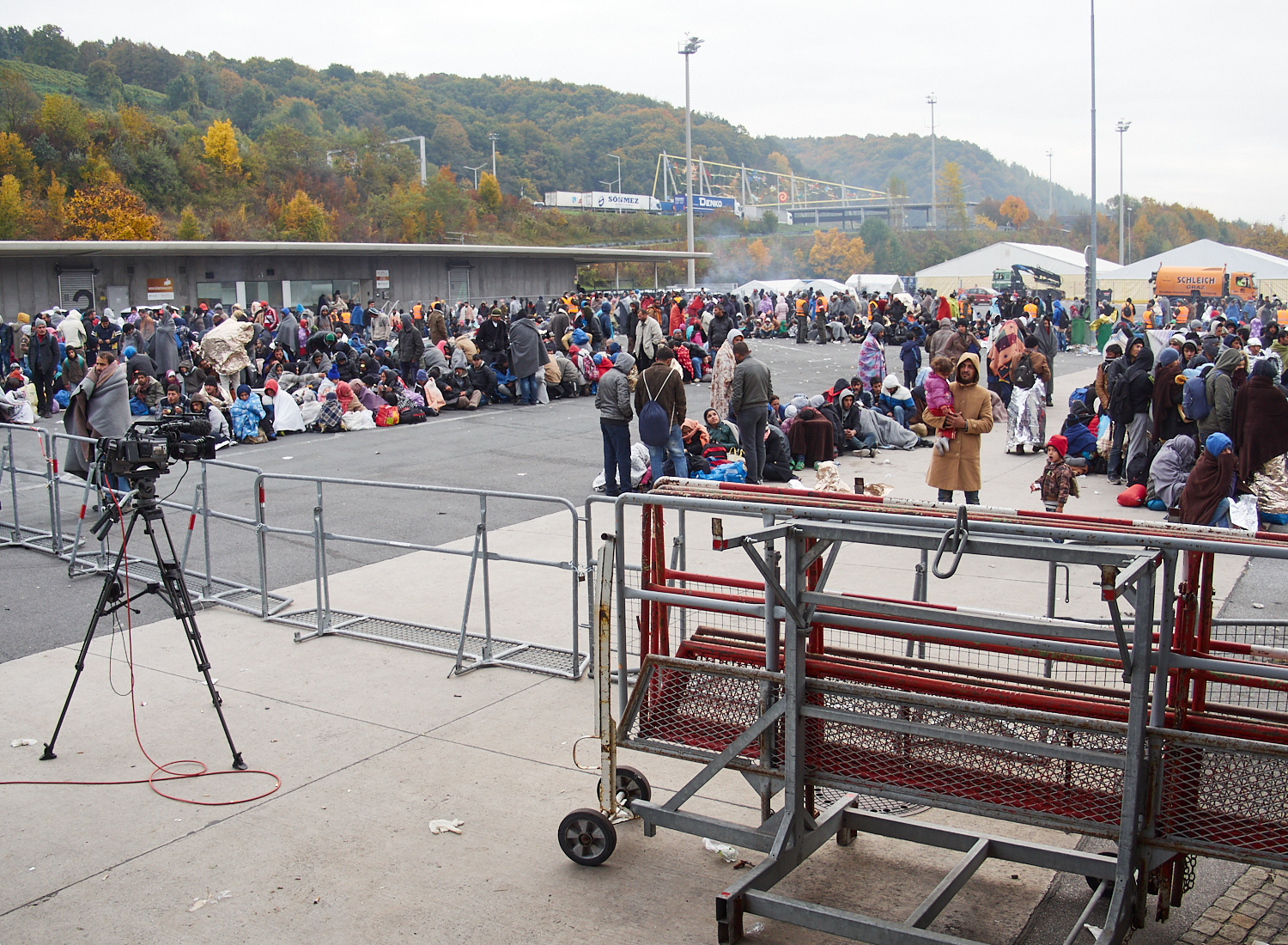
Spielfeld border crossing, Styria, late October 2015.
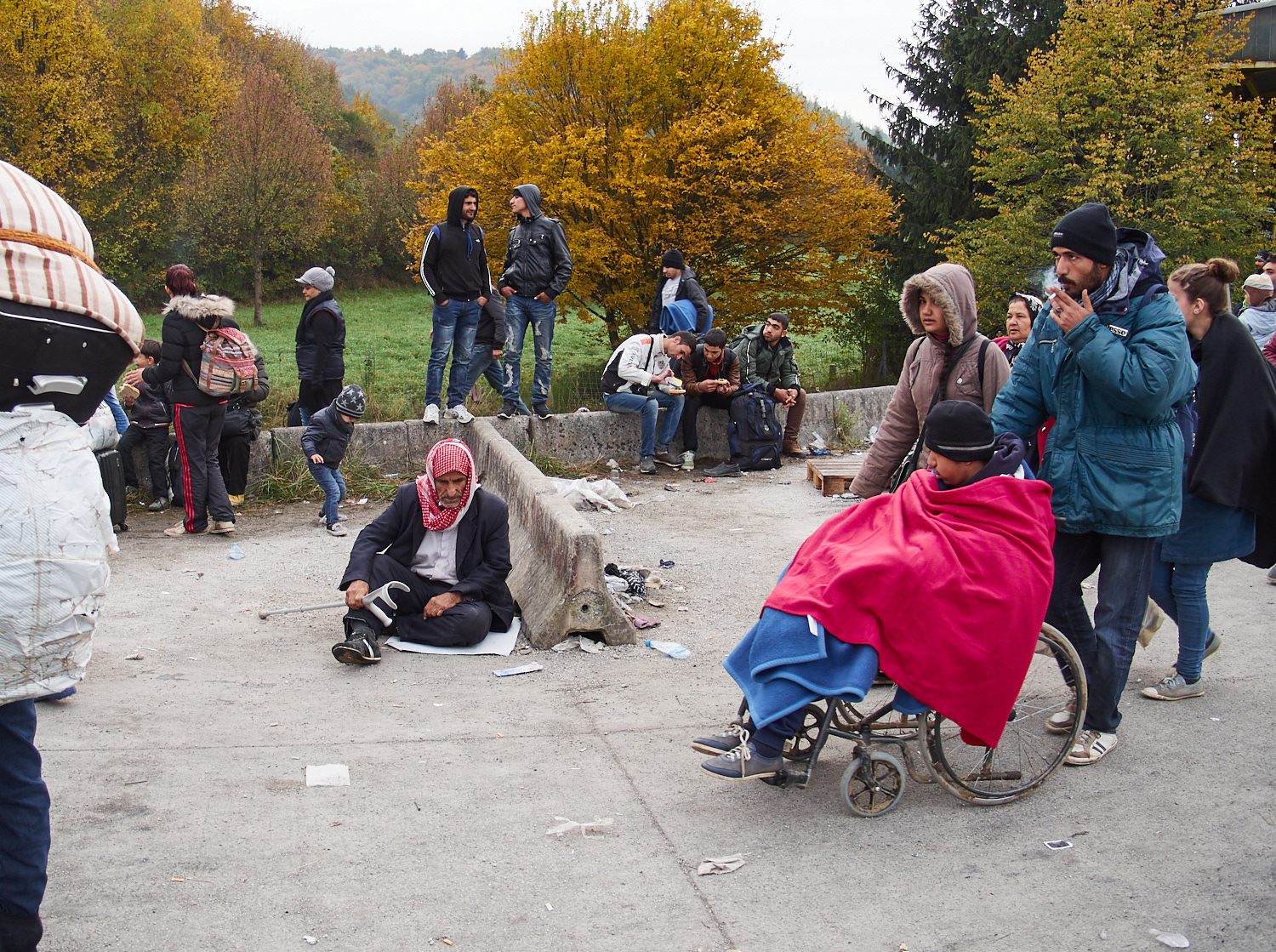
Spielfeld border crossing, Styria, late October 2015.
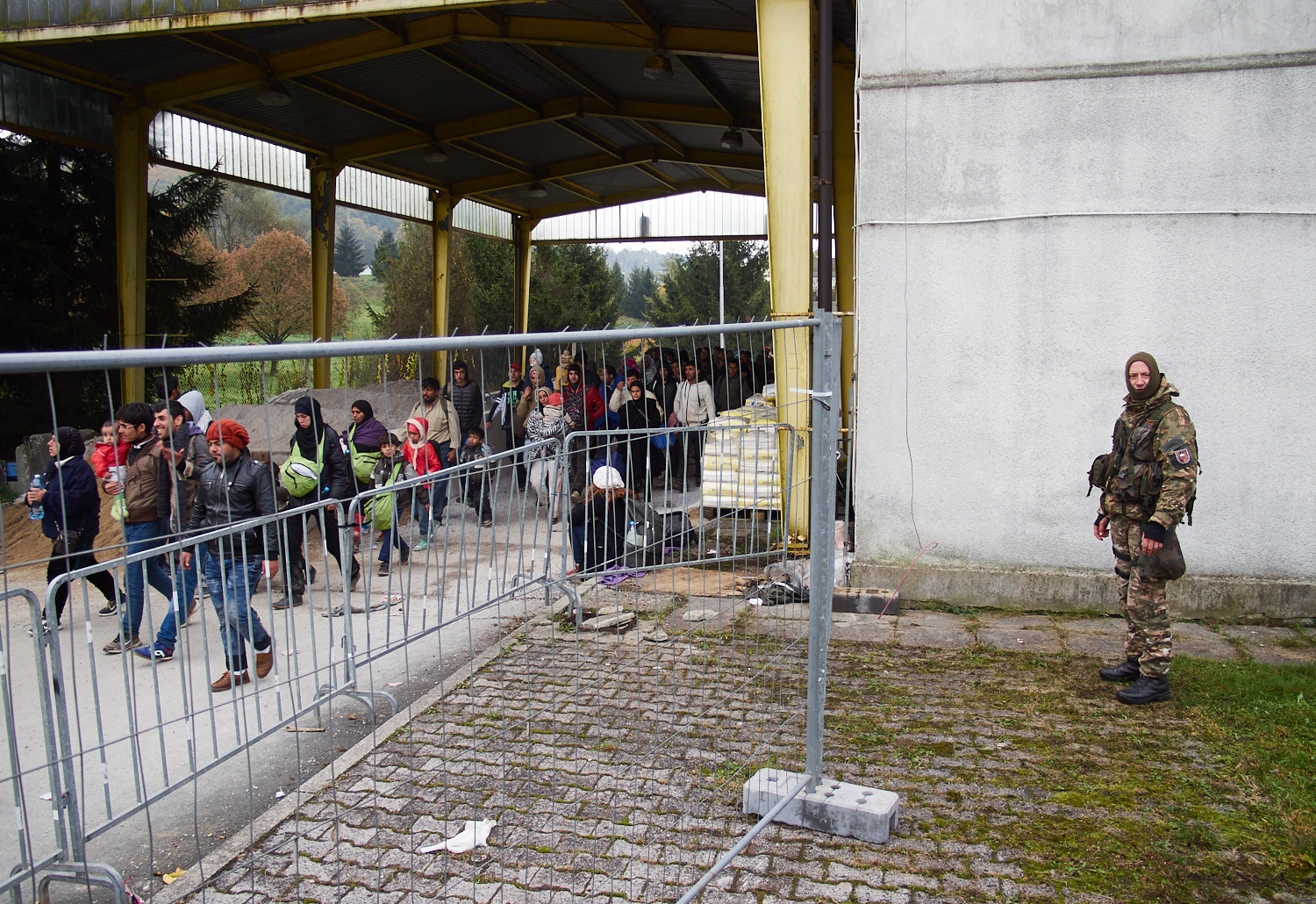
Slovenian border crossing into Austria near Spielfeld, late October: A Slovenian soldier monitors the border crossing of migrants.
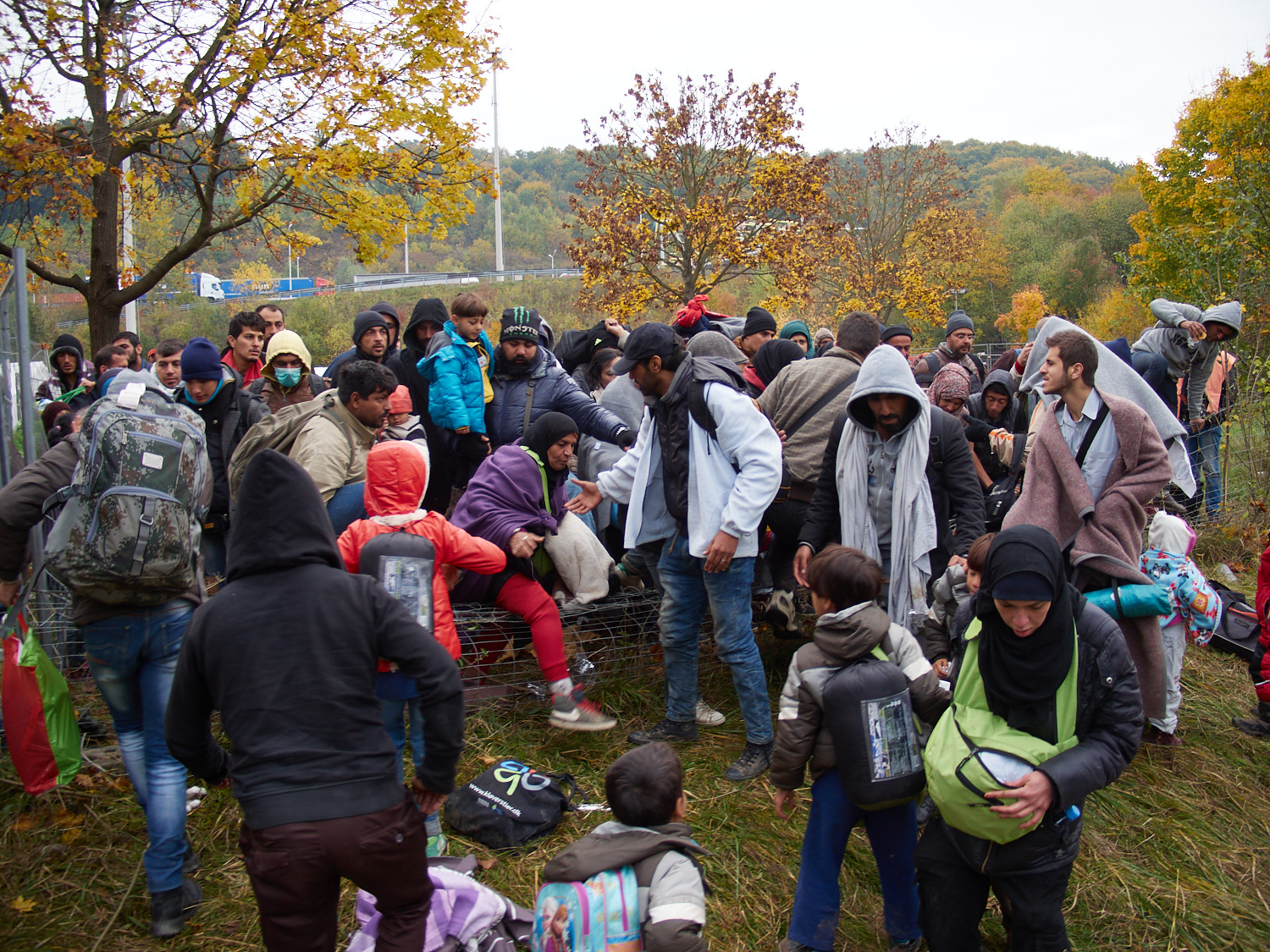
Spielfeld border crossing, Styria, late October 2015: On the Austrian side of the border, migrants were held in a temporary camp by police and the armed forces to organize orderly onward transport by bus. As delays sometimes occurred, migrants repeatedly set out on their own in frustration to continue their journey.
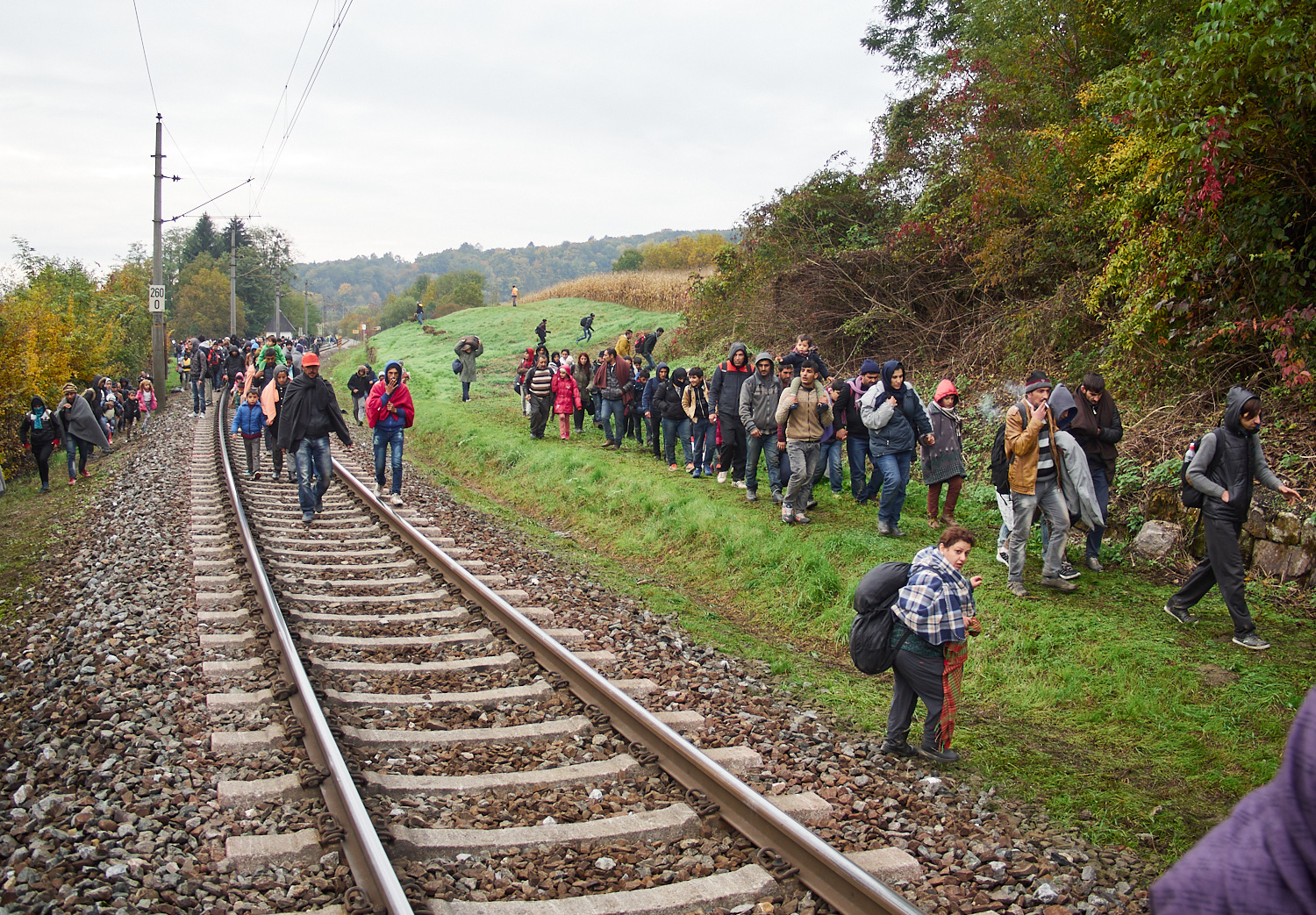
Spielfeld border crossing, Styria, late October 2015: Migrants walk along the tracks of the Spielfeld–Marburg railway line. Train services were repeatedly suspended for safety reasons.
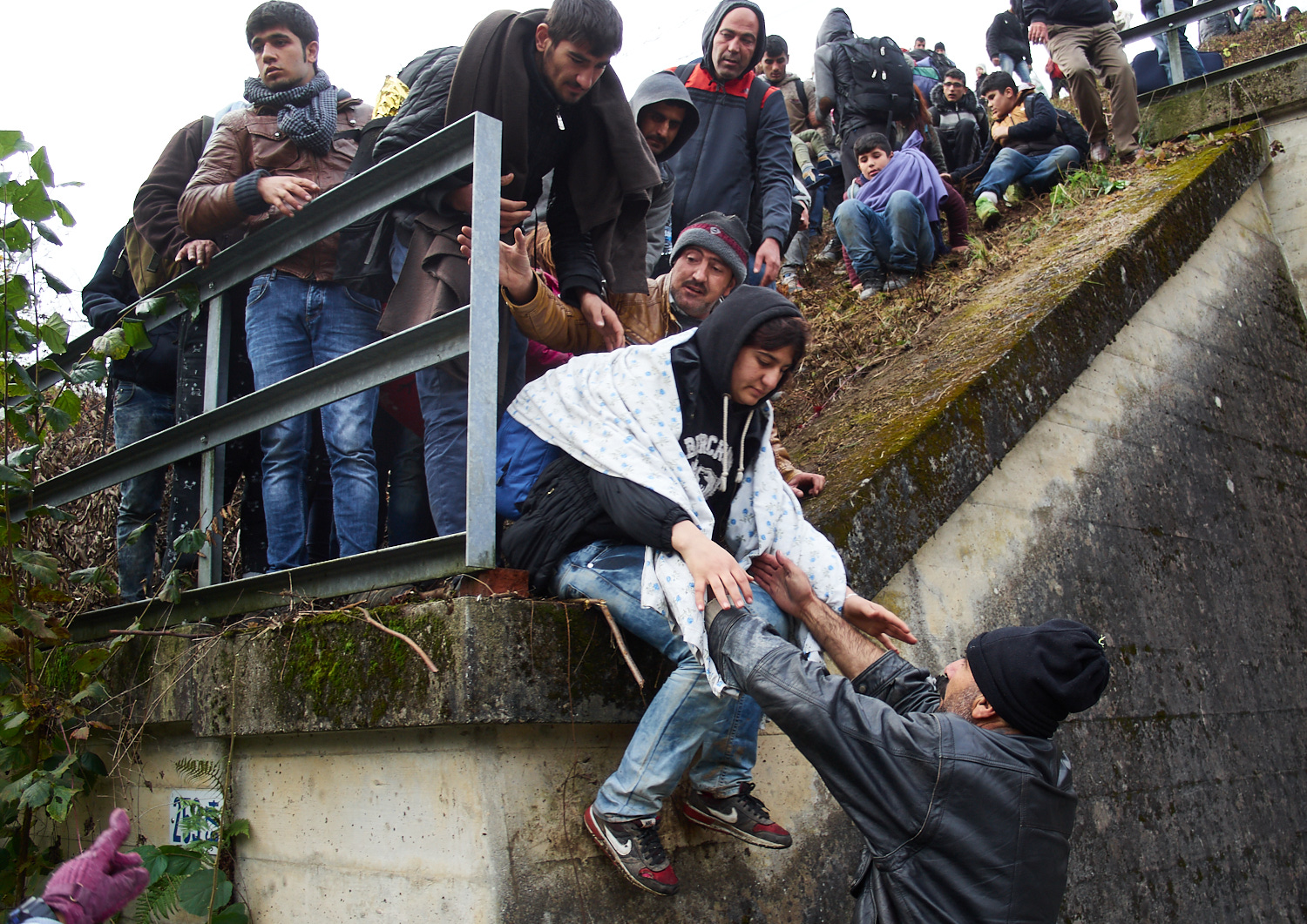
Spielfeld border crossing, Styria, late October 2015: Migrants climb down a railway embankment toward a road.
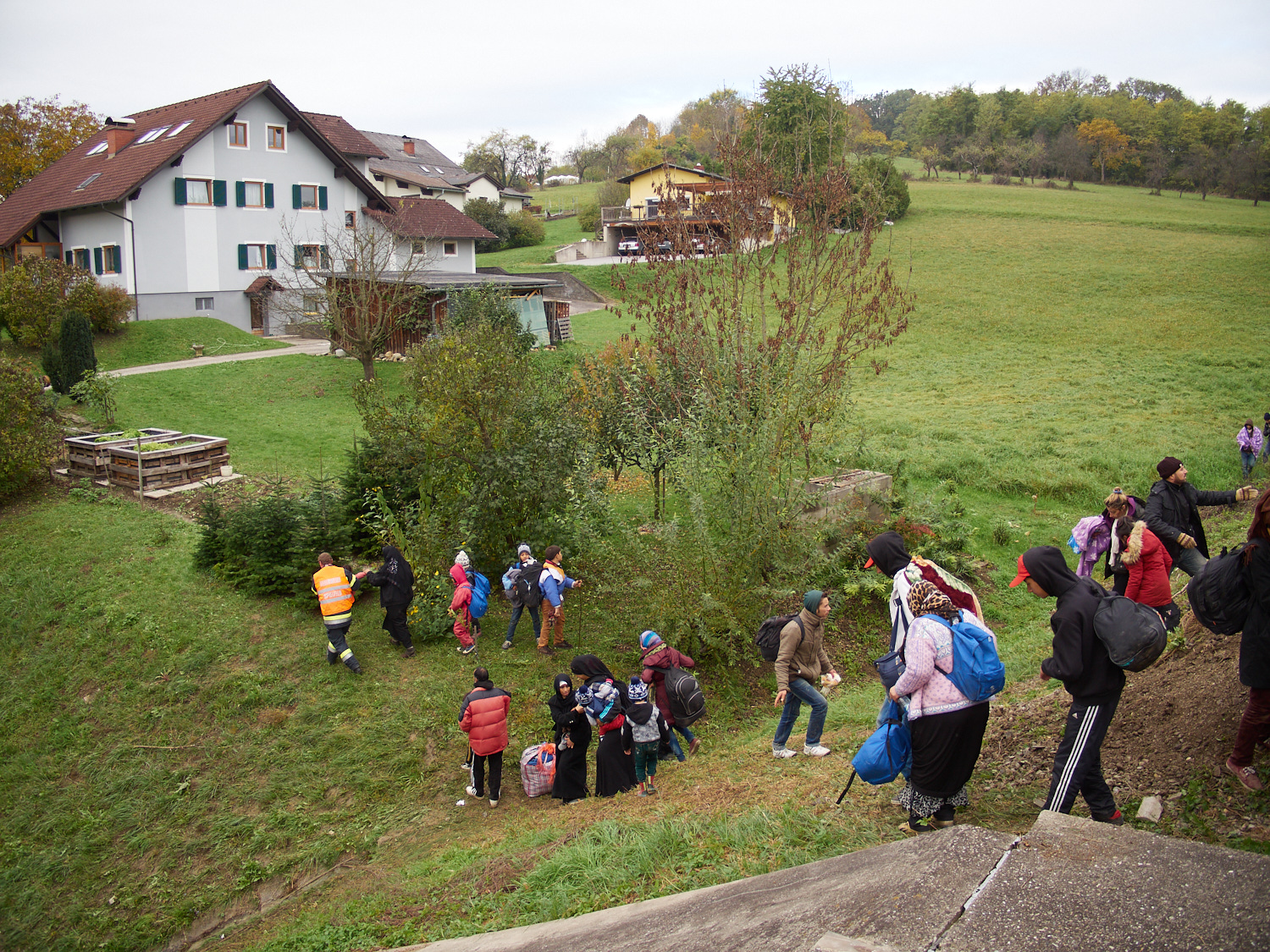
Spielfeld border crossing, Styria, late October 2015.
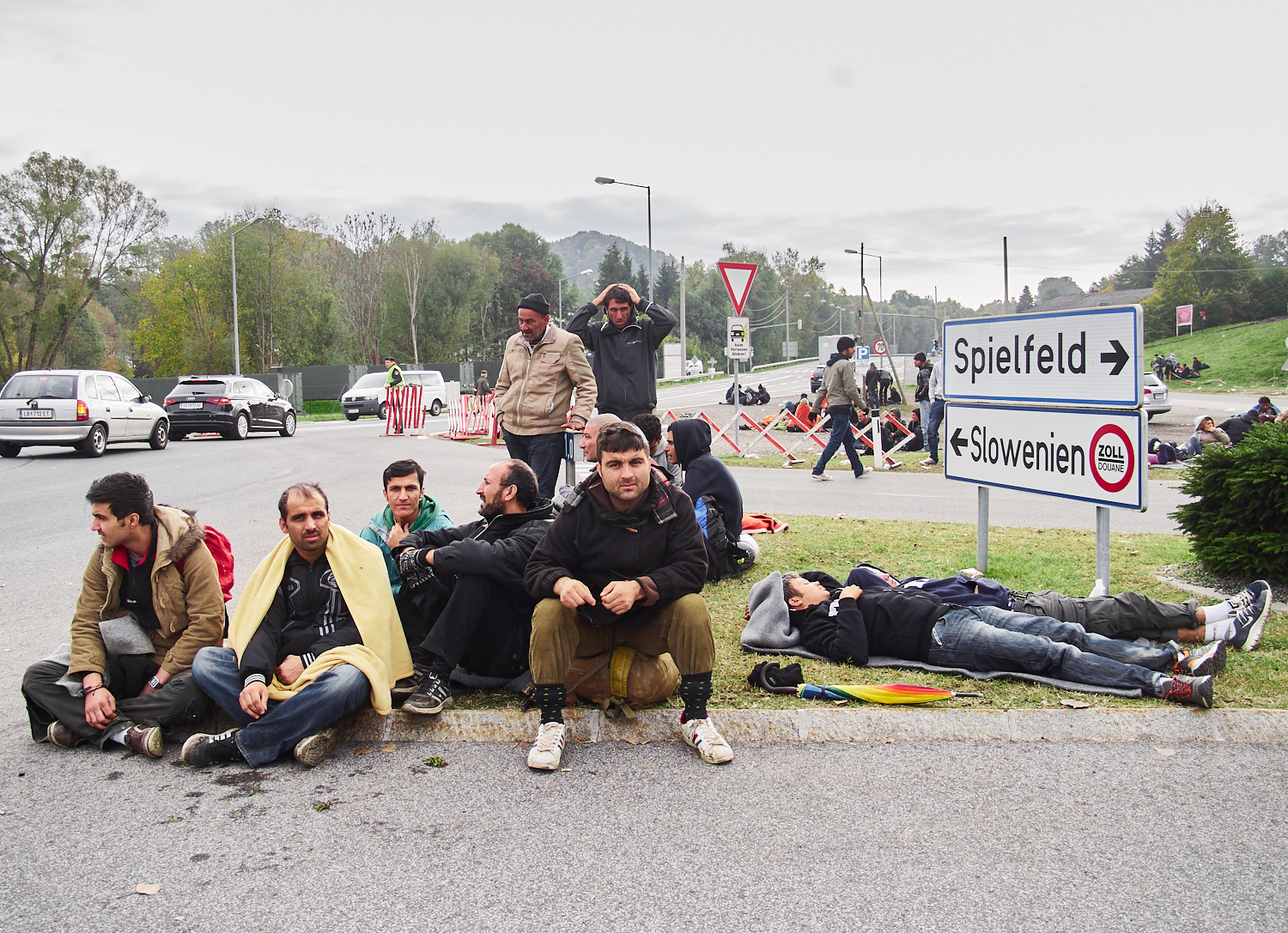
Spielfeld border crossing, Styria, late October 2015.
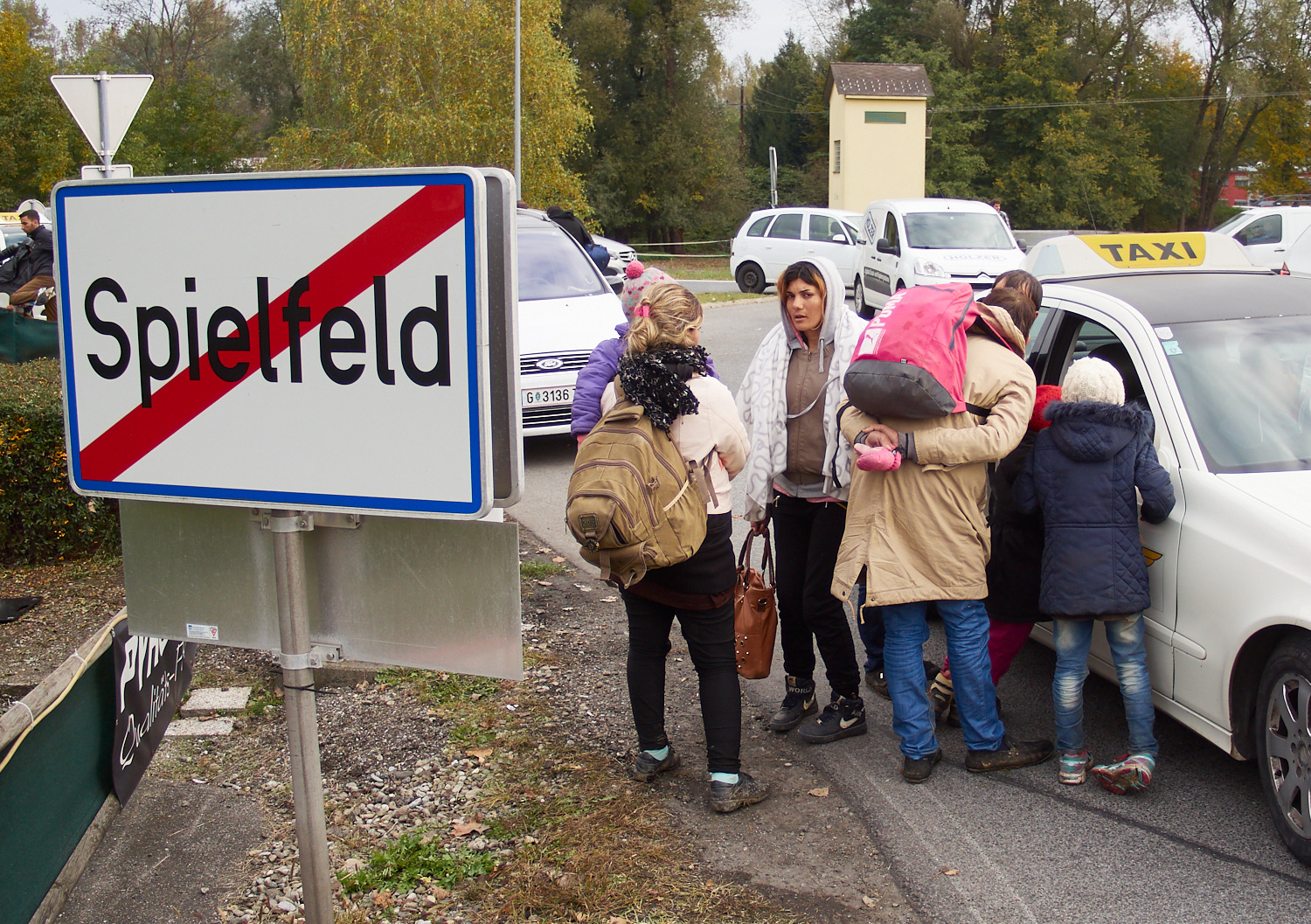
Spielfeld border crossing, Styria, late October 2015: Taxis were also used for the journey. Among the taxi drivers were many compatriots from the migrants’ countries of origin.
Text
All texts and photos are protected by copyright.